 USD
USD


Aloha & Welcome to My 2026 Creations
If you’ve been walking through my earring collection lately, you may have noticed that only a few pairs of Kipona style earrings are available at the moment, with limited quantities in some of my other styles as well. Before anything else, I want to simply say thank you.
This past holiday season was truly special. Sending these tiny shells to so many places — across Japan, the Philippines, Korea, Europe, and throughout the United States, especially Hawaiʻi — filled my heart in ways that are hard to put into words. Knowing my creations are being worn, gifted, and cherished around the world is something I never take for granted.
As we begin 2026, my focus is to slowly rebuild and create new designs again. I’m starting gently, one idea at a time, letting each piece guide the next. This early part of the year feels like a fresh beginning (はじまり) for my work this year.
One Pair at a Time: A Gentle Start to 2026
Behind the scenes, my creative process is always guided by feeling rather than speed. I like to let ideas arrive naturally and give them space to grow. Right now, my Kipona style earrings are the lowest in stock, so my first thought was a gentle one — let’s create just one pair and see where the idea wants to go.
That first pair came with a lot of blank moments. My hands were working, but my mind wasn’t fully there yet. Instead of forcing it, I switched directions and began creating Pikake style earrings. After a few pairs, the rhythm slowly came back, and I could feel that I was ready to return to Kipona again. That quiet return of flow always feels like inspiration (ひらめき), arriving when it’s ready.
The Physical Reality of Poking Niʻihau Shells
One thing many people don’t see is the physical side of this work. Niʻihau shell creators — and jewelry makers in general — quietly deal with sore fingers, tired eyes, stiff wrists, aching shoulders, and a sore back. These tiny shells may look delicate and light, but working with them for long hours takes a real toll on the body.
People often ask if I use a magnifying glass. The answer is no. From what I know, most Niʻihau shell creators don’t use one either. We rely on bright lighting, steady hands, and years of practice. Even so, by the end of a long day, your eyes, hands, fingers, wrists, shoulders, and back will eventually let you know it’s time to stop and call it good for the day — and see where you are tomorrow.
For anyone who prepares their own shells, poking is the most challenging — and honestly, the most brutal — step of the entire process. Each hole must be placed at the same angle and position every single time, especially when working with Momi and Kahelelani shells. Your hands must return to the exact same spot again and again, holding the shell steady while guiding the needle through these tiny shells.
Poking Kahelelani shells in particular is one of the most difficult and least enjoyable steps. Every Niʻihau shell creator has to work through this stage. So when you see a long lei with many strands, filled with thousands and thousands of tiny shells, please know that those leis are truly a labor of love — a form of craftsmanship (ものづくり) that requires patience and respect.
This art is not simply collecting shells from the beach, poking a hole, and stringing them together. When you see the price of a long lei, you are seeing the labor, skill, patience, and time it takes to complete just one piece — not to mention the rarity of shell colors, the difficulty of finding matching sizes, and the thoughtful design that brings everything together.
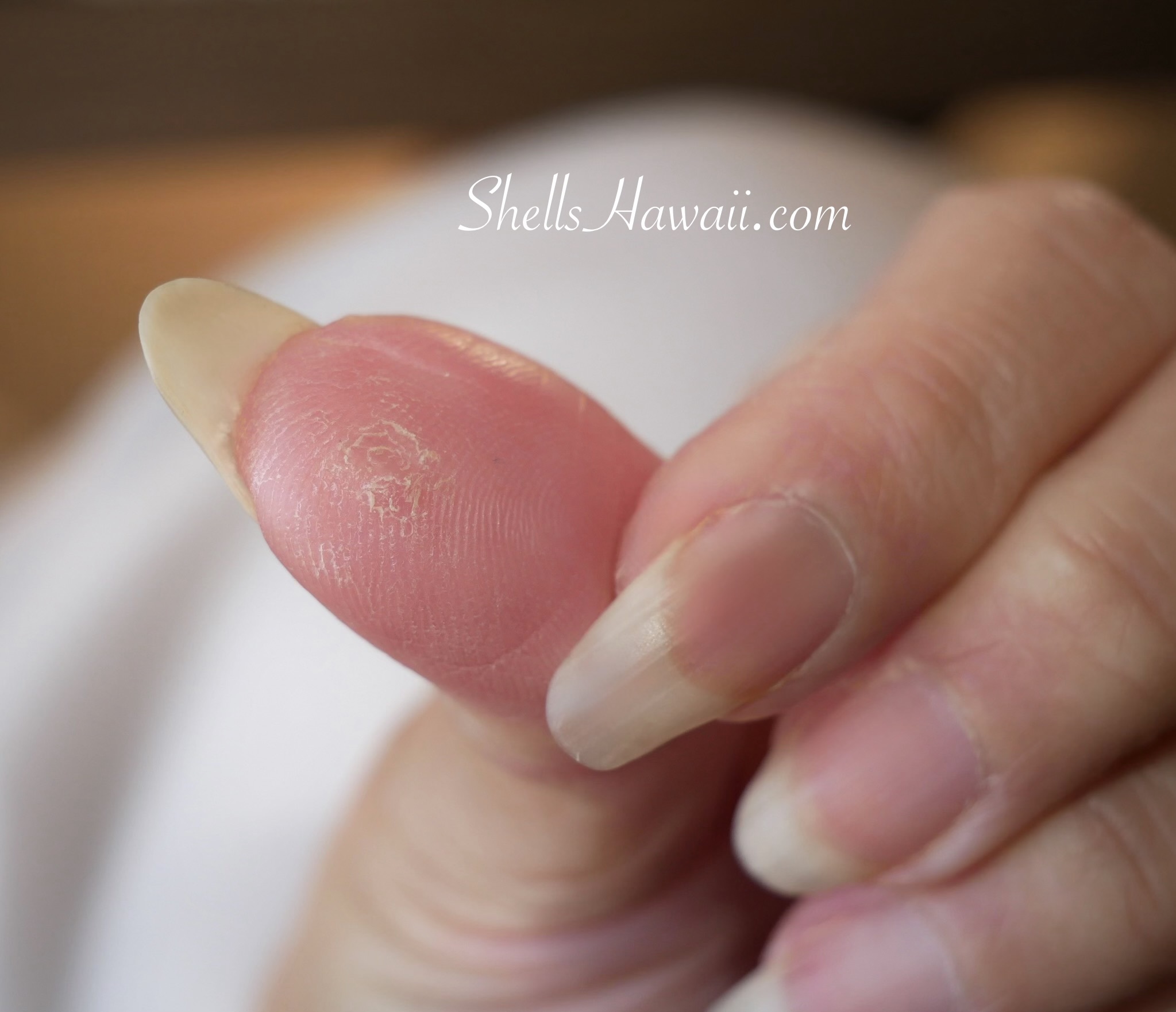
When Fingers Need a Break but Creativity Doesn’t
Most of the time, the finger that holds the shell ends up bruised, cracked, and sometimes sore enough to bleed. When it reaches that point, you simply can’t continue. You have no choice but to stop.
I once asked a friend who is a true lei master what they do to prevent this. Their answer made me laugh. They said to just keep going, that calcium will build up and help with swelling, pain, and even cracked skin. For me, it doesn’t work that way. I learned at a young age that no matter how much I work with my hands and fingers, they bruise, swell, and blister easily. The swelling always goes down after a few days, but it never turns into calcium.
That’s not ideal when I’m in full creation mode and ideas are flowing, because that usually means I need more shells to make everything come together. So if my fingers are bruised, I keep going right up until I physically can’t anymore. I know many creators do the same. We are all a bit of warriors when it comes to poking shells for this art.
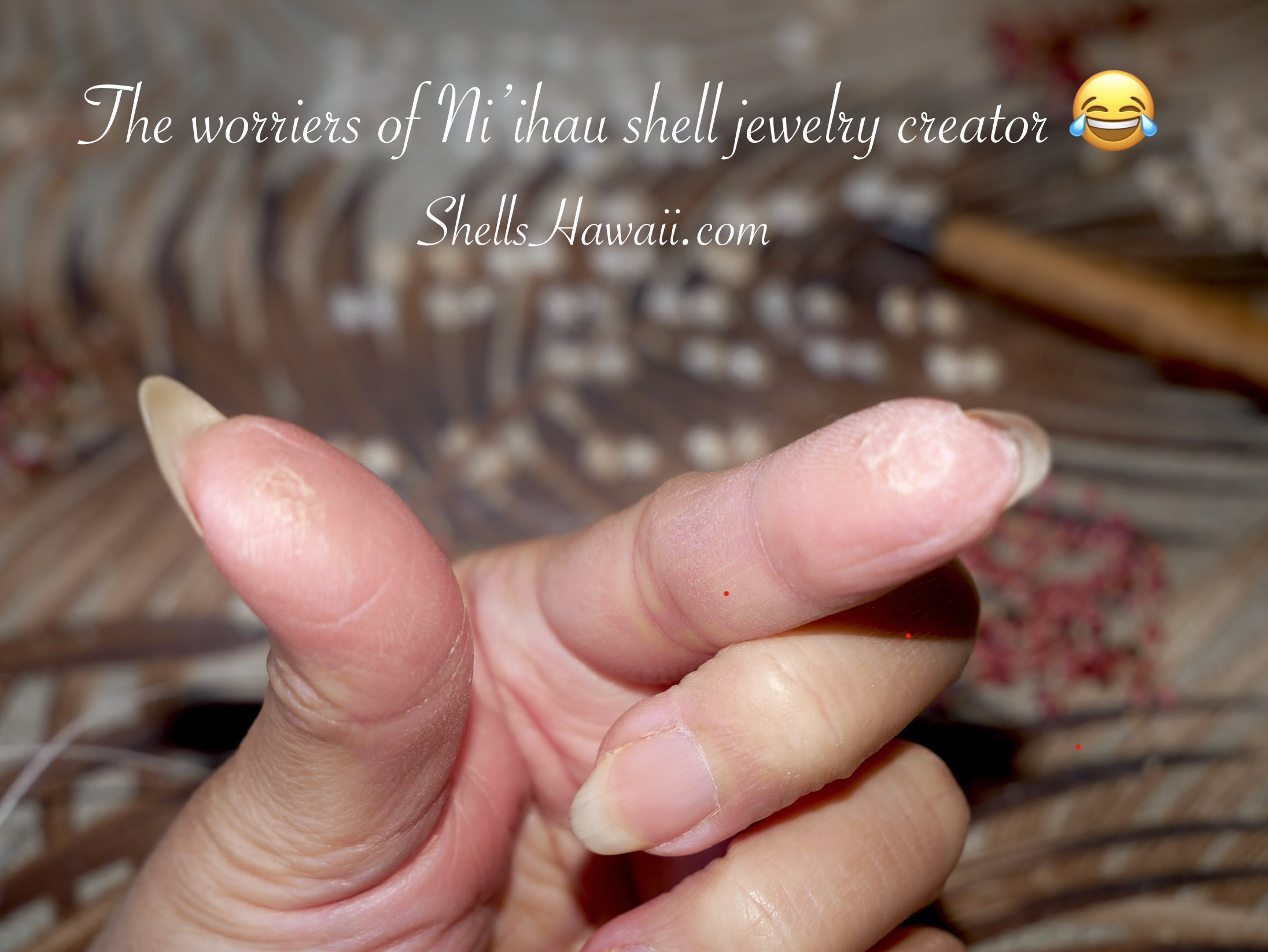
The Things I Try Before Finally Stopping
And when my skin starts to crack, if it’s only a little, I reach for lotion. You would think that’s a good idea. It’s not. It makes everything slippery, and suddenly I can’t hold the shell in place properly. So I rinse it off and go right back to where I was.
Then comes the next thought: It’s just a small crack. Just a bit of rough skin. Maybe I can sand it down, I tell myself. And yes — I actually mean sanding my own finger. Sitting there, carefully filing my skin so I could keep holding the shell and continue poking, as if that was the most reasonable solution at the time. When you read that, you might shake your head and laugh. Trust me, I did too — later.
More poking leads to more cracking, and at that point I start looking around and seriously wondering if superglue or something from a first-aid kit might work. And yes — I actually tried it. I put superglue directly on my finger, trying to hold the cracked skin together so I could keep going.
What happens next is exactly what you’d expect… and also not helpful at all. Superglue, or any kind of glue on skin, creates a clear, smooth coating. Which means your finger becomes slippery. The shell won’t stay in place. It just slides right off.
That’s when my next idea shows up. Here comes Mr. File. I file the glue down so my skin becomes rough enough again to hold the shell, and I continue poking. At this point, if my fingers or my body could talk — or better yet, run away — I’m pretty sure they would.
Eventually, reality wins. There’s no choice left but to stop and let my fingers heal for a few days.
And if my fingers are still too bruised to poke shells, I don’t stop working entirely. I shift to sorting imperfect shells, matching sizes, studying colors, or using any pre-poked shells I have and figuring out how to work with those first. Even when my hands need rest, my mind keeps creating, guided by deep focus (集中).
My Creative Goal for Each Year
Every year, I set a quiet personal goal for myself — to complete at least one big lei, along with a few new and more complicated lei designs. Sometimes it happens, sometimes it doesn’t, but that has always been my intention.
Whether I can complete those pieces depends on many things: the shell colors and sizes I have in my collection, the time it takes to carefully prepare and create them, and most importantly, whether my body is physically ready for that level of work. Creating a big lei takes a tremendous amount of time and shells to complete just one piece.
This is also why, when you see a piece you truly love, I always encourage you to purchase it when it feels right. Each design is one of a kind, and there may never be enough shells in the right colors, sizes, or quality to create the same piece again.
Looking Ahead: New Creations Coming Soon
As we move through the year, I warmly invite you to keep checking back to see what new creations begin to take shape. Creating Niʻihau shell jewelry is always a journey, and each piece develops in its own time.
So far this year, I’ve been working on new Kipona and Pikake style earrings — light, dainty, and super cute, created with tiny shells from Niʻihau, Hawaiʻi. These new pieces will be added to my website sometime this week.
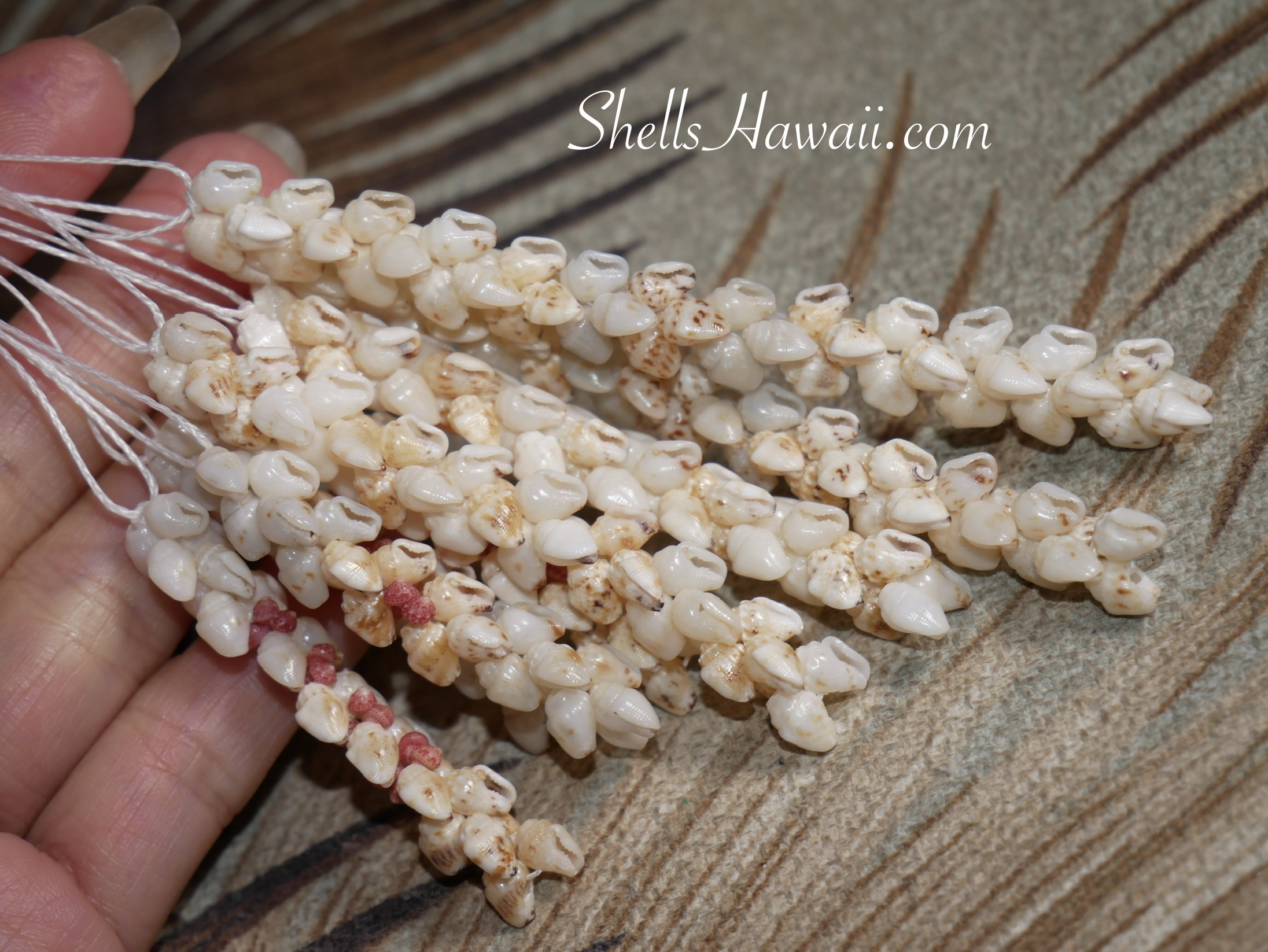
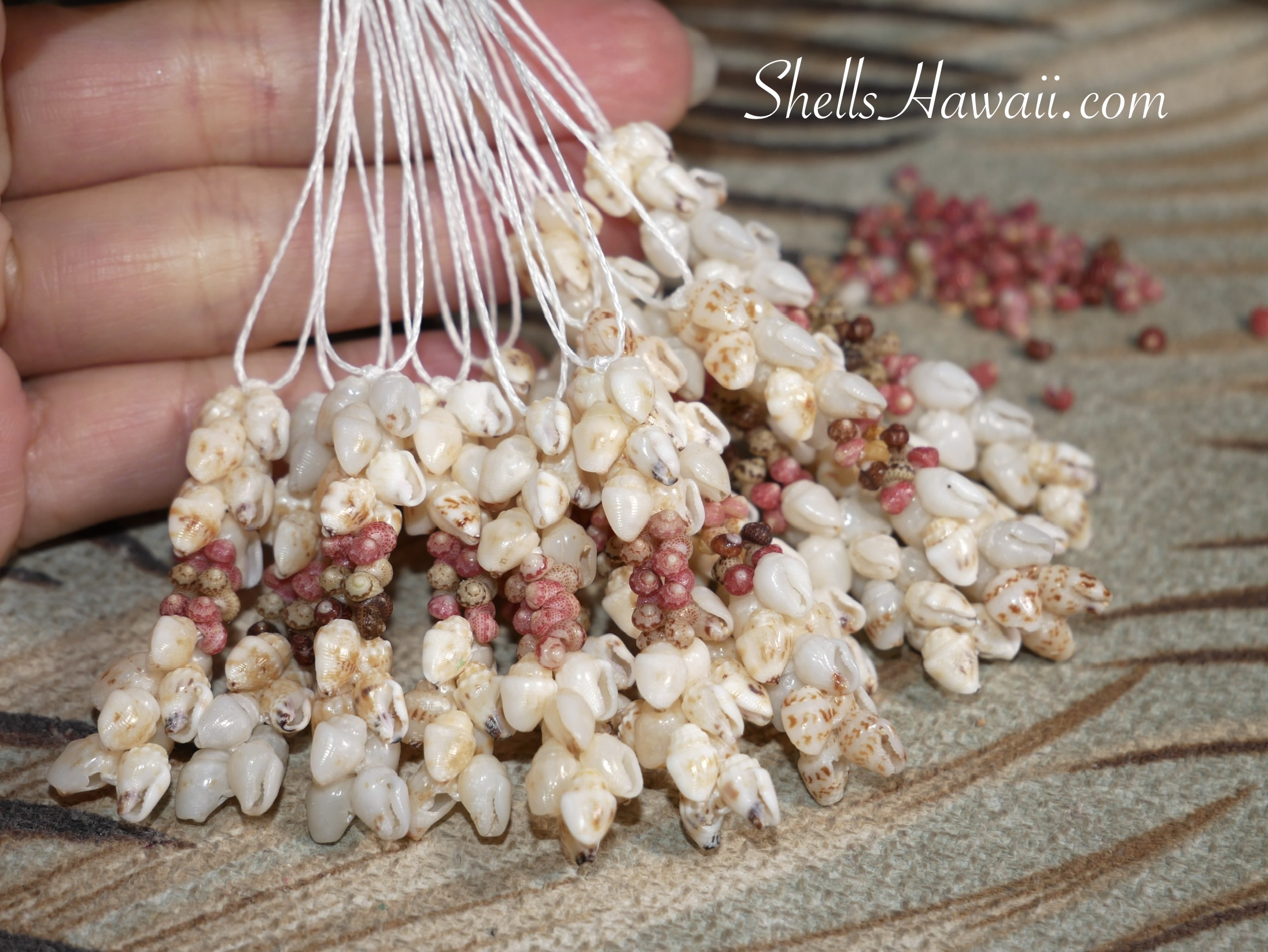
If you love handmade Hawaiian shell jewelry and appreciate the care behind each design — ハワイアンジュエリー created with tiny shells from Niʻihau, Hawaiʻi — I hope you’ll enjoy watching these new creations unfold.
Mahalo nui loa for all of your support and for taking the time to read my blogs. Your kindness, encouragement, and love for this art mean more to me than I can ever express.
With much aloha,
Janjira