 JPY
JPY


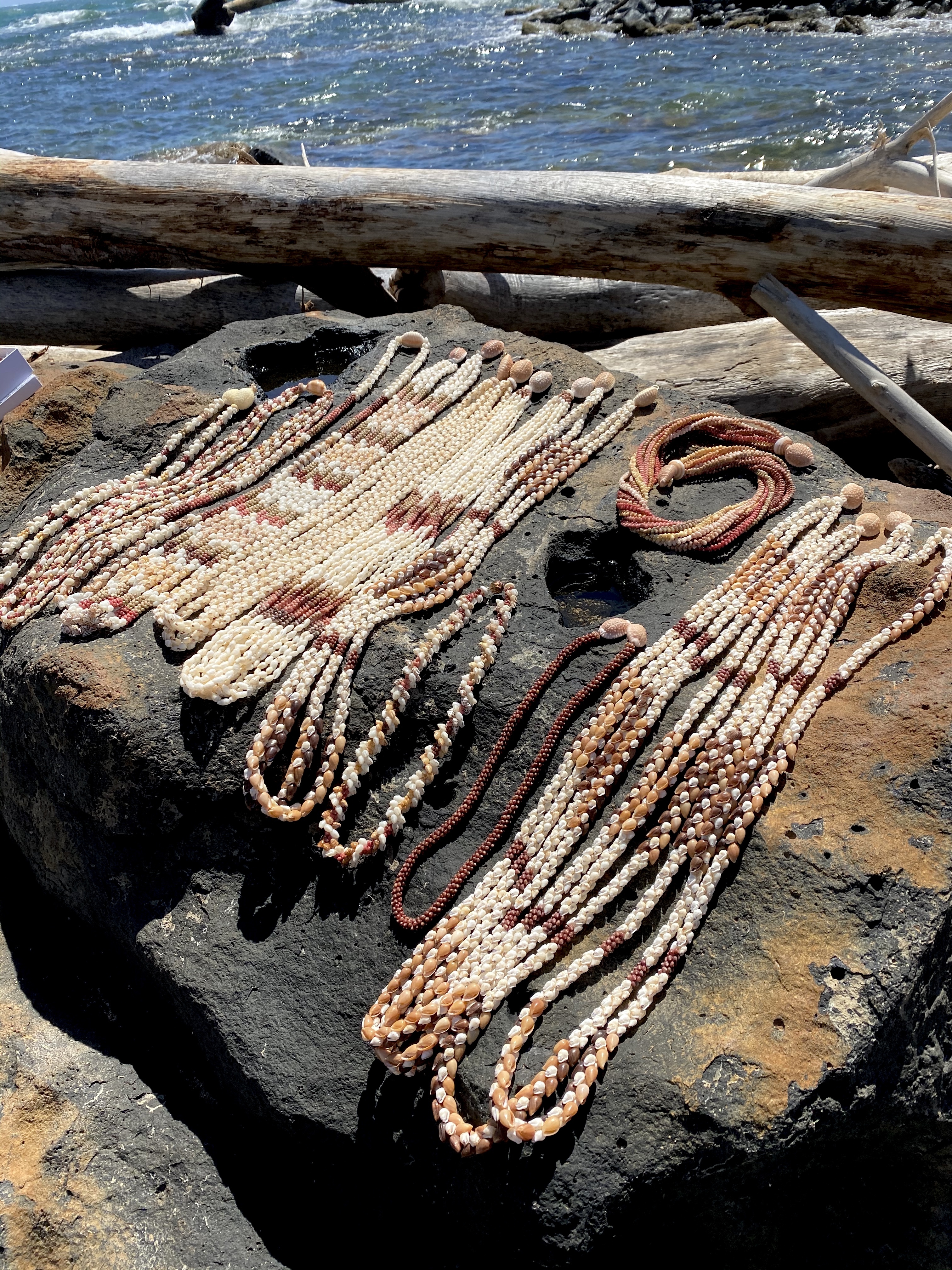
Aloha and welcome back,
If you’ve ever held a piece of Niʻihau shell jewelry in your hands, you already know it feels like much more than jewelry. Each piece carries history, patience, culture, and generations of Hawaiian tradition.
So where did this beautiful tradition begin?
It began on Niʻihau, a small privately owned island in Hawaiʻi where Hawaiian language and traditions continue to remain deeply rooted in everyday life. Along the shorelines of Niʻihau, some of the rarest, tiniest, and most colorful shells in the world can be found — especially the beloved Kahelelani shells known for their incredibly small size and beautiful natural colors.
Unlike the greener Hawaiian islands filled with flowers and freshwater, Niʻihau is dry and rocky in many areas. Over generations, the people of Niʻihau turned to the ocean to create their own beautiful lei using tiny seashells gathered carefully by hand along the shoreline.
Some Kahelelani shells are only a few millimeters in size, and even larger adult-sized shells are still extremely tiny. It can take an incredible amount of time and patience to collect enough matching shells in the right colors and sizes for a single lei or piece of jewelry.
For generations, Hawaiian families carefully gathered these shells by hand, cleaned and sorted them by size and color, and transformed them into beautiful shell leis and jewelry using techniques passed down through the ʻohana (family). Much of this knowledge was shared through experience and family teaching from one generation to the next.
In ancient Hawaiʻi, Niʻihau shell leis were treasured by aliʻi (Hawaiian royalty) and were seen as symbols of beauty, prestige, love, and deep connection to the land and sea. The tradition later became known around the world when Hawaiian royalty wore Niʻihau shell lei during important international events in the late 1800s.
Over time, rare and vibrant Kahelelani shells became so admired that some people began calling them the “Diamonds of the Pacific” because of their beauty, rarity, and delicate size.
Today, this precious tradition continues through the hands of Hawaiian shell artists and collectors who continue to preserve and respect the art form. Every Niʻihau shell lei or piece of jewelry carries many hours of work, learning, patience, and aloha behind it.
Hawaiian Cultural Note
Under Hawaiʻi state law, only jewelry made with authentic Niʻihau shells may legally be called “Niʻihau Shell Jewelry.” This helps preserve authenticity and protect the cultural legacy of this special Hawaiian tradition.
Over time, more people from around the world began discovering and appreciating the beauty of Niʻihau shell jewelry through travel, Hawaiian culture, local artists, collectors, and now the internet. Today, many people who love Hawaiian art and handmade jewelry also want to support local shell collectors, artists, families from Niʻihau and Kauaʻi, and creators like myself who deeply love and appreciate this beautiful tradition and the tiny shells used to create it.
In today’s modern world, information about Niʻihau shell jewelry has also become much easier to learn compared to many years ago. More classes, workshops, videos, and educational resources are now available for people who truly appreciate the art and would like to learn how these beautiful shell lei and jewelry pieces are created.
Creating Niʻihau shell jewelry has become one of the greatest honors of my life. Every shell has its own story, and every piece I create is made with appreciation, patience, and aloha.
Looking Ahead
In future blogs, I’ll continue sharing more about the shells themselves — including Kahelelani, Momi, Laiki, and Kamoa shells — along with the colors, styles, and techniques used in traditional Niʻihau shell jewelry.
Thank you so much for reading and allowing me to share a small part of this beautiful Hawaiian tradition with you.
With aloha always,
Janjira
ShellsHawaii.com