 JPY
JPY


Aloha everyone, and welcome back to ShellsHawaii blogs.
After exploring the warm yellow tones of the Momi Lenalena family in our last blog, today we’re continuing our journey through the beautiful world of Momi shells by looking at one of the most treasured color families of all.
The golden Momi shells have long been loved by collectors and creators of Niʻihau shell jewelry. Their shades can range from soft honey tones to deeper caramel colors, each one glowing like a tiny drop of sunlight shaped by the ocean. Their beauty feels warm, timeless, and full of natural charm.
Within this golden family lives one of the rarest treasures — Momi Kahakaha (striped Momi shells).
These beautiful shells are naturally patterned with delicate stripes that set them apart from other Momi colors. Finding them is never easy. Sometimes only a very small handful appear among thousands of shells collected, making each one feel truly special. Because of their rarity, Momi Kahakaha shells are especially treasured in Niʻihau shell jewelry, admired for their beautiful markings and the unique character they bring into every design.
Let’s Get to Know Each Golden Kahakaha Shade
When we look closely at the golden Momi Kahakaha family, we begin to notice how naturally varied these shells can be. They exist along a beautiful spectrum — from light gentle striping to bold, powerful patterns.
Some Kahakaha shells appear soft and creamy with faint stripes. Others deepen into warm golden tones with more defined markings. The rarest develop dark, high-contrast striping that immediately stands out. These differences are formed naturally by the sea.
Each shade carries its own Hawaiian name, chosen not only to describe how the shell looks, but also the feeling it carries. While all Kahakaha shells share the beauty of natural striping, their contrast, depth, and strength can vary greatly. Understanding these differences helps collectors and creators appreciate why certain shells are rarer and more difficult to find.
Below, we’ll take a closer look at each shade — from the light ʻĀhiehie, to the classic medium Kahakaha, to the bold and powerful Ikaika.
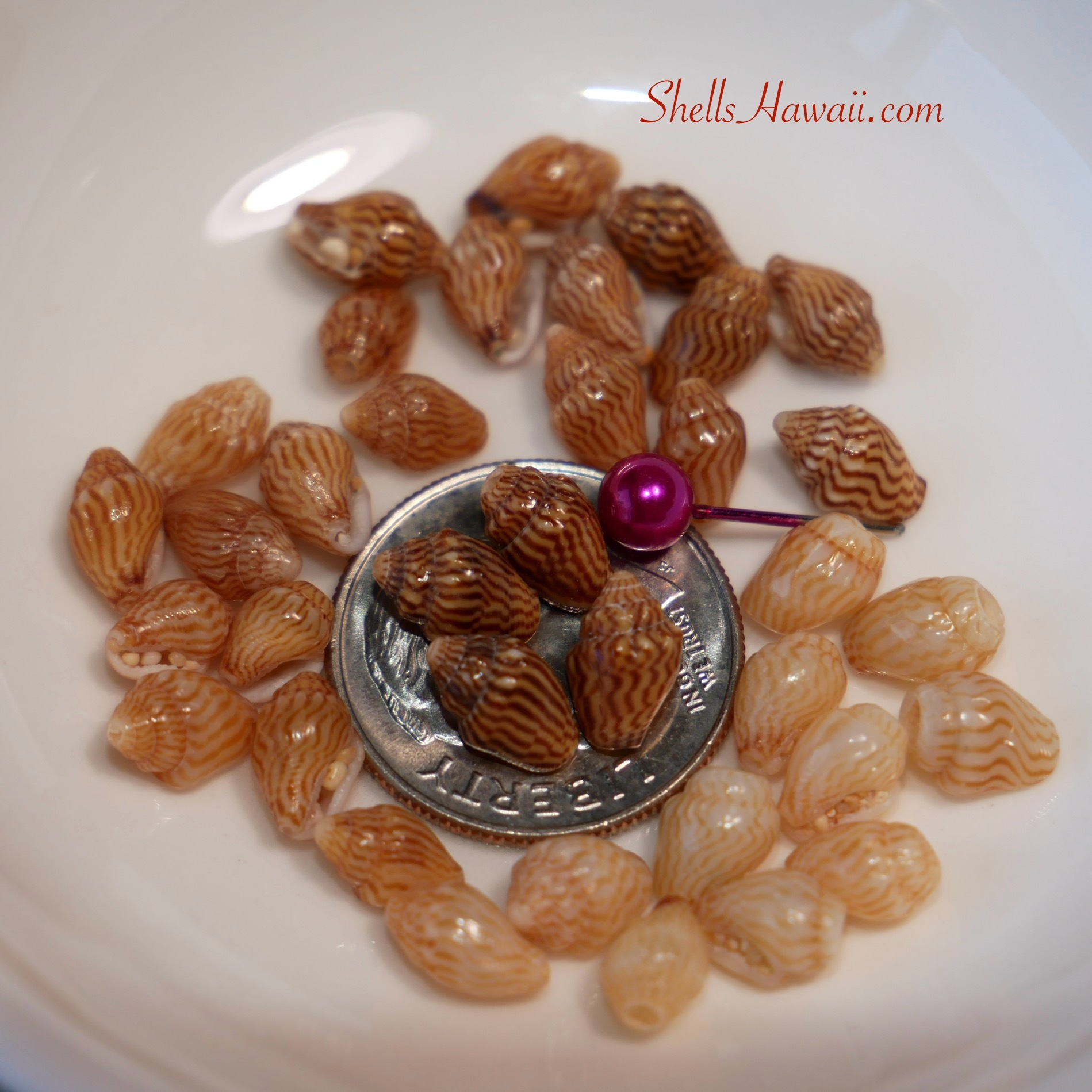
Momi Kahakaha ʻĀhiehie — Light Striped Golden Momi
In Hawaiian, ʻāhiehie means light, gentle, or soft — and this shade is the lightest expression of the golden Kahakaha family. These shells carry a soft honey to creamy golden base, with striping that feels faint and whisper-like rather than bold.
In the photos, the ʻĀhiehie shells appear noticeably lighter than other Kahakaha shades. Their stripes are present, but subtle, blending softly into the shell instead of standing out with strong contrast. Some shells may even appear almost creamy at first glance, with the striping only becoming visible when viewed closely.
Because only a small number of Momi shells develop striping this light and delicate, Momi Kahakaha ʻĀhiehie is rare and highly treasured. Their softness brings a calm, airy elegance to Niʻihau shell jewelry, especially when paired with deeper golden Kahakaha shades.
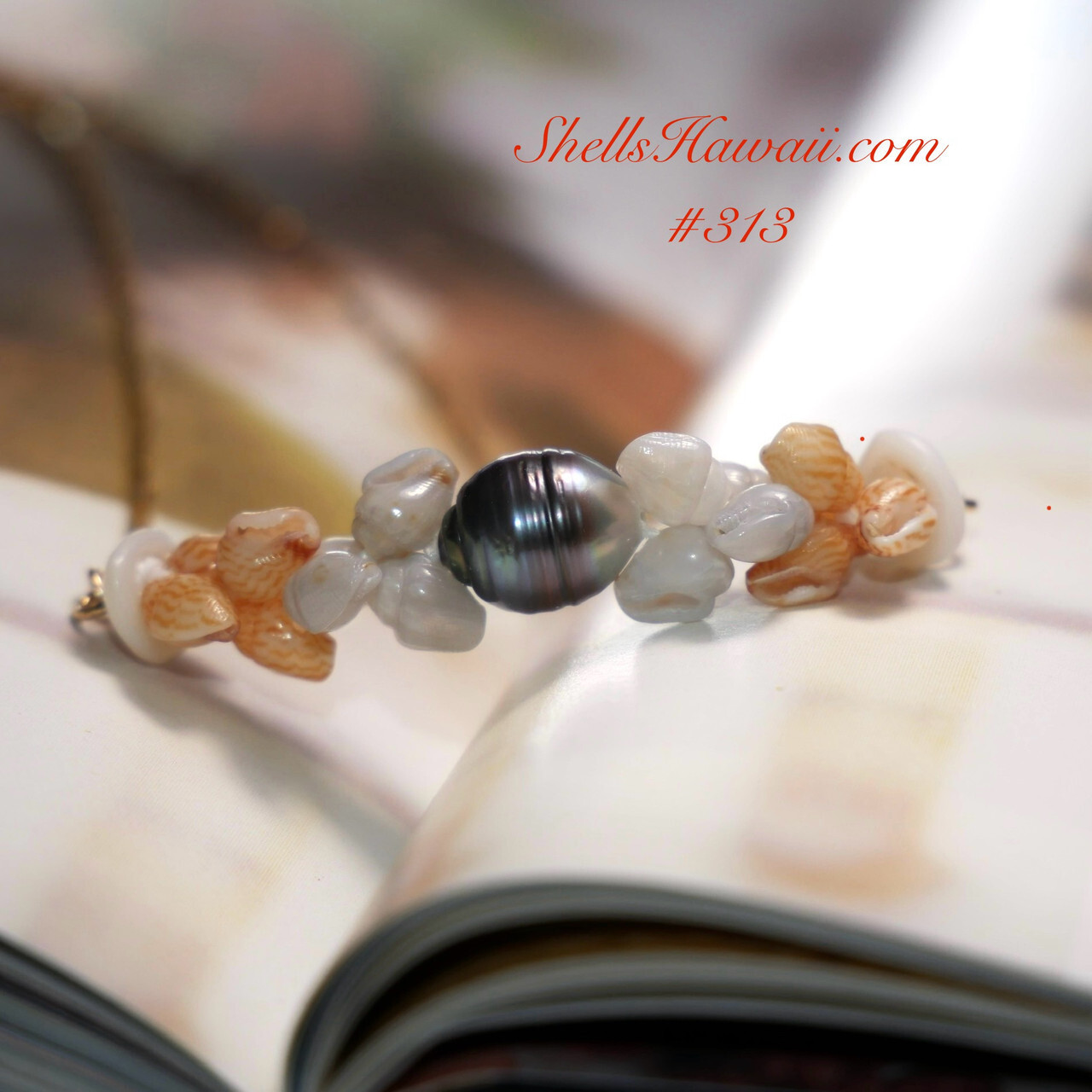
Momi Kahakaha — Medium Golden Striped Momi
The word kahakaha in Hawaiian means striped or patterned, and this shade represents the balanced, classic expression of the golden Kahakaha family.
These shells carry a true golden to warm honey base, with striping that is clearly visible and evenly defined. In the photos, medium Kahakaha shells show more contrast than ʻĀhiehie, yet their patterns remain smooth and harmonious rather than bold or heavy. The stripes stand out naturally, creating a warm honey-like richness without overpowering the shell.
Medium Kahakaha shells are rare and sit at the center of the Kahakaha spectrum. As the golden color deepens and the striping becomes stronger and more complete — moving toward Ikaika — the shells become increasingly difficult to find. The more refined and balanced the color and pattern become, the rarer and more valuable the shells are.
When you see a full strand or complete lei made entirely from well-developed Kahakaha shells, it often reflects many years of careful collecting. Both the creator and collector may spend a very long time gathering enough matching shells to complete a single lei.
Their presence reflects not only beauty, but also dedication, patience, and deep respect for the shells and the tradition behind them.


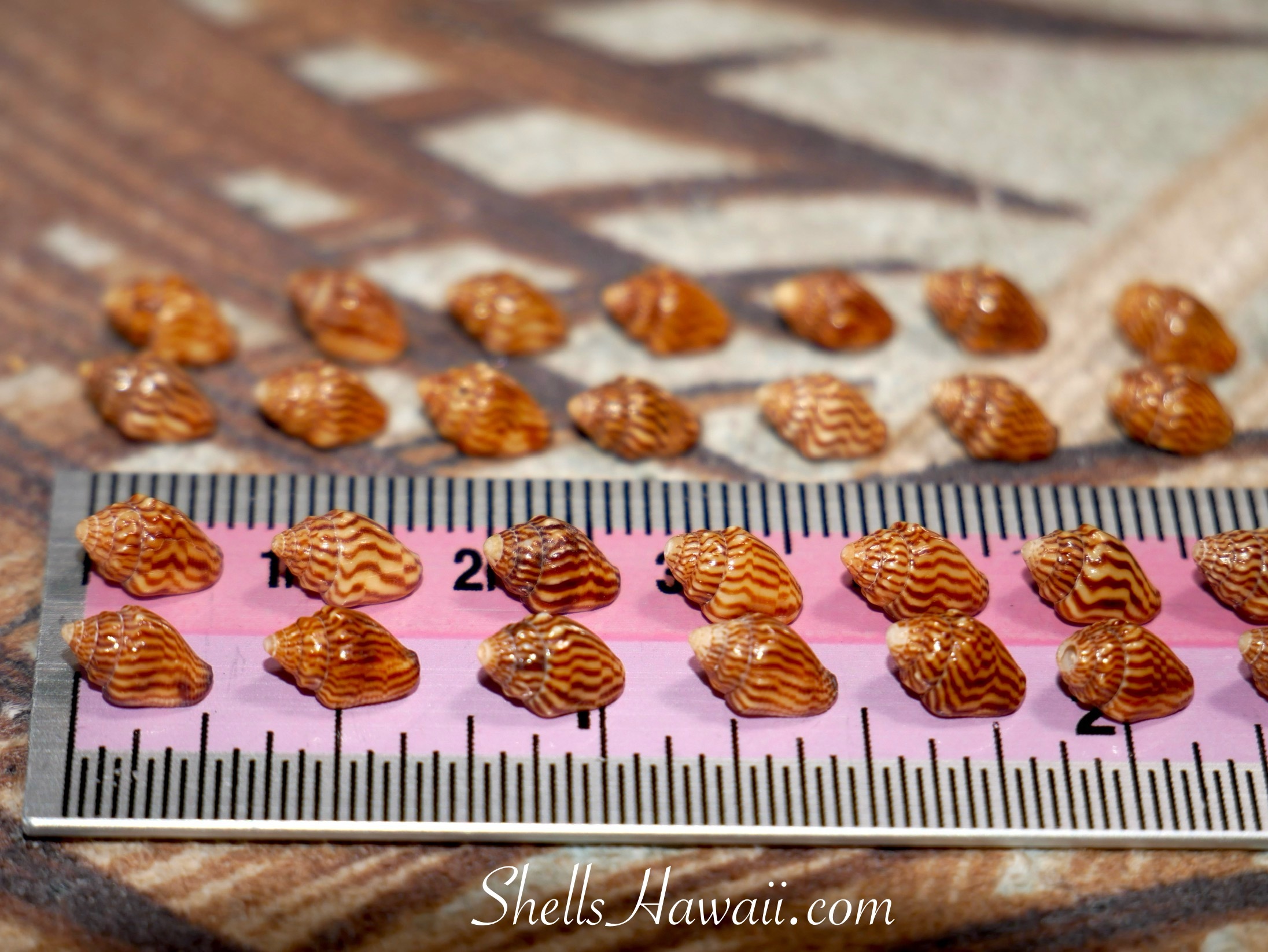
Momi Kahakaha Ikaika — Dark Striped Golden Momi
In Hawaiian, ikaika means strong, bold, or powerful — and this shade represents the most intense and fully developed expression of the golden Kahakaha family.
Momi Kahakaha Ikaika shells carry deep caramel to rich dark golden bases marked by strong, bold, high-contrast striping. In the photos, the stripes are immediately noticeable — darker, thicker, and more dominant than in other Kahakaha shades. The contrast feels powerful and grounded rather than soft or gentle.
These shells are extremely rare. Only a very small number of Momi shells naturally develop striping this strong, complete, and visually balanced. As the golden color deepens and the striping becomes more refined and fully formed, the shells become significantly harder to find.
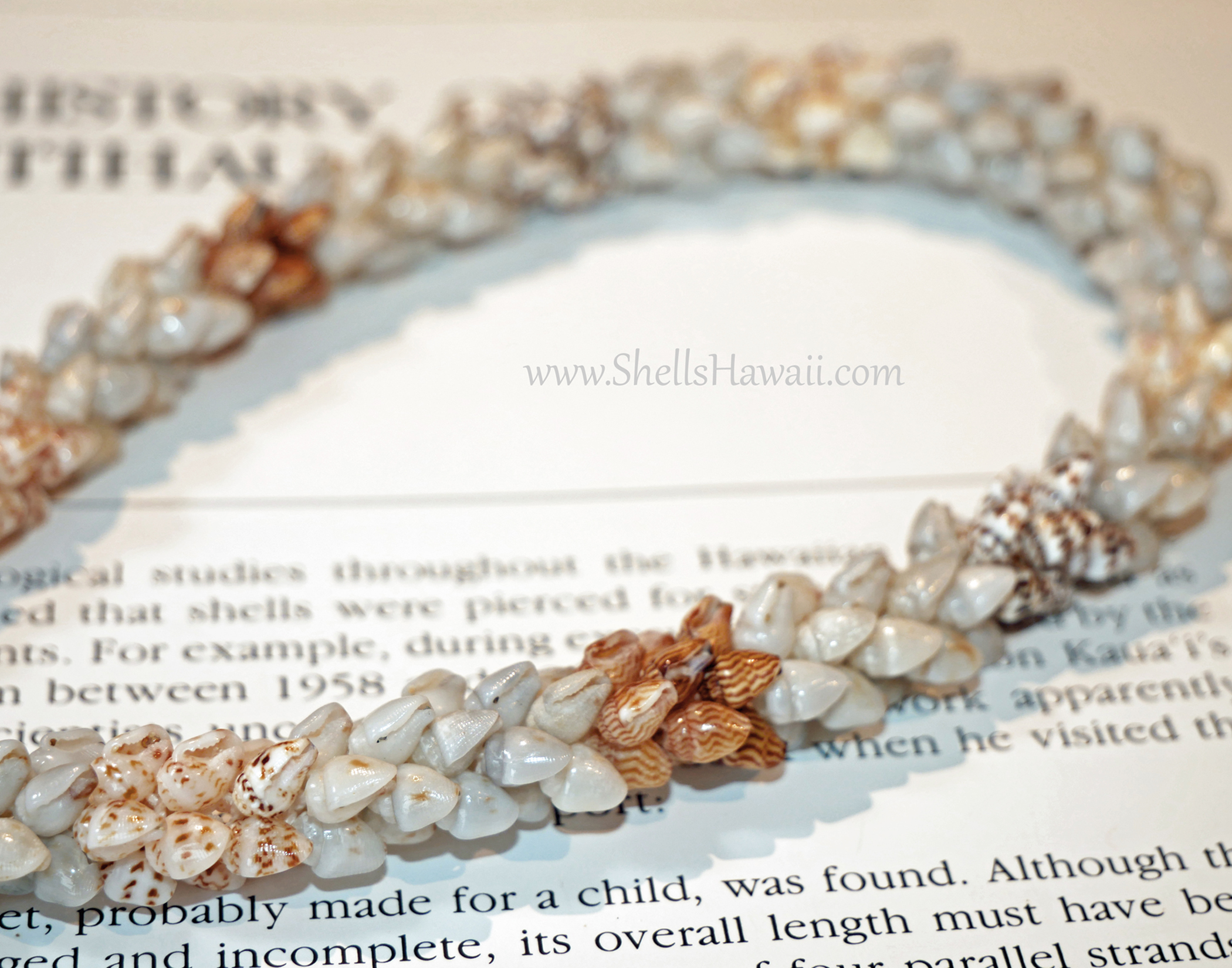
When you see a full strand or complete lei made entirely from Kahakaha Ikaika, you immediately know it represents many years — sometimes decades — of careful collecting. Matching shells with striping this strong and complete are very difficult to gather in enough quantity, size, color depth, and pattern strength to complete a single lei.
Because of this rarity, many long complete strands of Kahakaha Ikaika are found only in museums or private collections, and are sometimes worn by Hawaiian musicians or cultural practitioners. These pieces are not simply jewelry — they reflect patience, dedication, and deep respect for the shells and the tradition behind them.
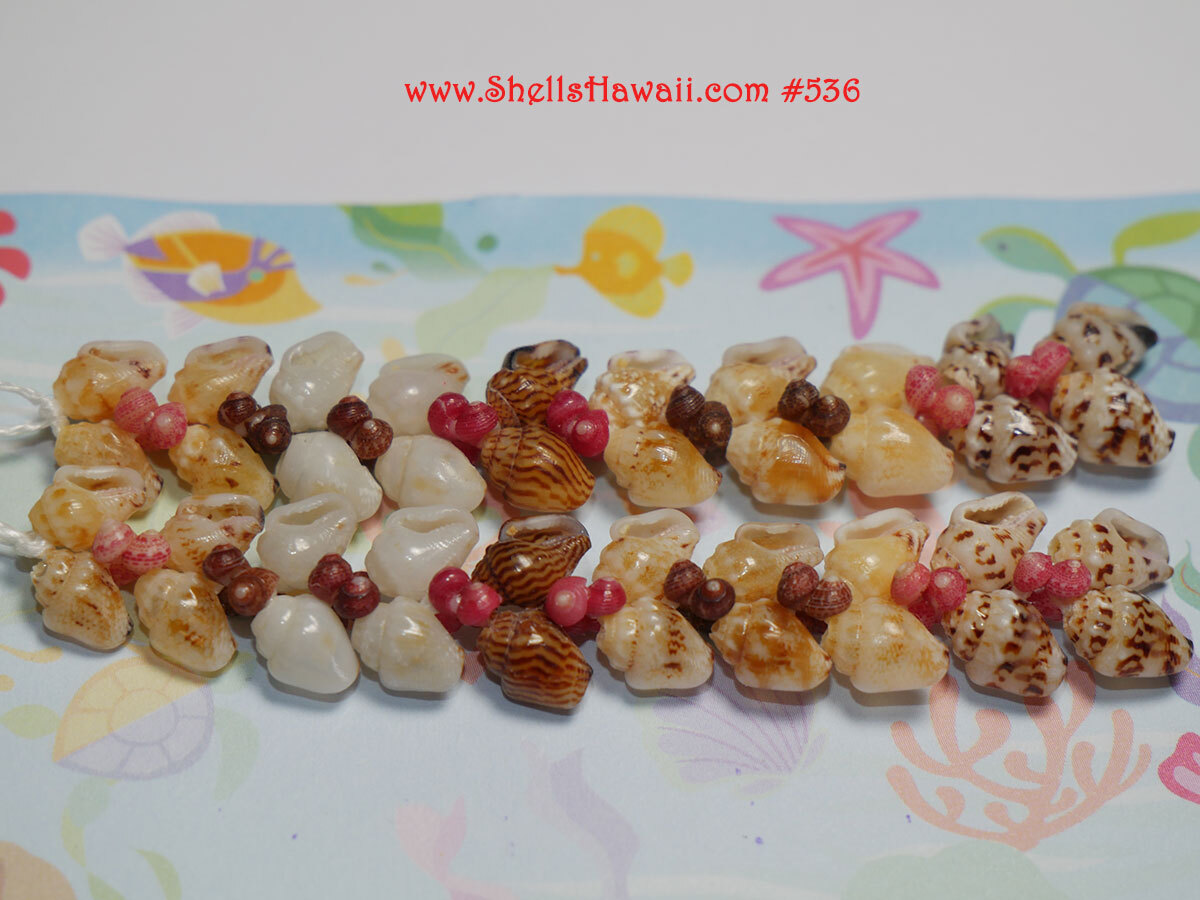
These photos show golden Kahakaha Momi shells with natural striped patterns. Shells with stronger striping and deeper golden tones are much rarer to find and are highly treasured in Niʻihau shell jewelry, including traditional designs such as Coconut style Momi shell lei and Heleconia style shell earrings.
Closing Thoughts on the Golden Kahakaha Family
Today, we learned more about the beautiful and rare golden Kahakaha family of Momi shells. The next time you see these special striped golden shades online or used in Niʻihau shell jewelry, you’ll have a better vision of how rare and difficult these beautiful Momi shells are to collect and match.
From the soft lighter striping of ʻĀhiehie to the deep bold patterns of Ikaika, each shell carries its own natural beauty shaped by the ocean over time. Because of their rarity, patience and years of collecting are often needed before enough matching shells can come together to create a single piece of jewelry or lei.
I hope this blog helped you appreciate these beautiful shells and the art of Niʻihau shell jewelry even more. Thank you so much for spending a little time with me here on ShellsHawaii blogs, and I hope to see you again in my next blog.
With aloha,
Janjira