 USD
USD


Welcome Back, Everyone!
In our last blog about Niʻihau shell styles, I shared what the Poepoe style is and how it looks when different techniques and numbers of strands are used. Today, we’re taking that learning one step further by focusing on just one variation — the two-strand Poepoe style — and how it looks when used in Niʻihau shell jewelry.
Now let’s dive into one of the most unique and recognizable styles of Niʻihau shell lei sewing: Lei Kui Poepoe using two strands, made with Kahelelani shells.
Haha… I can almost see the curious look on your face.
Two strands? Maybe easier than four?
Nope — it’s actually the opposite.
But for today, let’s set difficulty aside and focus only on understanding the look.
Two-strand Poepoe style is exactly what the name suggests — a Poepoe design created with two strands, giving the piece its familiar rope-like presence. You’ve probably seen photos or descriptions like “Poepoe-style shell lei,” earrings, or bracelets and thought, Okay… Poepoe is Poepoe.
In Hawaiian, Poepoe refers to a rope-like shape, and just like ropes in everyday life, each one can look a little different.
Yes, in Hawaiian, Poepoe describes a rope shape. But a rope doesn’t always look the same, right?
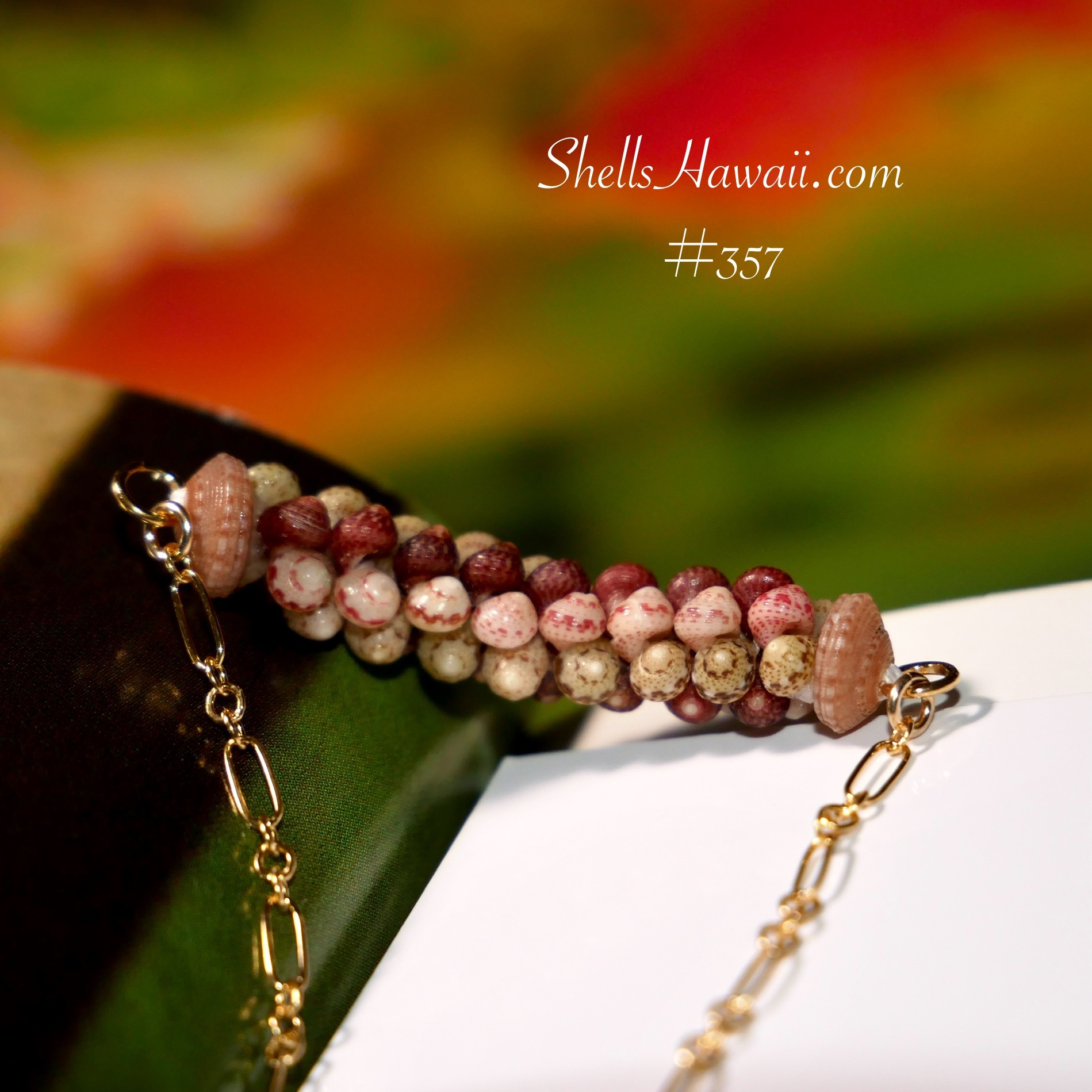
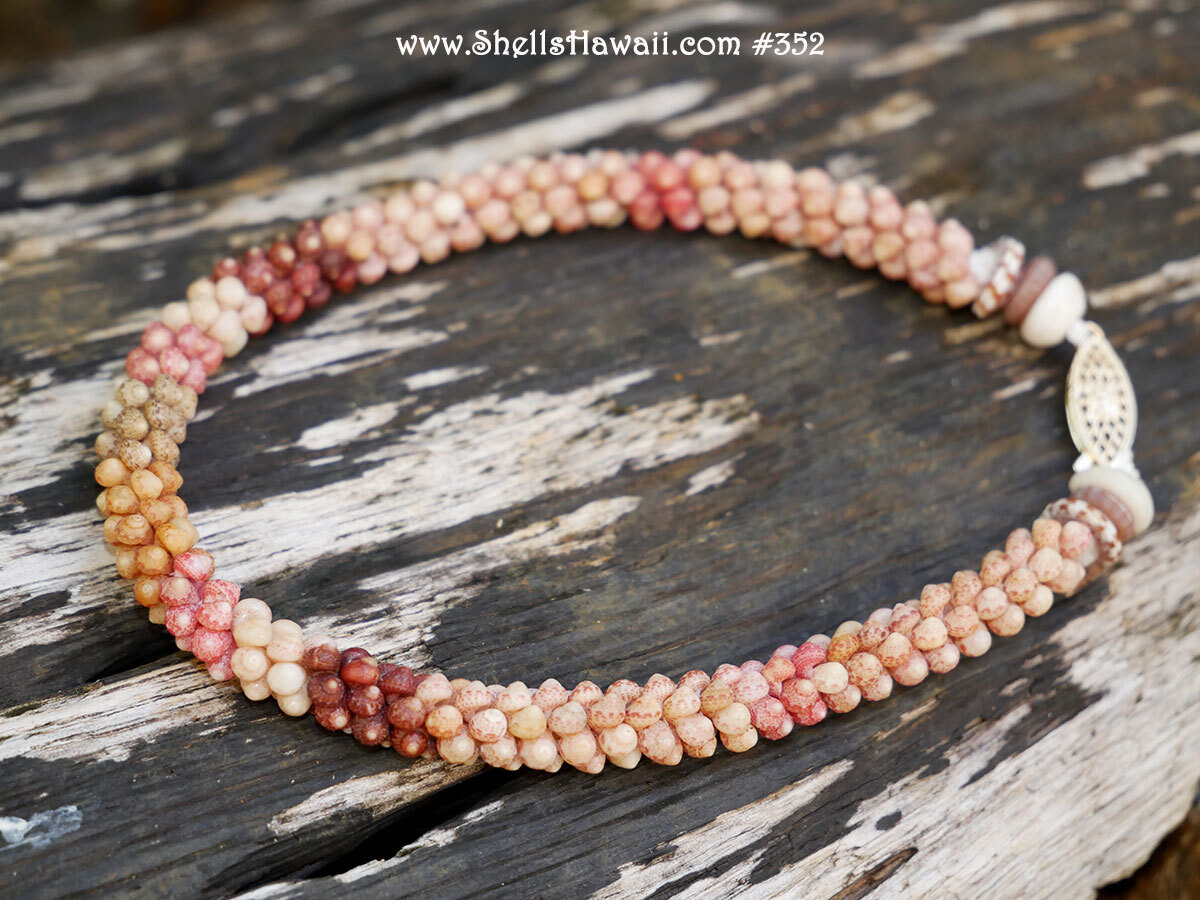
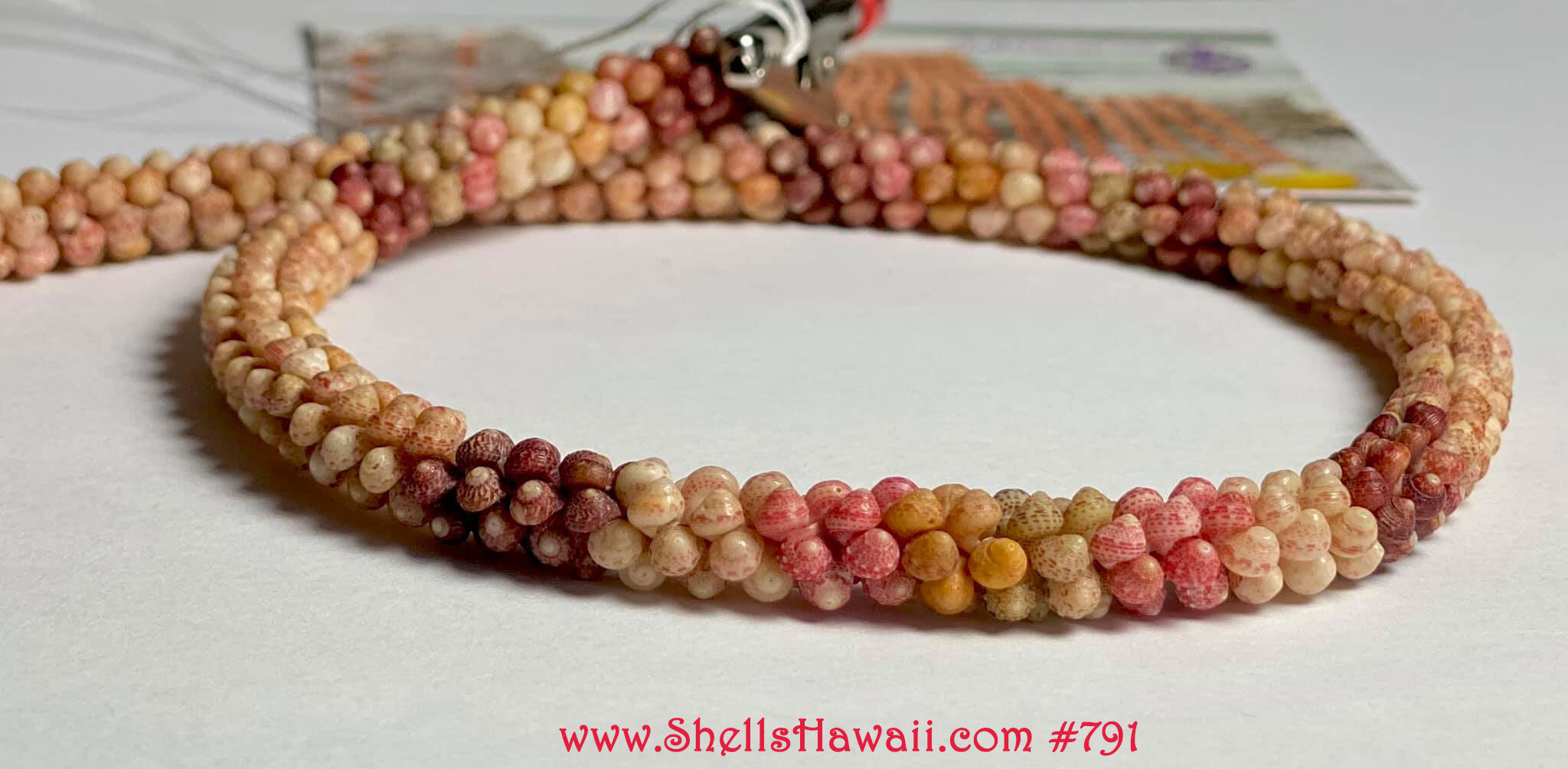
With two strands, the Poepoe does not form a round shape. Instead, it creates a square structure. The finished piece shows six rows of shells, all aligned together. Once you realize this, your memory clicks — Yes, I’ve seen that before!
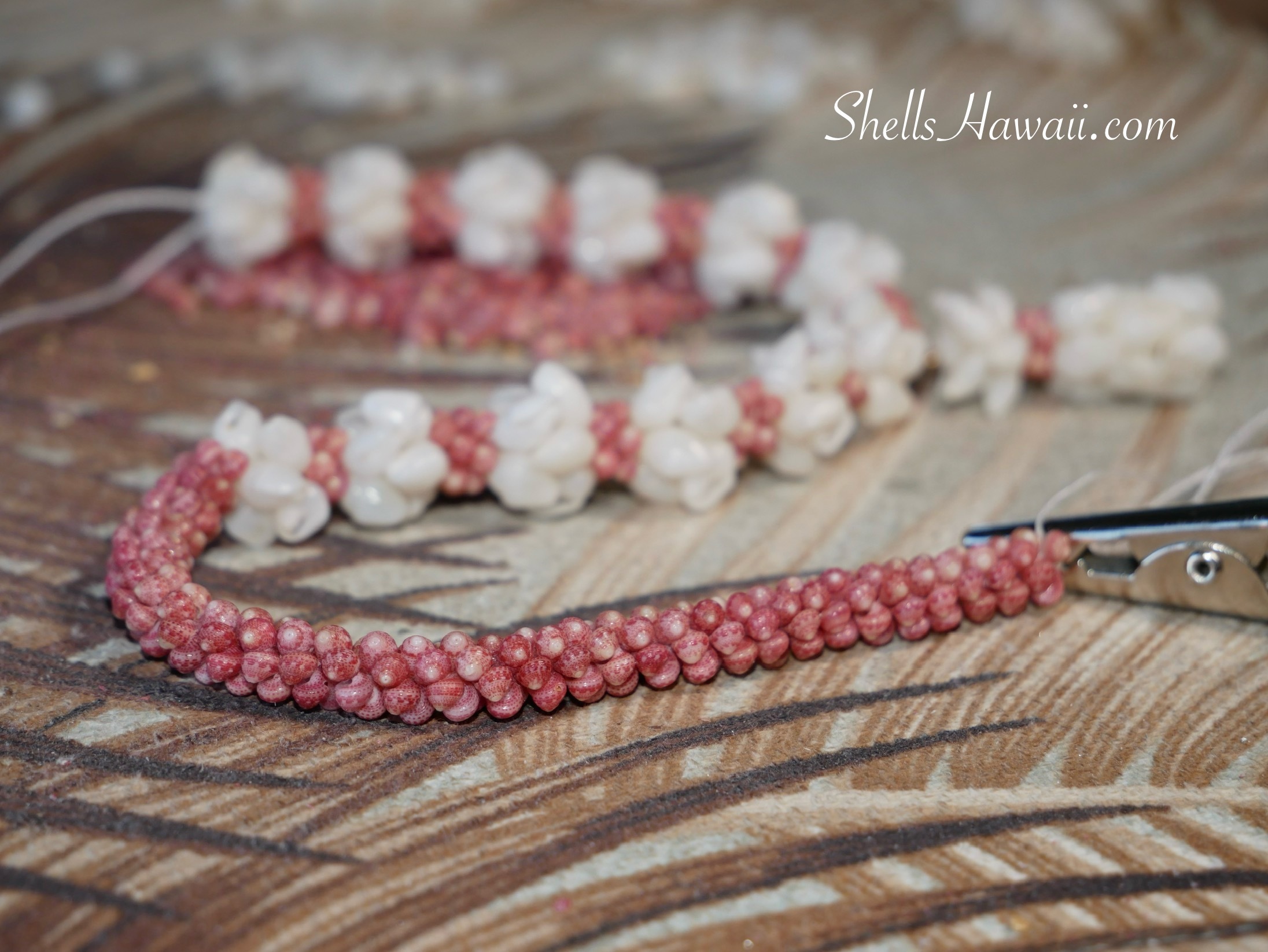
The Beginning of the Struggle
When I first tried making a Poepoe-style lei, I started with four strands, just like the photos I had seen online. But then I noticed something confusing — some Poepoe pieces looked completely different. They weren’t round at all. Instead, they appeared square, with six neatly aligned rows.
I remember reading the description closely. It said, “Two-strand Poepoe"
That’s when I really paused. Just two strands? And how they even do it with two strands. I honestly had no idea where to begin.
What I eventually came to understand is that this design is incredibly unique, but also very demanding. Two-strand Poepoe requires shells in near-perfect condition — almost identical in size, sitting cleanly next to one another. A shell that’s slightly too big can tilt a row, while one that’s too small can leave gaps. That level of precision is what makes two-strand Poepoe so challenging — and also what makes it so rewarding when it finally comes together.
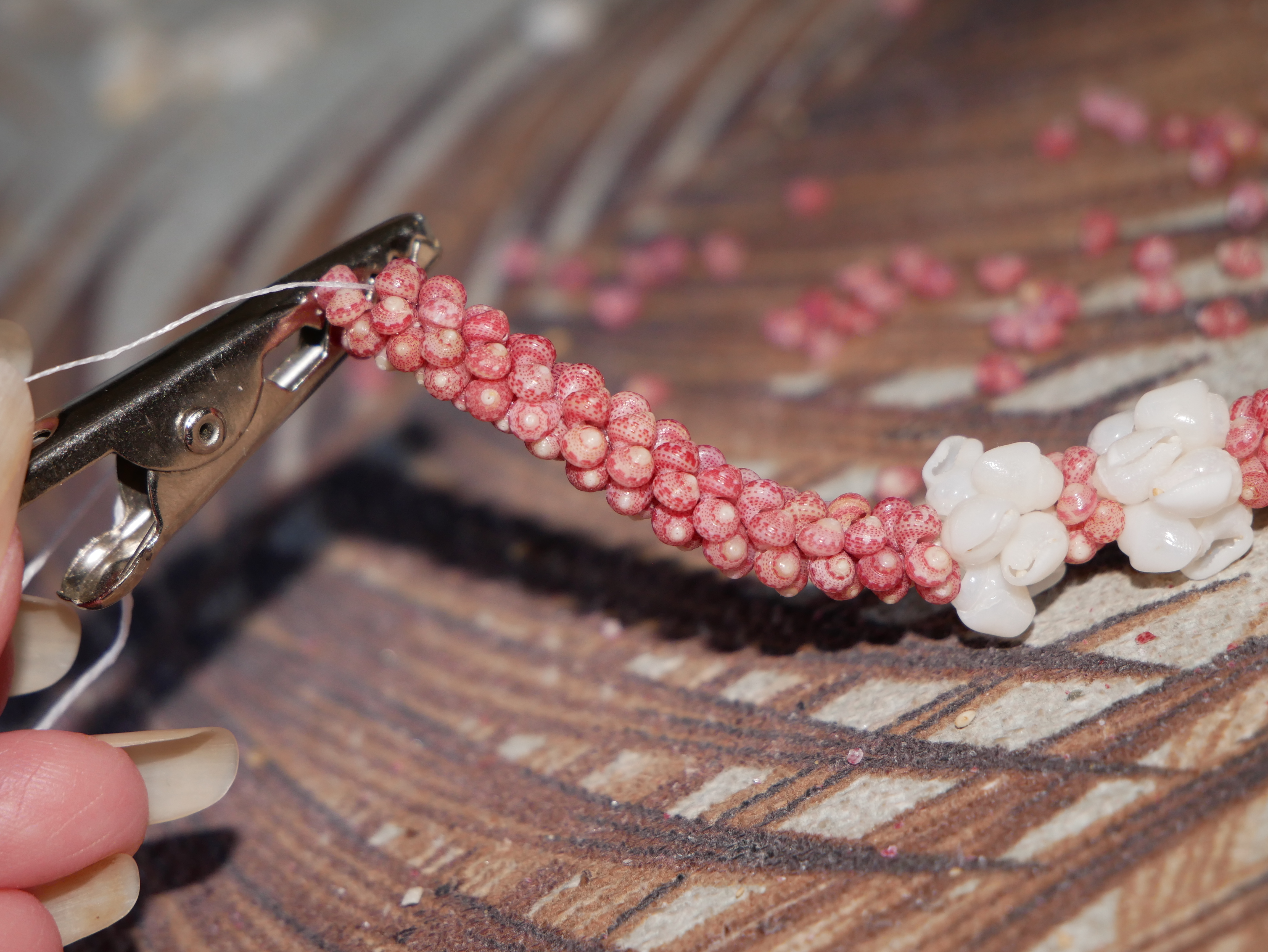
Close-Up of Two-Strand Poepoe Showing Its Square, Structured Form
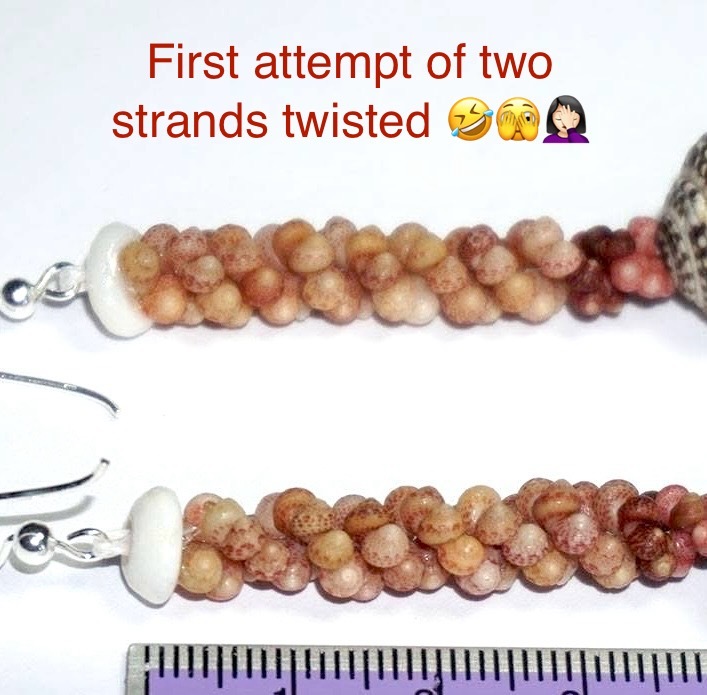
The First Attempt — Let’s Just Say… It Wasn’t Pretty
I grabbed two threads, added some shells to each side, and tried twisting them together. But which way do you twist? I tried both directions — loosely, tightly, every way I could think of. I kept twisting, untwisting, and re-tying it again and again.
The result was a complete disaster.
It looked nothing like the elegant square shape I had imagined. I stared at it and laughed to myself because it was so far from what I’d seen in photos. I remember asking myself, How do they make the shells look so perfectly square?
The Frustration Years and the Breakthrough
I spent many long days trying to figure it out. I never gave up, but I also never quite got it right. Even after two years, I still couldn’t find anyone willing to explain what I was doing wrong. Eventually, I had to step back and take a break from trying to create the two-strand Poepoe style. Even then, I didn’t stop learning.
Instead, I focused on improving my Pikake style — practicing, refining my skills, and learning to better understand the shells themselves. By my fourth year of making Niʻihau shell jewelry, I felt ready to try again. Around that time, a kind older artisan finally agreed to look at my work. He told me,
“I won’t teach you how to make it — but I’ll tell you what you’re doing wrong.”
When he looked at my piece, he smiled and said,
“You’ve been poking the holes wrong this whole time,”
then showed me the correct angle.
I went home and practiced for many hours, focusing only on getting the poking right. When I strung my shells again and twisted them together — just like before — something changed. The shape finally began to form. The answer was clear: the poking.
Even then, it wasn’t perfect. The rows still wanted to twist, and sometimes I couldn’t get very far before the pattern went crooked. But this time, I knew I was on the right path. With more patience and practice, everything slowly came together. I eventually completed my first 7.5" Poepoe-style bracelet. From that day on, I kept improving. I’m still learning. Still practicing. And I’ll never forget his kindness — mahalo from my heart.
Here is my very first Poepoe-style bracelet — the moment everything finally came together after years of practice, mistakes, and learning.
What I learned over time is that this design takes a lot of practice, along with many frustrating moments, year after year, before it truly starts to come together. But I never gave up — I kept trying, learning, and slowly improving along the way. And honestly, that understanding didn’t come all at once. It began right at the very beginning — with my very first attempt.
To Answer Your Questions
Creating a two-strand twisted Poepoe style requires far more shells than most people expect, and they all need to be in excellent condition to achieve this look. It also takes a tremendous amount of practice, especially if you’re aiming for clean lines, balance, and consistency.
I’ll be honest — I can be very hard-headed when it comes to quality. Even today, I often redo the same piece more than once. That attention to detail is just part of who I am and how I approach my work.
If you want to try this style but don’t plan on chasing precision, it may bring more frustration than joy. That’s why I usually recommend starting with the four-strand Poepoe style tie before attempting the two-strand twisted version. I learned this the hard way.
Sometimes we see someone demonstrate a technique and think it looks simple — but what we’re really seeing is years of practice behind that ease. I’ve been fooled by that many times myself, laughed at myself, and started over more than once.
Of course, this is just my personal experience. Maybe you’ll pick it up faster than I did. And if you find someone willing to guide you closely, you might master it sooner. But for most of us, it’s a long journey — filled with patience, trial and error, and eventually the joy of watching beauty come together strand by strand.
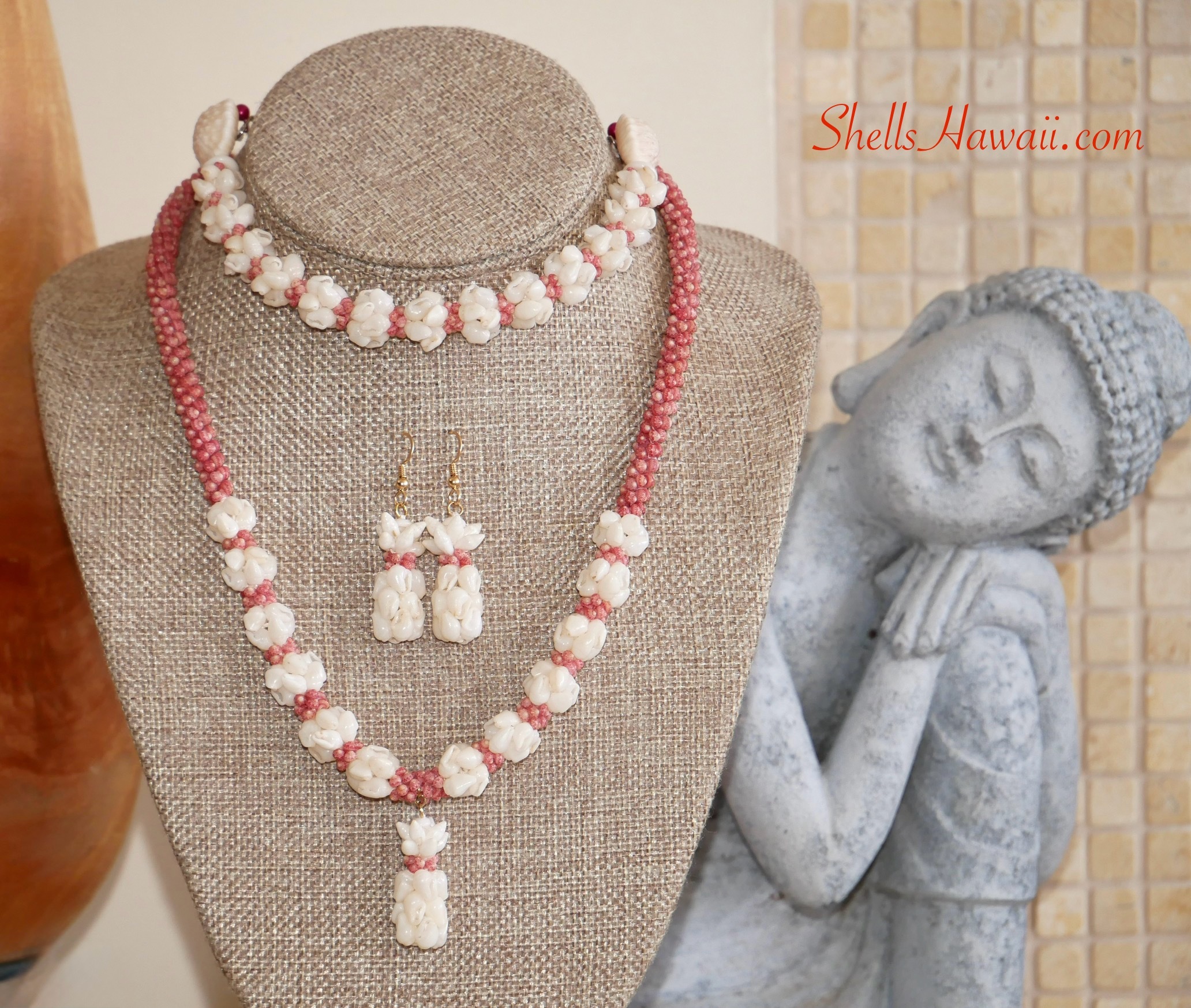
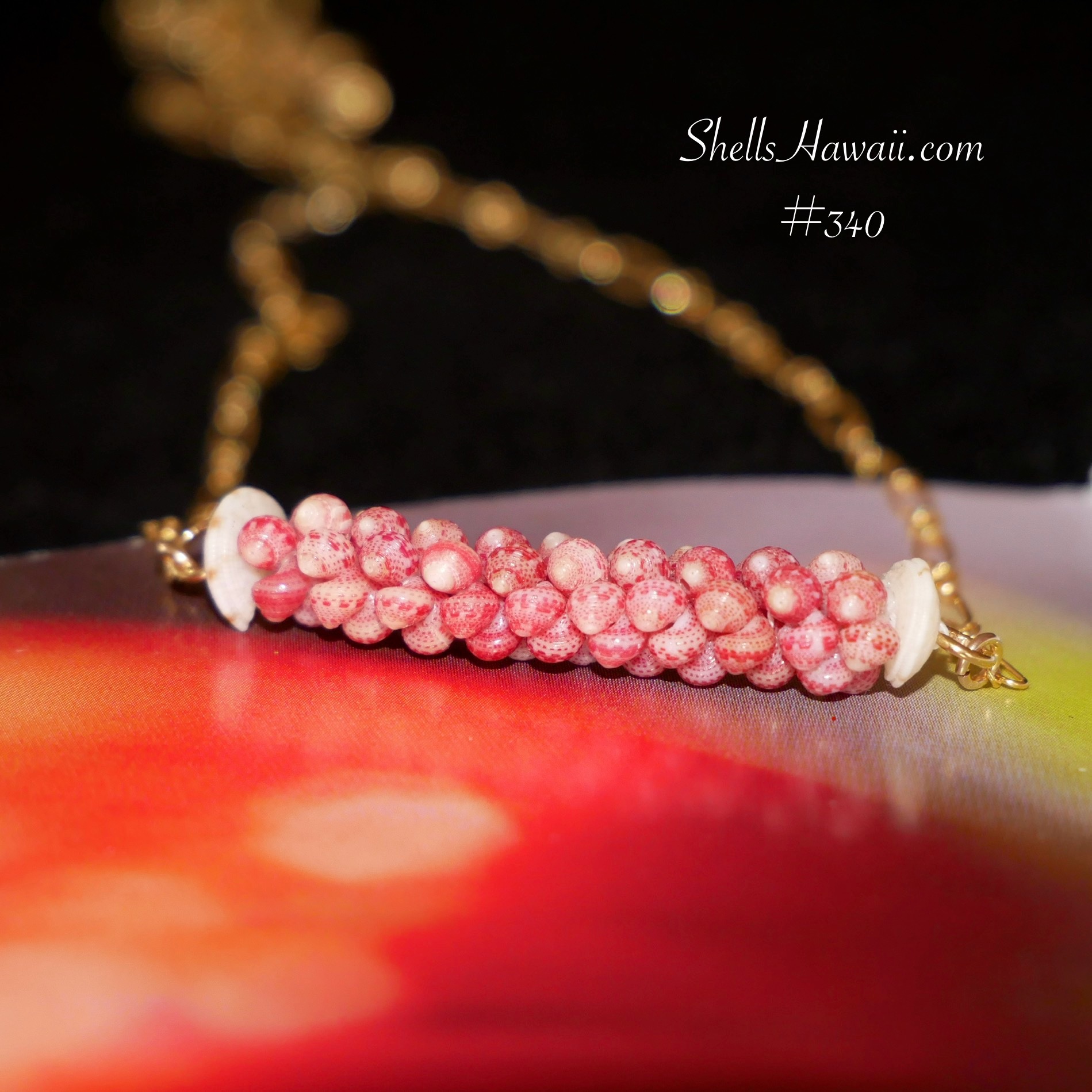
It truly took me a long time to understand and practice this design. After many years of patience and learning, here I am today — finally able to create this beautiful style with confidence and even take custom orders. Below are some of my creations using the two-strand technique, formed into the Poepoe style.
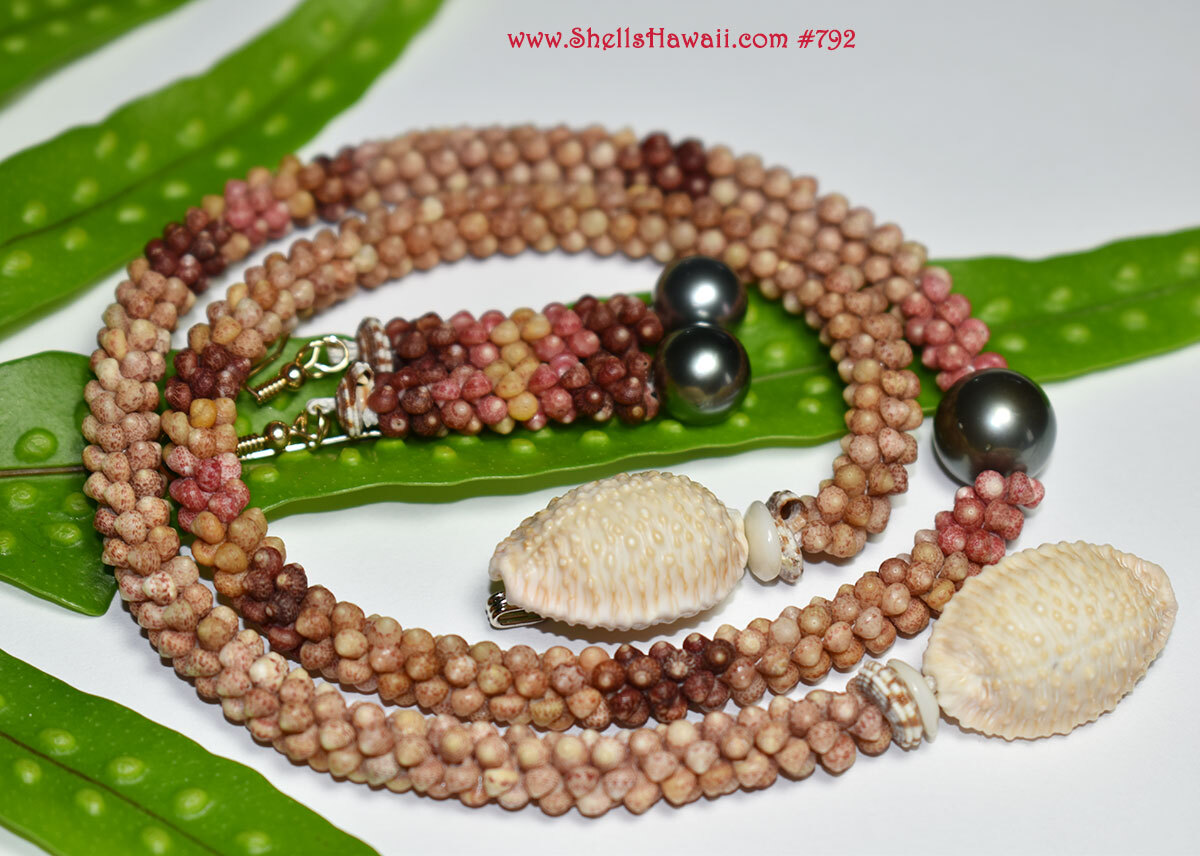
The lei shown below is created using Kahelelani shells from Kauaʻi, Hawaiʻi.
In our next blog, I’ll take you deeper into the Poepoe style — this time using Triple strands to create a fuller, rounder design. I’ll share how I practiced, failed, tried again (and again), and finally learned how to create a balanced lei that flows just right.