USD
USD


Aloha & Welcome to my work station everyone,
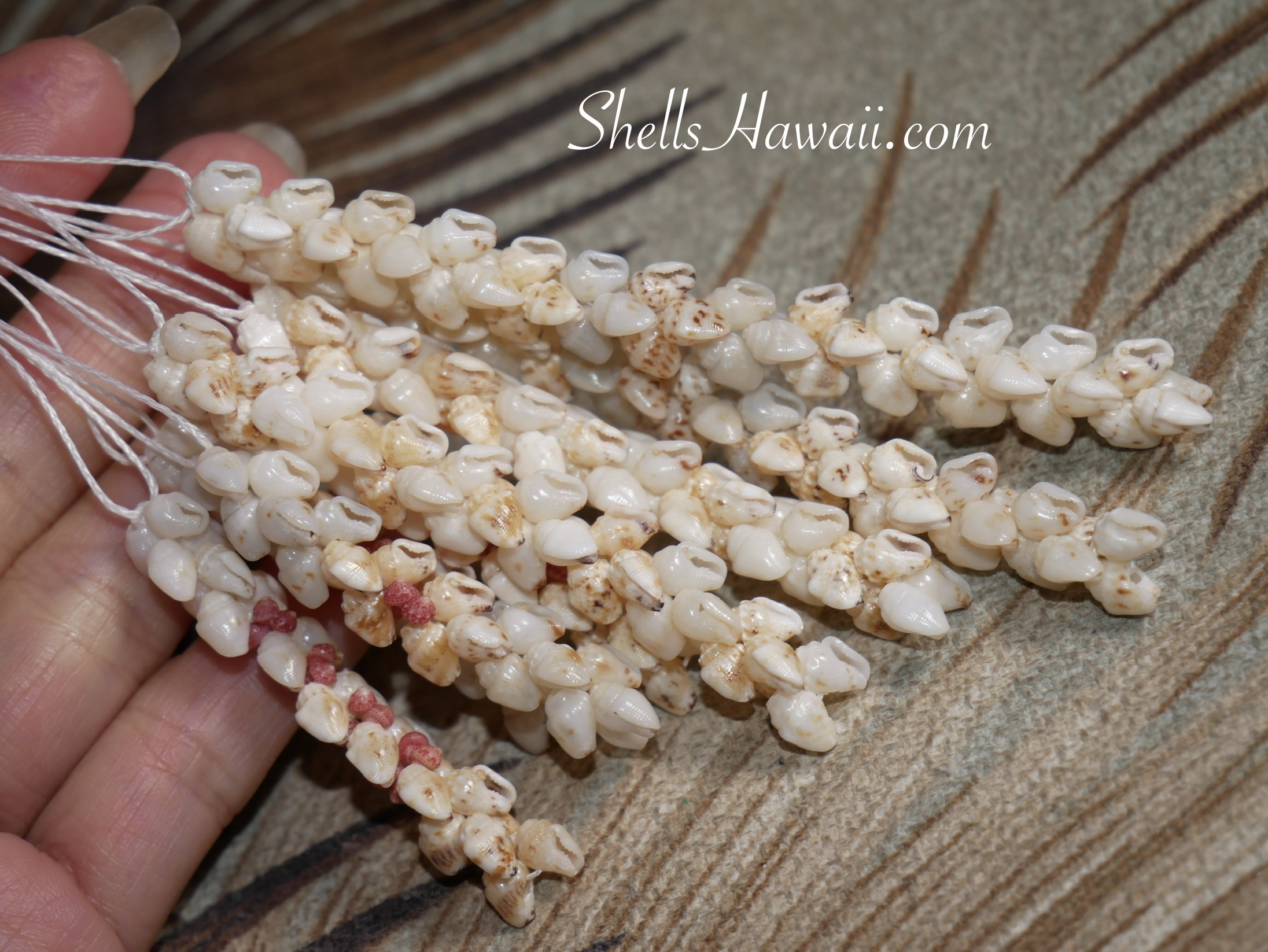
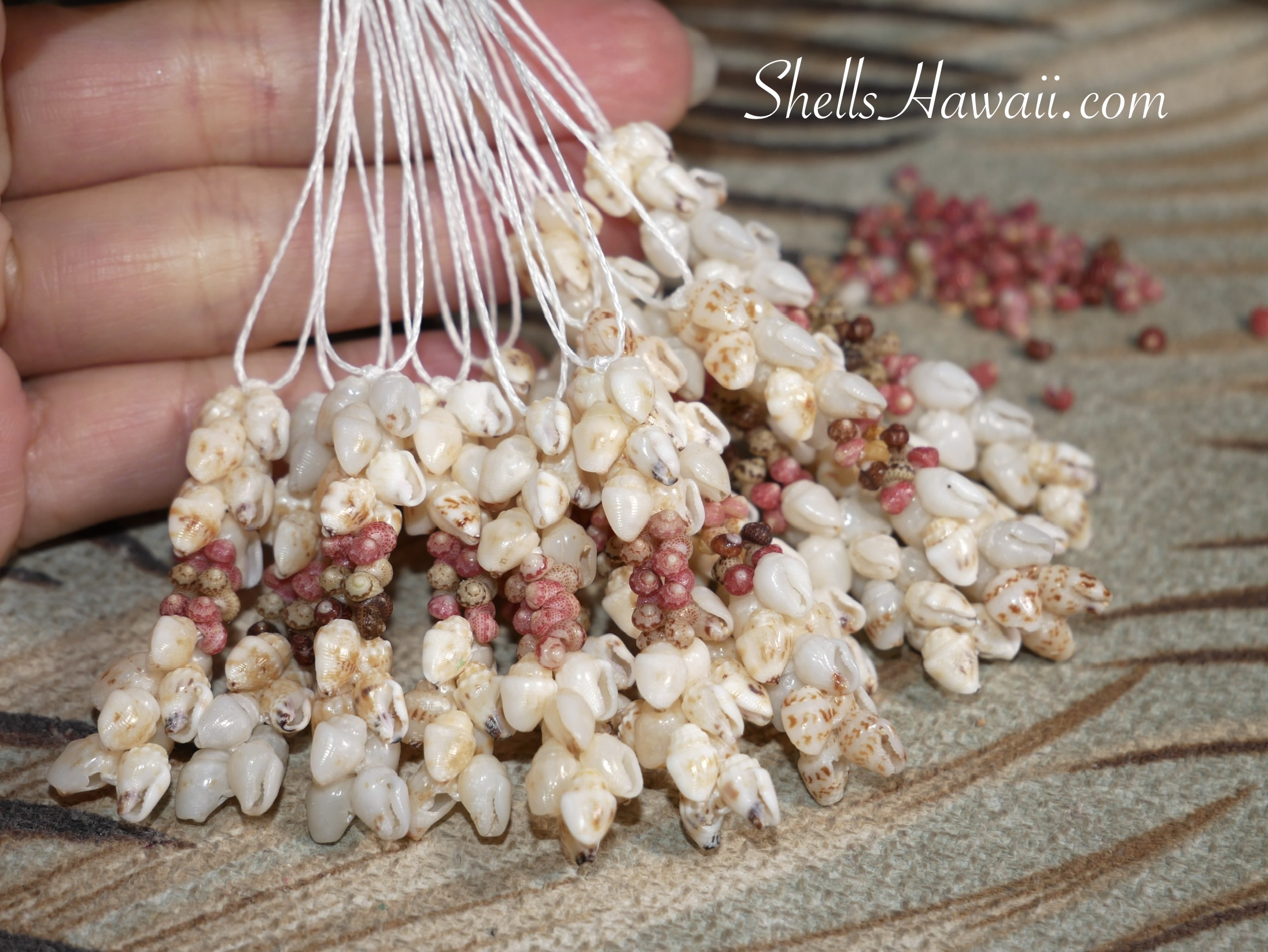
If you’ve been browsing through my earring collection lately, you may have noticed that only a few pairs of Kipona style earrings are available right now, along with limited quantities in some of my other styles as well. After a very busy holiday season, I’ve been slowly returning to my work table again, one pair at a time.
Before anything else, I truly want to thank all of you for your support and love for my work, which have meant so much to me. During this past holiday season, it brought me so much happiness shipping out many pieces of my creations to customers around the world, especially throughout Hawaiʻi.
Now that we’ve entered 2026, I’ve been slowly rebuilding my collection again and allowing myself time to settle back into the creative process. I’m starting gently, one idea at a time, letting each piece naturally guide the next. In many ways, this part of the year always feels like a fresh beginning for both my work and creativity.
The Hidden Physical Side of Niʻihau Shell Preparation
Right now, my Kipona style earrings are the lowest in stock, so my first thought was a gentle one — let’s create just one pair and slowly return to the work table again after the busy holiday season.
Behind the scenes, creating Niʻihau shell jewelry, other than the quiet enjoyment of processing steps and spending time looking through my beautiful Hawaiian shell collection, is physical work that can be very unforgiving sometimes.
Sometimes when you first begin a new creation, it can come with many blank moments before your ideas and vision slowly begin to flow into different designs. Then little by little, you start seeing which shell colors look beautiful together, what patterns begin to form naturally, and how the piece wants to come together. Those are the moments that make you excited and want to continue creating even more.
But... here is the problem many creators quietly face.
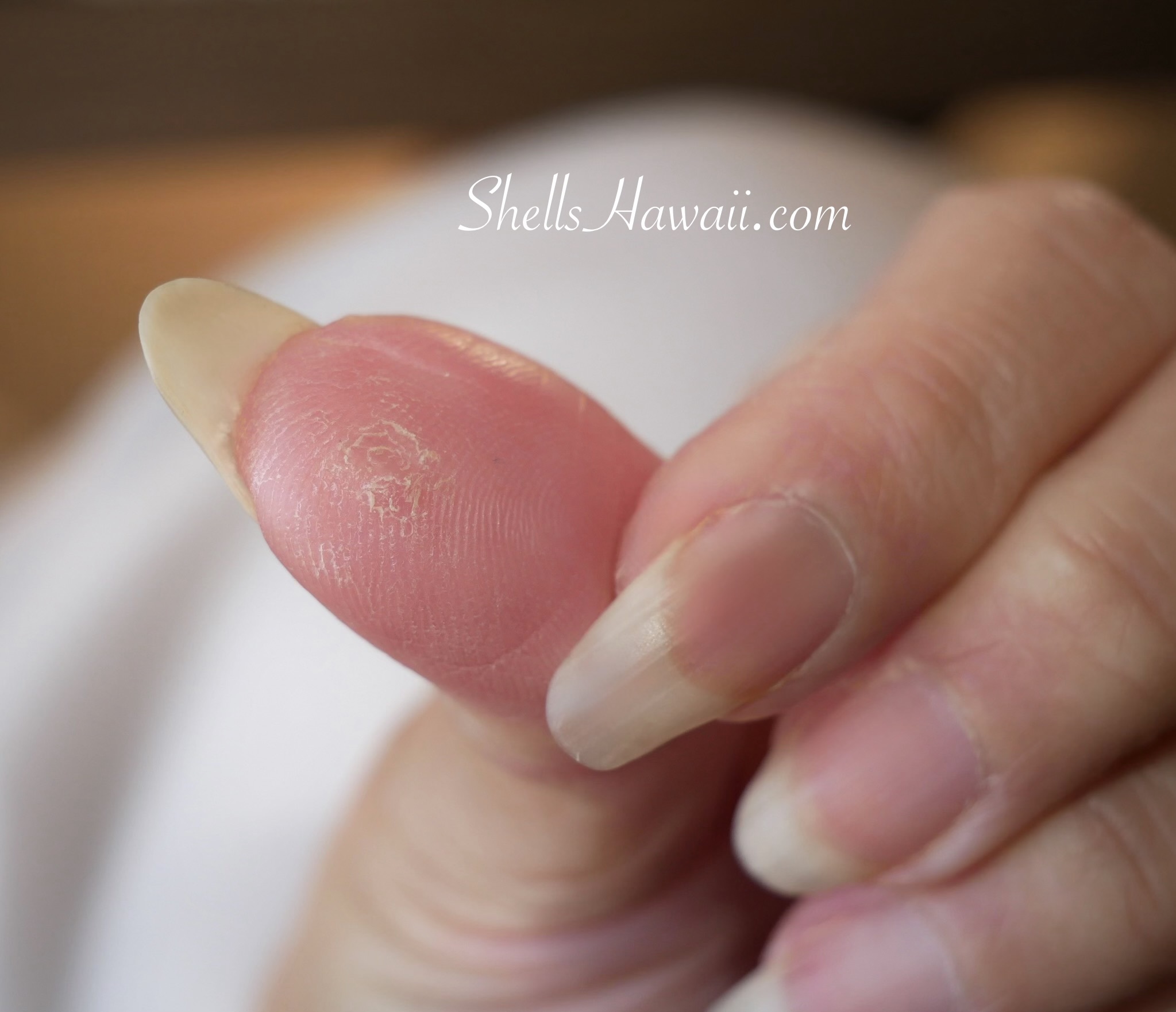
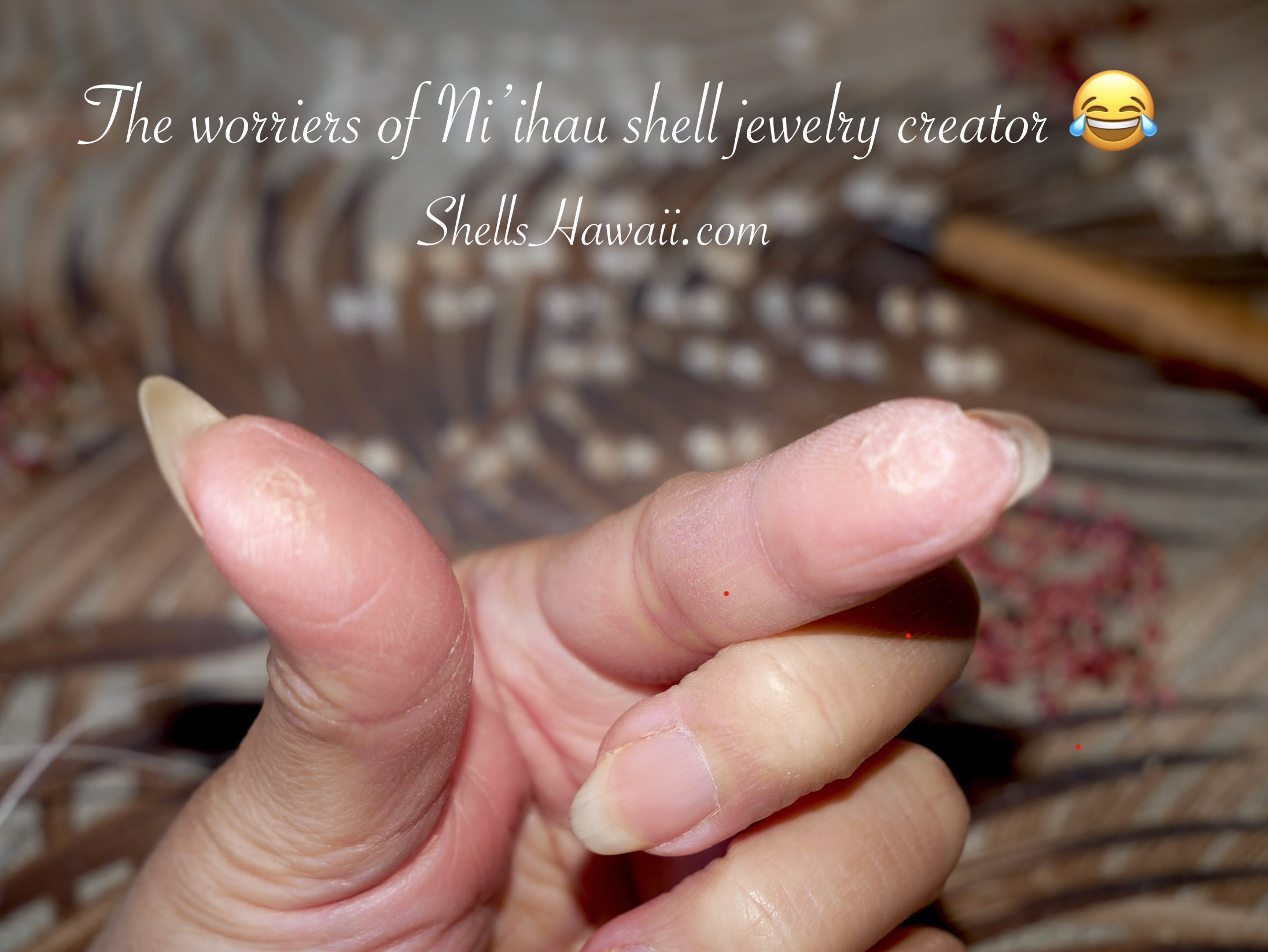
As your ideas begin flowing, your fingers, hands, wrists, shoulders, and back also begin feeling the physical side of the work. Long hours of poking shells can lead to sore fingers, cracked skin, bruising, swelling, and sometimes even bleeding fingertips. These tiny shells may look delicate and lightweight, but preparing them by hand can be surprisingly unforgiving on the body.
People often ask if I use a magnifying glass. The answer is no. From what I know, most Niʻihau shell creators don’t use one either. We usually rely on bright lighting, steady hands, and years of practice. Even so, after a long day of working with shells, your eyes, fingers, wrists, shoulders, and back will eventually let you know it’s probably time to stop for the day and continue tomorrow.
For anyone who prepares their own shells, poking is honestly the hardest — and probably the most brutal — part of the entire process. Every hole has to be placed at nearly the exact same angle and position each time, especially when working with Momi and Kahelelani shells. Your hands repeat the same tiny movement again and again while trying to hold these delicate little shells steady.
And honestly, poking Kahelelani shells is probably one of the least enjoyable parts of creating Niʻihau shell jewelry. Every creator has to push through that stage. So when you see a long lei filled with thousands of tiny shells, please know those pieces represent an incredible amount of patience, preparation, and time.
This art is not simply collecting shells from the beach, poking holes, and stringing them together. Behind every finished lei are many hours of shell preparation, matching colors and sizes, planning designs, and working through the physical side of creating each piece by hand.
The Things I Try Before Finally Stopping
And when my skin starts cracking, even just a little, my first thought is lotion. You would think that sounds like a smart idea. It’s not. Suddenly everything becomes slippery, the shell starts sliding around my fingers like it wants absolutely nothing to do with me anymore, and I can no longer hold it properly. So I wash the lotion off and go right back to where I started.
Then comes the next brilliant idea.
“It’s only a small crack. Maybe I can just sand it down a little.”
And yes — I actually mean sanding my own finger.
There I am sitting at my work table, carefully filing my skin so I can continue holding the shell and keep poking, as if this is somehow a completely normal life decision. Looking back now, I honestly have to laugh at myself a little.
But of course, more poking usually leads to more cracking. At that point I start looking around the room wondering if something from the first-aid kit might save the day. And yes... superglue eventually entered the conversation.
I actually tried putting superglue directly onto my finger, hoping it would hold the cracked skin together long enough so I could continue working. Which, of course, turned into another disaster almost immediately. The glue created a smooth, shiny layer on my skin, which meant the shell suddenly started skating around my fingers like it was trying to escape from me.
So naturally, Mr. File made another dramatic return to the work table.
There I was again, filing down the glue so my finger would become rough enough to grip the shell properly. At this point, I’m pretty sure my fingers and my body were both questioning my life choices. If they could talk — or better yet, run away — I’m fairly certain they would have.
Eventually reality wins. There’s no choice left except letting my fingers heal for a few days.
And if my fingers are still too bruised to continue poking shells, I don’t stop working completely. I usually shift into other parts of the process — sorting imperfect shells, matching sizes, studying colors, or working with pre-poked shells I already prepared earlier. Even when my hands need rest, my mind usually keeps creating.
My Creative Goal for Each Year
Every year, I set a quiet personal goal for myself — to complete at least one big lei, along with a few new and more complicated lei designs. Sometimes it happens, sometimes it doesn’t, but that has always been my intention.
Whether I can complete those pieces depends on many things: the shell colors and sizes I have in my collection, the time it takes to carefully prepare and create them, and most importantly, whether my body is physically ready for that level of work. Creating a big lei takes a tremendous amount of time and shells to complete just one piece.
This is also why, when you see a piece you truly love, I always encourage you to purchase it when it feels right. Each design is one of a kind, and there may never be enough shells in the right colors, sizes, or quality to create the same piece again.