 USD
USD


Aloha and welcome to ShellsHawaii blog everyone,
Sunrise shells are among the most famous and recognizable Hawaiian seashells in the world. Known for their glowing shades of orange, yellow, pink, red, and sometimes rare green or blue tones, these beautiful scallop shells have fascinated collectors, divers, and jewelry makers for generations.
Today, sunrise shells are especially associated with Hawaiʻi, where they are treasured not only for their beauty, but also for their rarity and connection to the ocean surrounding the islands.

What Species Creates Sunrise Shells?
Sunrise shells come from a deep-water scallop species scientifically known as Langford’s Pecten (Bractechlamys langfordi). This scallop species is considered endemic to the Hawaiian Islands, meaning it naturally belongs to Hawaiʻi and is not commonly found elsewhere in the world.
Like other scallops, Sunrise shells are the two protective halves of the scallop’s shell. Their beautiful natural colors and patterns can vary greatly from one shell to another, which is part of what makes them so interesting to collectors.
Where Are Sunrise Shells Found?
Most sunrise shells are closely associated with the North Shore of Oahu, where strong winter surf offshore ledges and ocean conditions can help bring empty shells closer to reefs and shorelines.
However, sunrise shells are not limited only to Oʻahu. They can also exist in waters surrounding other Hawaiian islands, including Niihau and Kauaʻi. These finds are simply much less common and are rarely discussed publicly.
Many collectors believe Hawaiʻi’s underwater volcanic shelves, ocean currents, and powerful winter swells may all play a role in how empty Sunrise shells eventually make their way toward reefs and beaches.
How Deep Do Sunrise Shells Live?
Sunrise scallops are generally believed to livearound sandy or coral-rubble ledges far below the ocean’s surface.
Exact depth ranges can vary depending on the source, which is why it can be difficult to give one exact depth at which Sunrise scallops are always found.
Because of where these scallops live, many beautiful sunrise shells are discovered only after storms, strong currents, ocean movement, or diving activity bring the empty shells closer to reefs and shorelines.
Why Are Sunrise Shells Usually Found as Single Halves?
One interesting detail about sunrise shells is that they are very often found as only one side of the shell instead of a complete matching pair.
Like other scallops, the two shell halves are connected by a softer hinge and muscle tissue while the animal is alive. After death, the hinge naturally weakens and separates over time. Ocean currents, surf, and tumbling movement can then carry the two halves apart in completely different directions.
This is why intact “mated pairs” are considered extremely rare and highly collectible.
The Famous Colors of Sunrise Shells
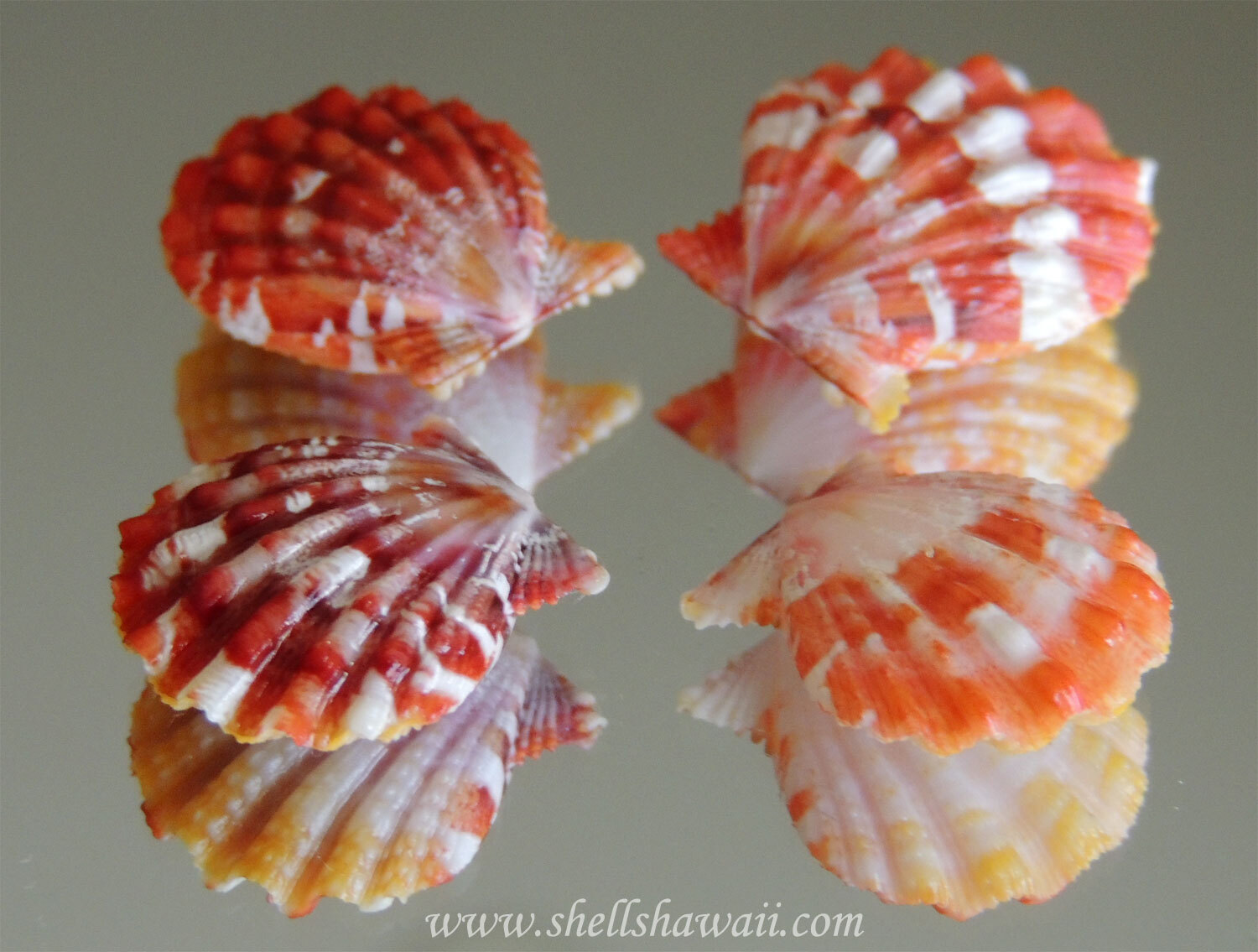
One of the biggest reasons sunrise shells became so famous is their incredible range of natural colors. Collectors often discover bright orange, golden yellow, soft peach, pink, deep red, rare green tones, occasional blue or “moonrise” coloration, and even rare albino sunrise shells with unusually pale or creamy white appearance.
Some shell enthusiasts believe environmental conditions, minerals, burial conditions, algae, or long-term ocean exposure may influence certain rare colors over time. However, many of these color theories are still based more on longtime collector observations than fully proven scientific explanations. Because of this, it is safest to separate established shell biology from collector theories and personal experience.
Why Do Sunrise Shells Often Have Heavy Calcium Buildup?
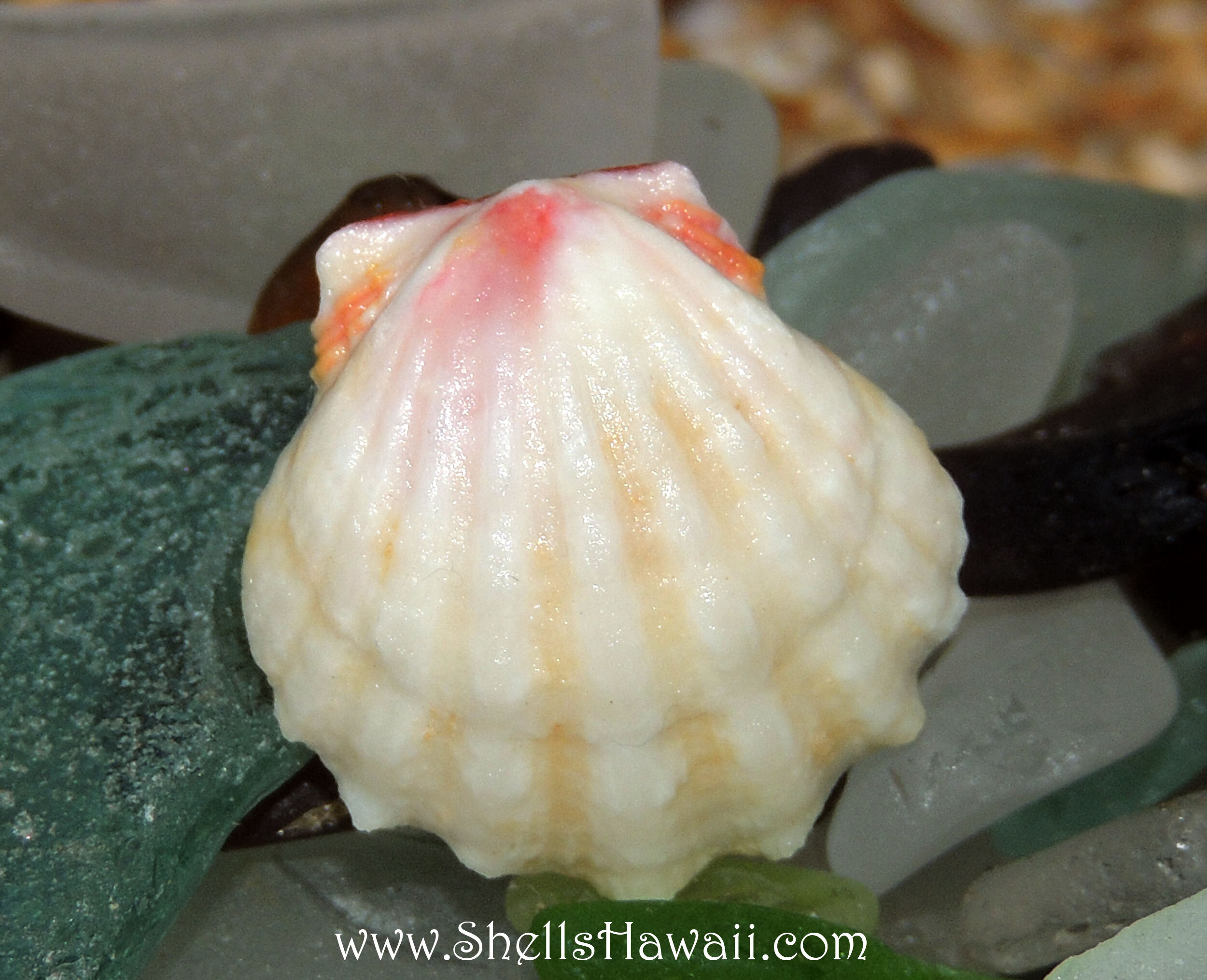
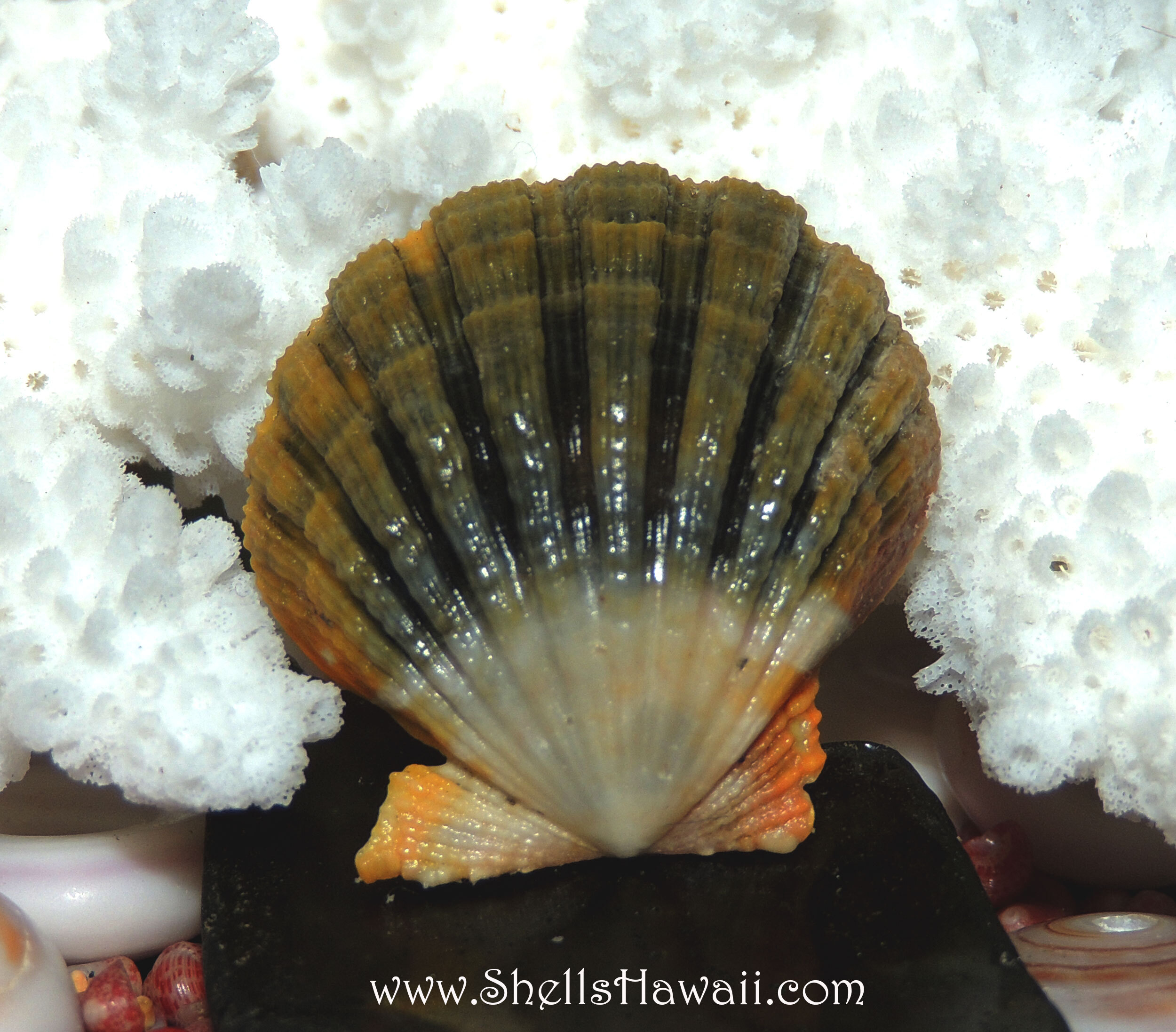
Freshly discovered sunrise shells do not always appear bright and colorful right away. Many are covered with thick calcium buildup, marine crust, coral deposits, or other ocean growth after spending long periods underwater.
Collectors and jewelers often carefully clean these layers away to slowly reveal the hidden colors beneath the surface.
This cleaning process must be done gently and patiently because sunrise shells, while fairly strong in some areas, can still chip or crack along thinner edges.
Are Sunrise Shells Strong or Fragile?
Sunrise shells are surprisingly durable for natural scallop shells, especially across the thicker ridged center sections.
However, the outer edges and hinge “wings” can still be delicate. Larger sunrise shells with deep grooves are usually sturdier, while very tiny shells may crack more easily during drilling, wrapping, or jewelry work.
Like many natural shells, they can survive years in the ocean yet still break from one sharp impact against a hard surface.
Why Sunrise Shells Continue to Fascinate Collectors
Part of the mystery and beauty of sunrise shells comes from how much is still based on firsthand experience and collector knowledge passed through generations. Even today, there are still ongoing discussions about how certain rare colors develop, why some beaches produce better shells, how ocean conditions influence shell movement, and why some shells survive while others do not.
That blend of science, ocean mystery, and natural beauty is part of what continues to make sunrise shells one of Hawaii’s most admired treasures.
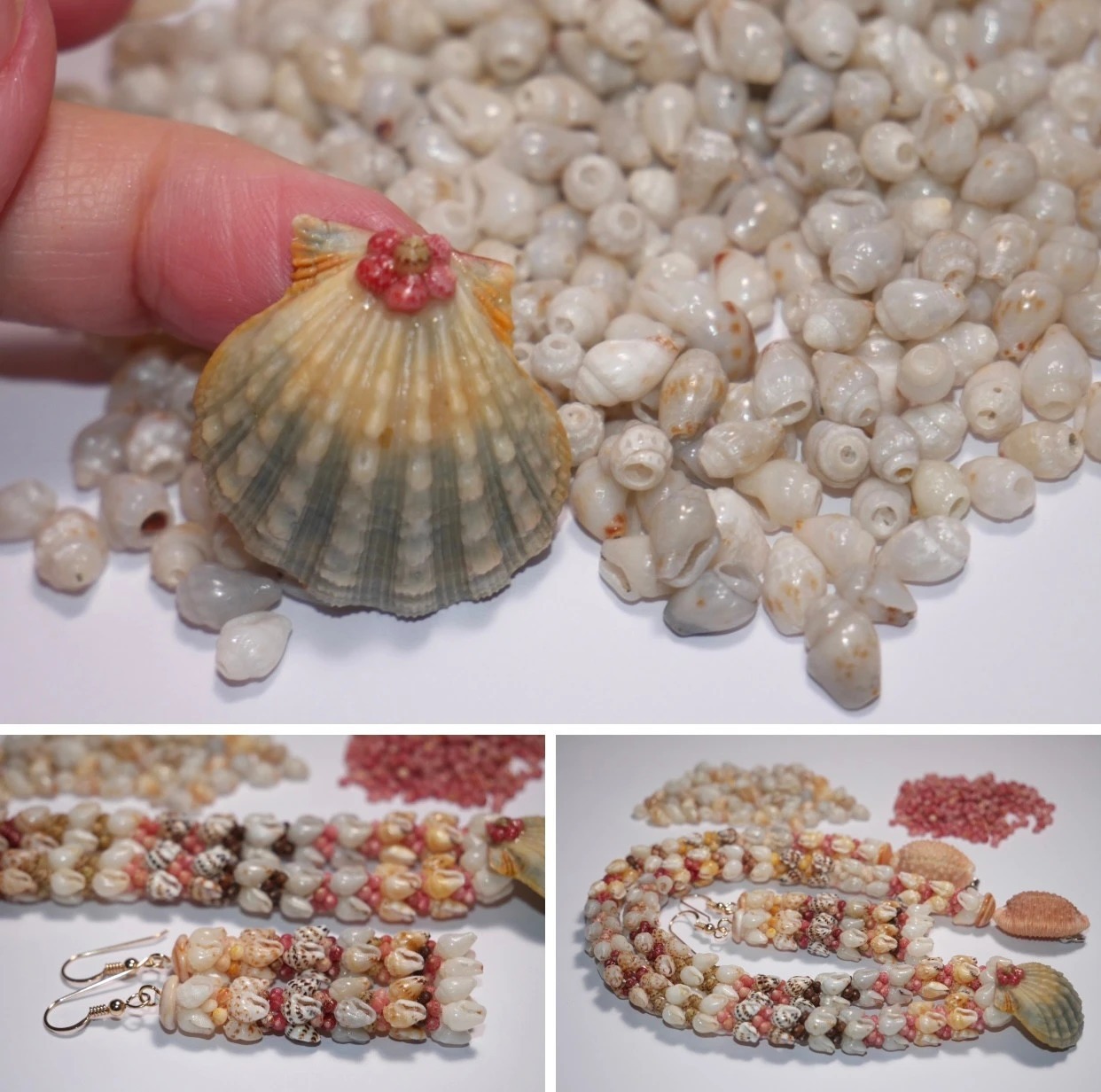
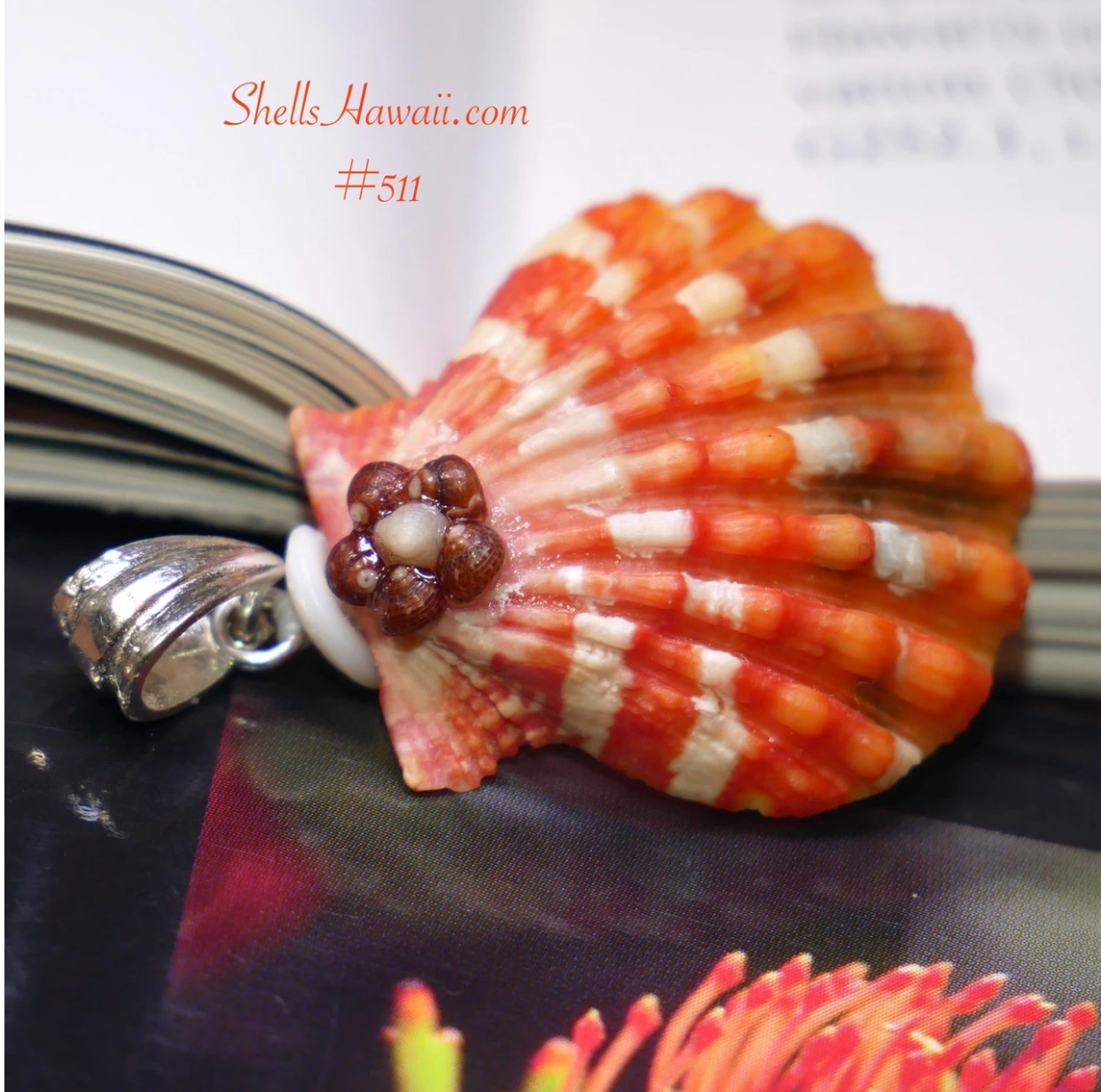
If you would like to see some of my sunrise shell supplies and sunrise shell pendants and Niʻihau shell lei featuring Sunrise shells,Please feel free to click on the highlighted words throughout this blog to explore related products, shell categories, and additional blog topics connected to Hawaiian Sunrise shells and Hawaiian shell jewelry.
Much aloha, and I truly hope you enjoyed reading my blog. I also hope some of the information I shared was helpful and allowed you to learn a little more about these beautiful Hawaiian treasures.
With aloha,
Janjira