 USD
USD


Aloha and welcome to the ShellsHawaii blog, everyone.
Today we will learn more about one of the beautiful shells used to create clasps and finishing sections in Niʻihau shell jewelry — the granulated cowrie shell.
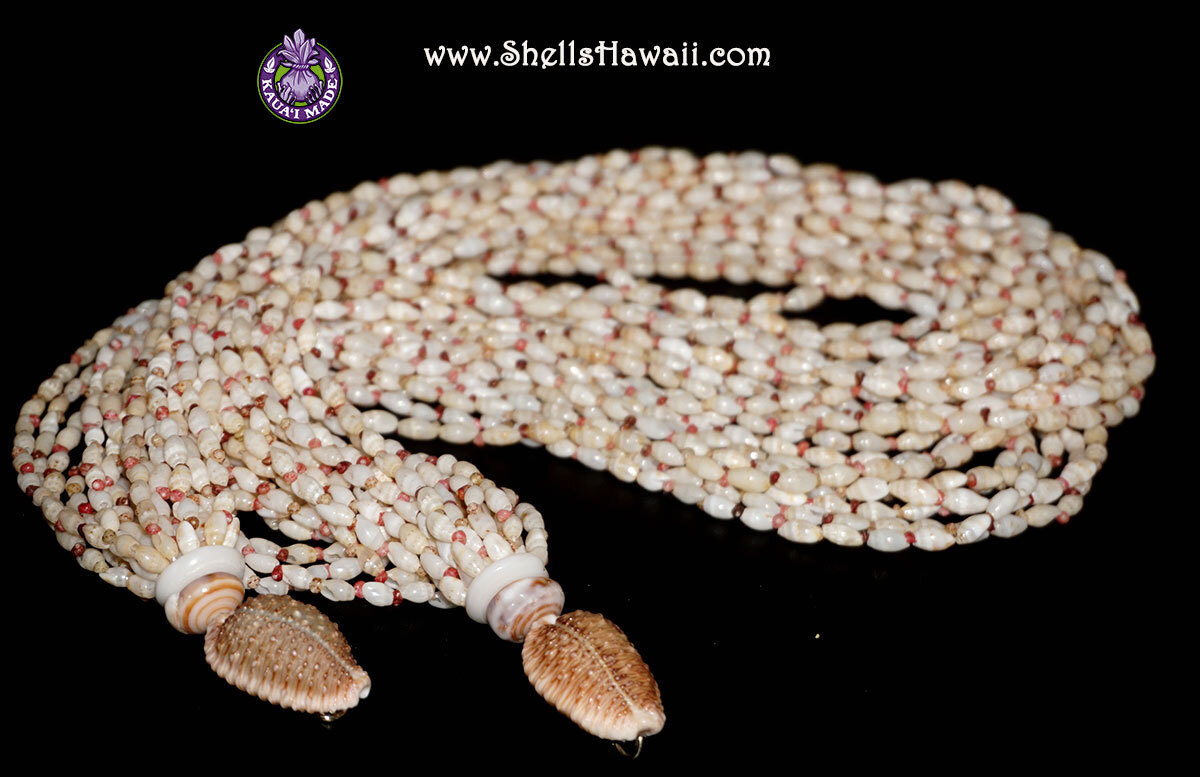
Granulated cowrie shells are one of my favorite clasp options to use in my statement Niʻihau shell lei pieces. I especially love the beautiful brown ones with a well-defined bumpy texture, consistent color, and nicely balanced shape. Each shell is unique, and I feel its natural character can add something very special to a finished lei.
Alongside the safety clasp, the granulated cowrie is one of my favorite finishing options. They can give the same lei two completely different looks — the granulated cowrie gives it a beautiful natural character, while a safety clasp creates a more refined and elegant finish.
Let's get to know this beautiful little shell, shall we?
What Are Granulated Cowrie Shells?
Granulated cowrie shells, scientifically known as Nucleolaria granulata, are a rare species of small sea snail, or marine gastropod mollusk, in the cowrie family (Cypraeidae).
Granulated cowries are relatively small shells, commonly measuring around 22–28 mm in length, although larger specimens can reach close to 49 mm.
Where Granulated Cowries Are Found
Granulated cowries are found in tropical Hawaiian waters. Live granulated cowries usually hide beneath rocks, inside small caves, ledges, and protected reef areas during the day. They become more active at night, which is one reason live shells can be difficult to spot.
Many shells later used in jewelry are naturally ocean-tumbled shells that eventually wash ashore after movement through the surf and reef systems.
What Makes Granulated Cowries Different?
Unlike the smooth, glossy appearance we often associate with many cowrie shells, granulated cowries have a very distinctive surface. Mature shells develop strong raised ribs, rows of tiny bumps, and a noticeable center line running lengthwise along the shell.
This unusual texture is actually where the name “granulated cowrie” comes from. The word granulated describes a surface that appears to be covered with small grains or tiny raised bumps. If you look closely at a granulated cowrie, you can see these little grain-like bumps across the surface of the shell.
So when we talk about the granulated texture, we are talking about these small raised bumps and the pattern they create on the surface — not the overall shape of the shell. This distinctive texture is one of the easiest features to recognize when you are learning about granulated cowries.
How to Tell the Difference Between Mature and Immature Granulated Cowries
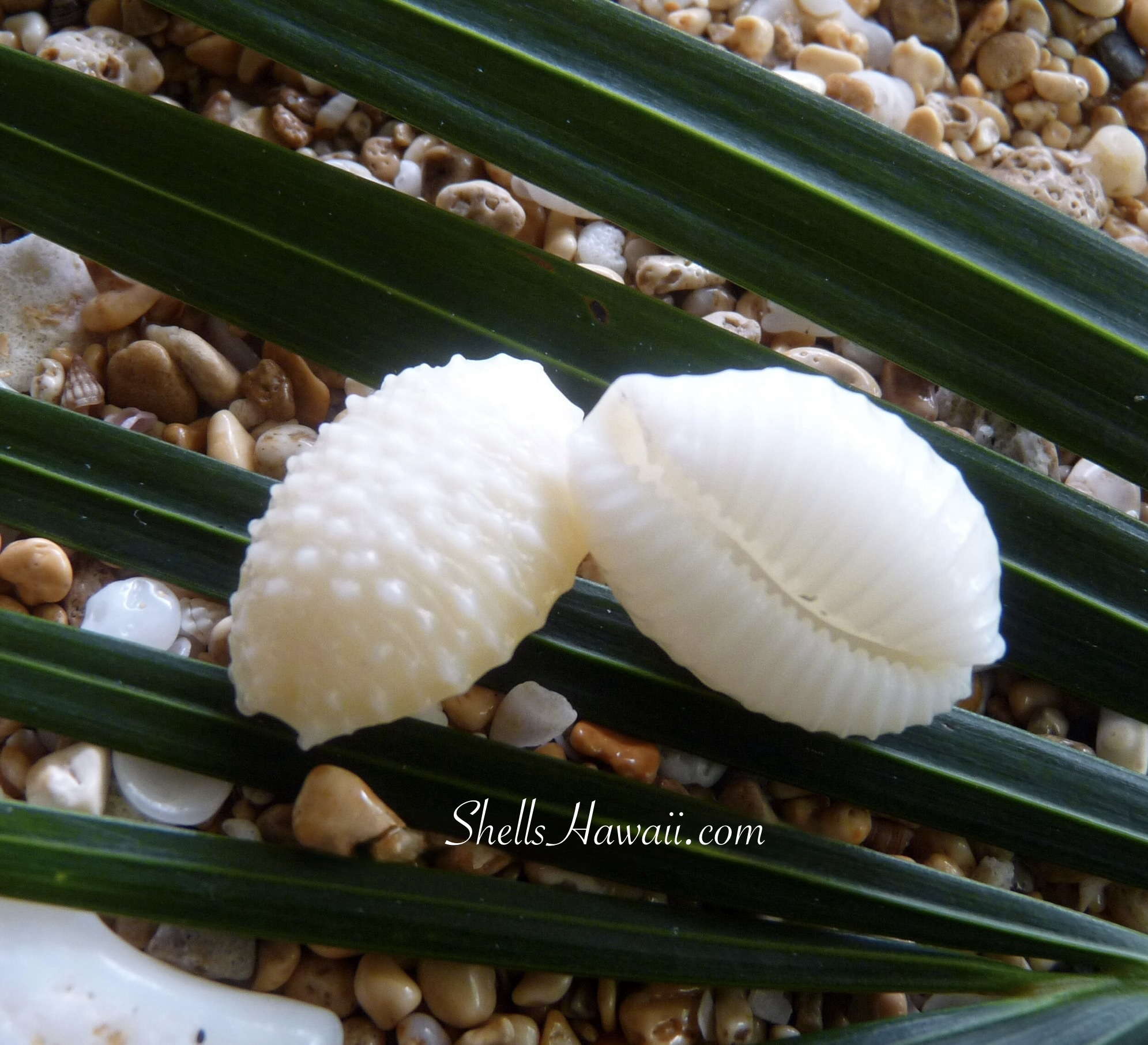
Immature granulated cowries are not necessarily smooth. They can already have a bumpy or pebbled surface, although the individual bumps and surface pattern may be less developed than those of a mature shell.
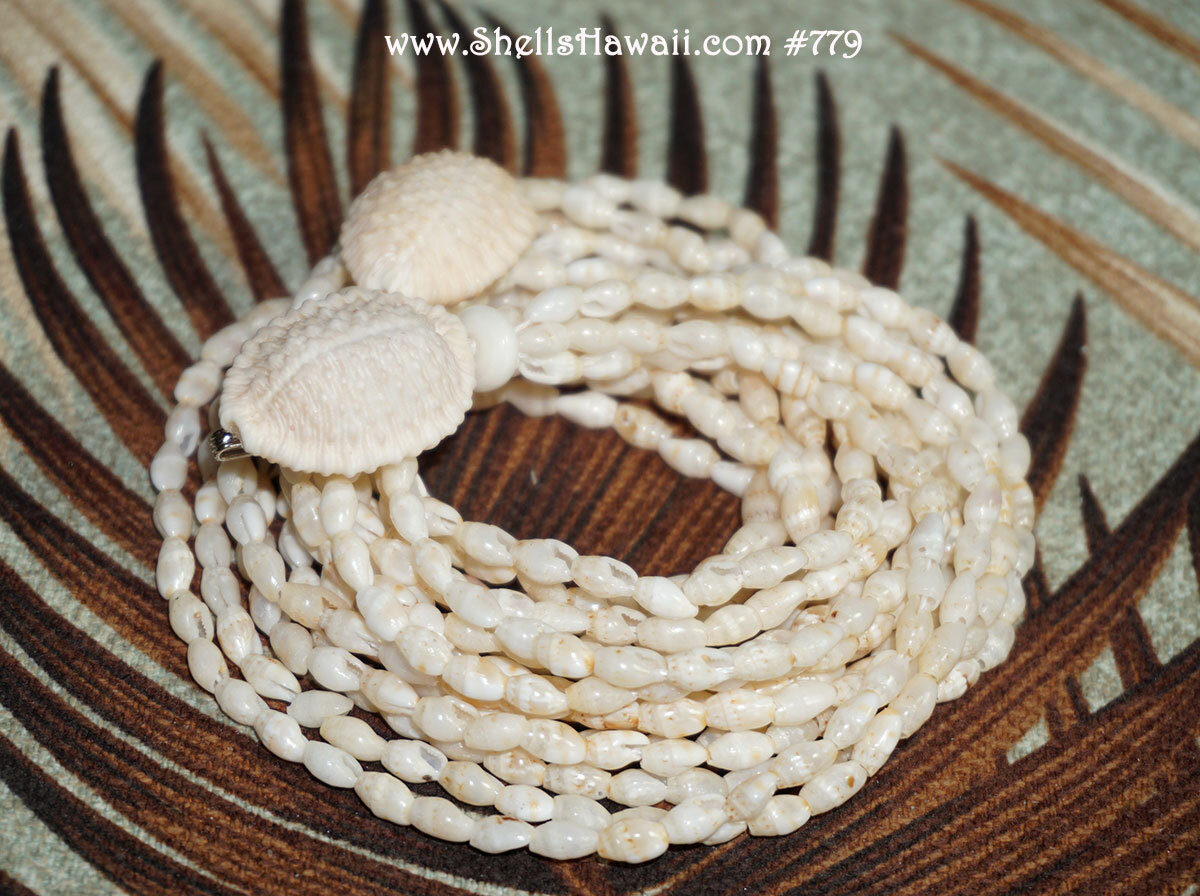
Here is how mature off-white granulated cowrie shells look when used as clasps on a finished Niʻihau Laiki shell lei.
As the shell matures, the surface texture becomes more defined, with stronger raised ribs, rows of tiny bumps, and a distinctive center line running along the shell.
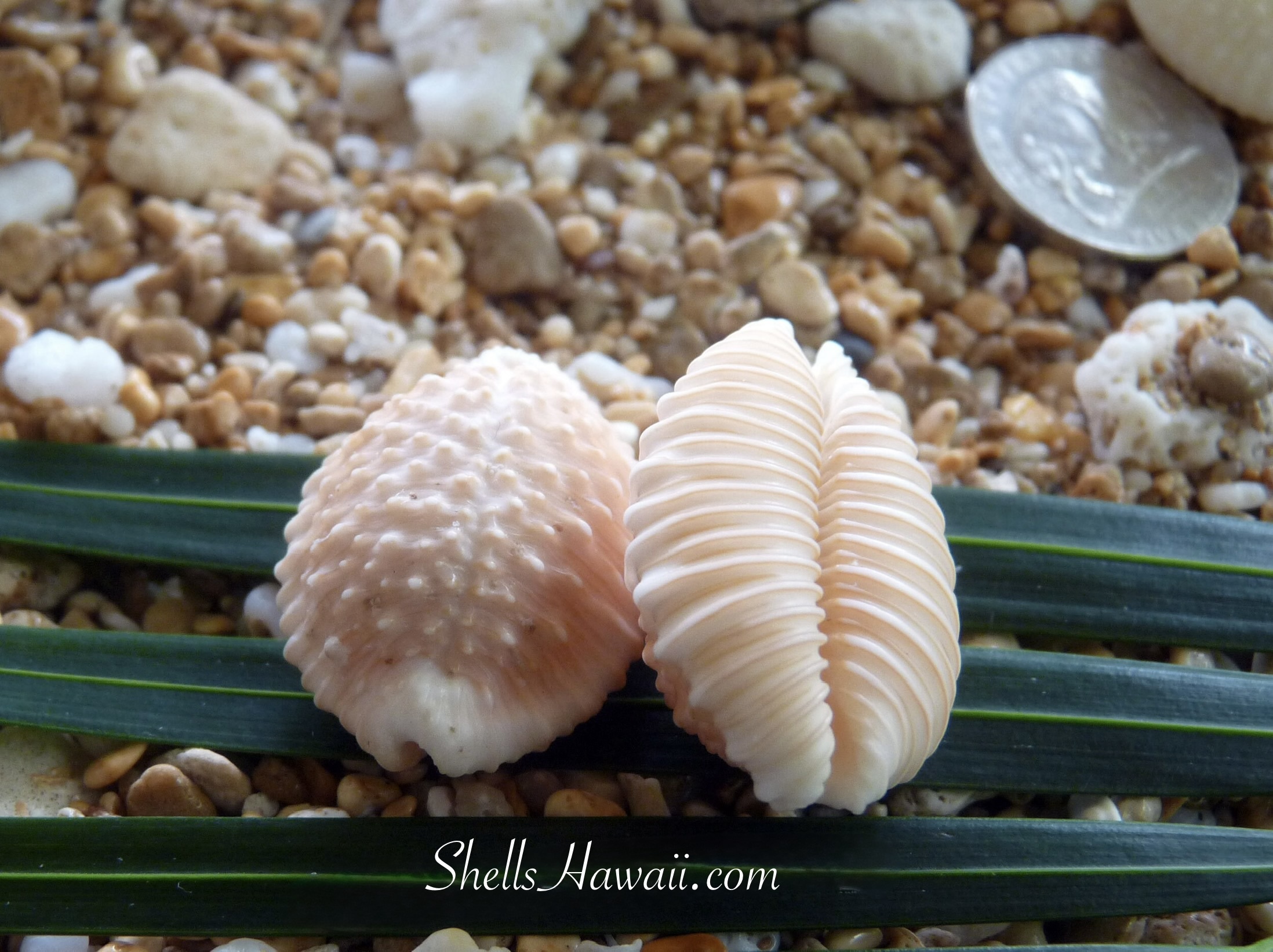
The difference is not only what you can see, but also what you can feel. Immature shells can have thinner, lighter shell walls, while mature shells generally become thicker, heavier, and more durable. This stronger shell structure is one reason mature granulated cowries are especially useful for lei finishing and clasp work.
Sometimes you may find a granulated cowrie that looks much smoother. This doesn't necessarily mean it naturally grew that way. After an empty shell has been tumbled in the ocean for a long time, constant movement through waves and sand can gradually wear down the raised bumps and some of its distinctive granulated texture.
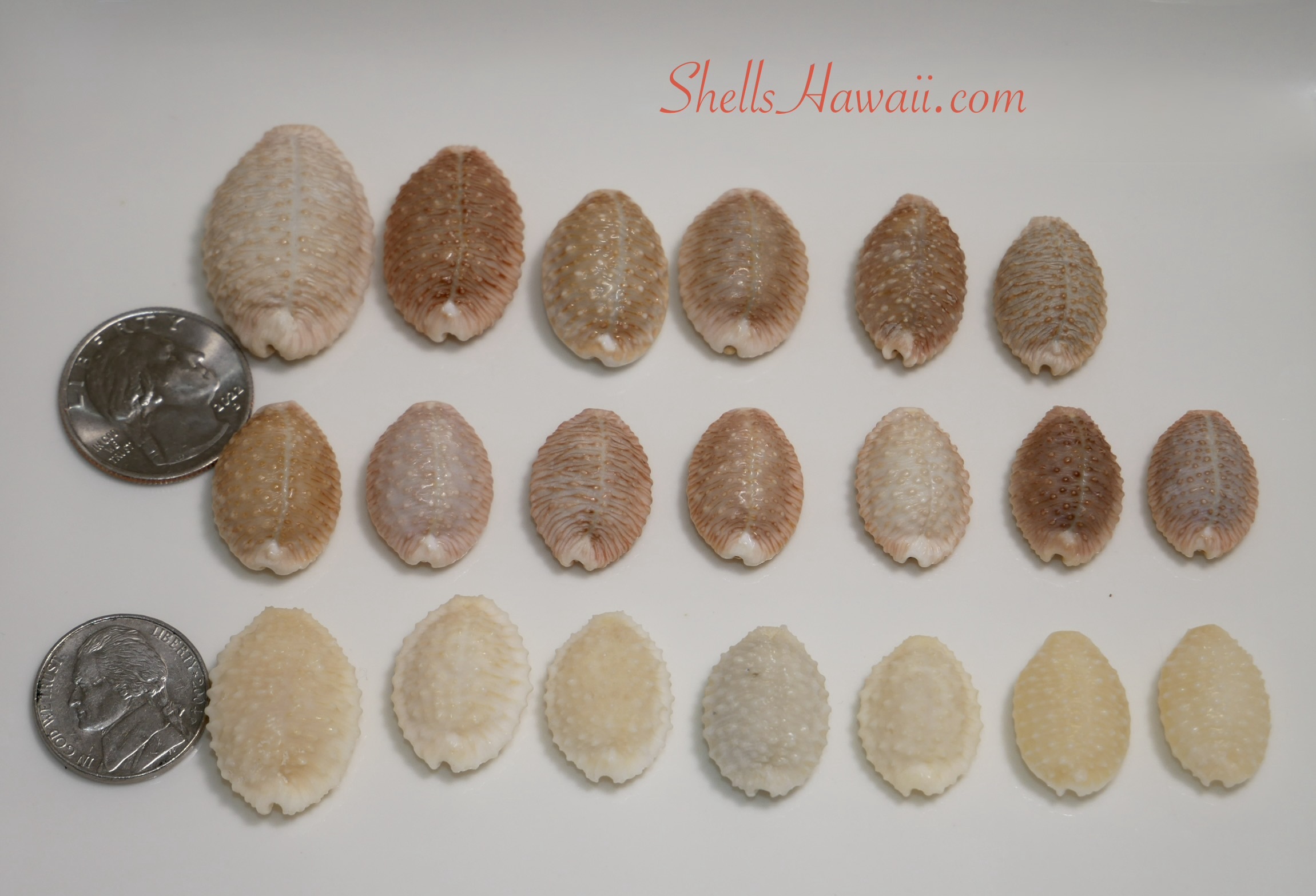
The photo below shows granulated cowrie shells with different levels of natural ocean wear. You can see how some still have more of their raised bumps and texture, while others have become much smoother after being tumbled by waves and sand over time.
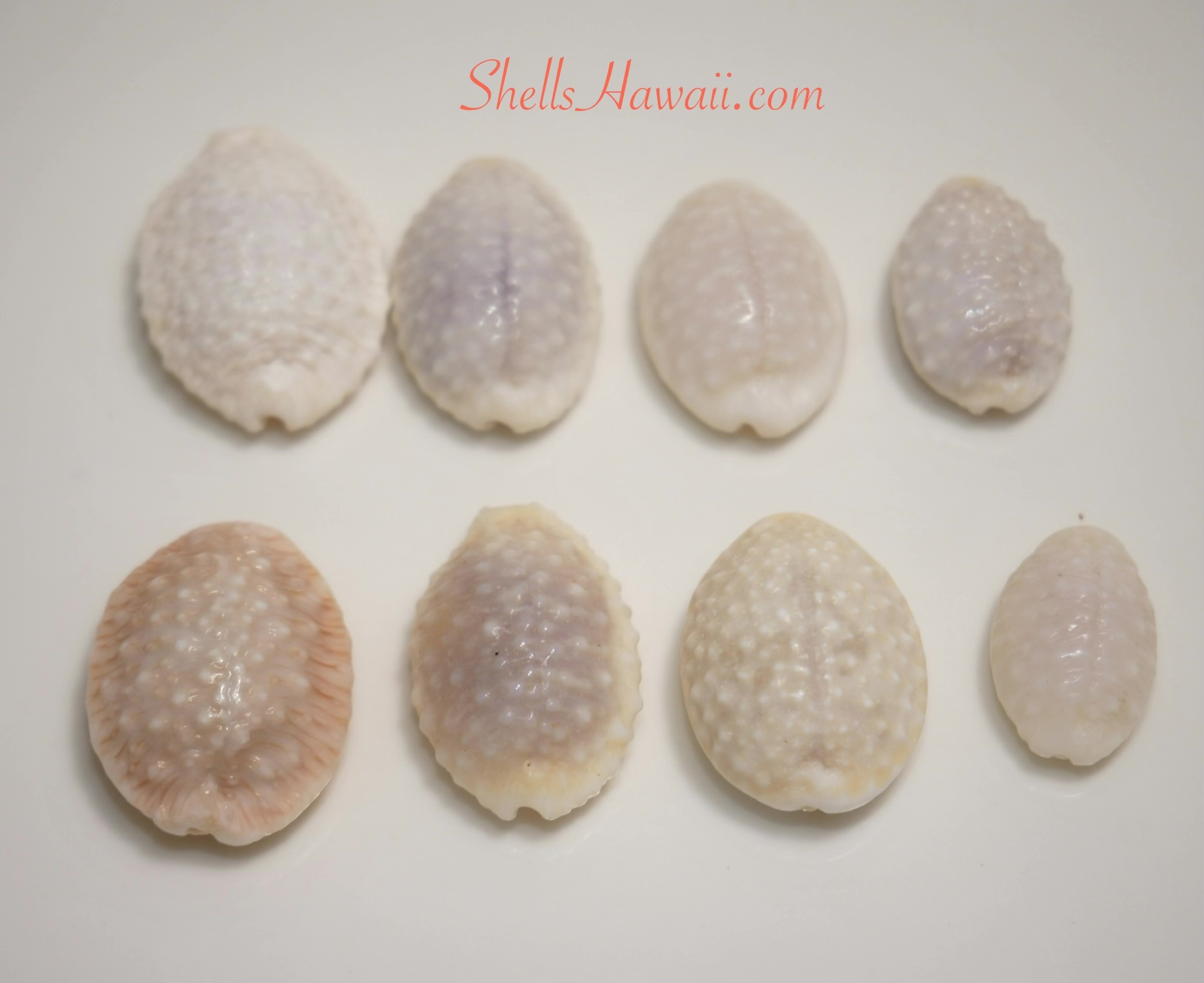
There is nothing wrong with naturally ocean-tumbled cowries or shells with more variation. They have their own beauty and can still make beautiful clasps. Choosing the shells I prefer for my work is simply my personal preference.
What I Learned From Working With Granulated Cowries
When I first bought granulated cowries to use with my lei, I received a mixture of mature and immature shells. I remember looking at the immature ones and thinking, Are these even real? They were so thin and lightweight that, honestly, they almost felt like plastic to me.
At the time, I didn't understand why they looked and felt so different, so of course I had to investigate in my own way. And when I say investigate, I really mean it! I tried biting one, and then I carefully tested one with a lighter to see if it would burn.
Instead of smelling like melting plastic, it smelled more like I had put a seashell on the barbecue grill! Right then I thought, Well, okay... these really are shells.
Looking back, I have to laugh at myself. I certainly don't recommend using my old bite-and-lighter experiment as a way to identify your shells! But it made me curious enough to do more research, and that is when I learned they weren't fake at all. They were simply immature granulated cowries.
The Colors of Granulated Cowries
Granulated cowries come in a beautiful range of earthy natural colors, including golden brown, caramel, tan, orange-brown, creamy off-white, soft rose, and deep dark brown tones.
Some shells remain lighter and softer in appearance, while others develop deeper coloring and stronger contrast. Pastel pink or very dark charcoal-colored shells can be especially admired by collectors for their unusual appearance.
Natural color variation can be significant from shell to shell, which is part of what makes each granulated cowrie unique. And because the color, shape, size, and texture can vary slightly from one shell to another, finding a really nice matching pair is never as easy as it may look.
I don't even know how many single granulated cowrie shells I have in my collection right now, patiently waiting for their perfect soulmate to come along!
A beautiful variety of granulated cowrie shells showing their natural differences in color, from creamy off-white and light tan to pinkish brown and deeper brown tones.
Why Granulated Cowries Are Used in Niʻihau Lei Finishing
Granulated cowries are used as a beautiful finishing clasp for Hawaiian and Niʻihau shell lei. Mature shells are especially valued because their thicker structure makes them strong enough for this purpose.
For me, the granulated cowrie is more than just a functional clasp. The natural color, texture, and character of each shell can become part of the overall design and give a finished lei a very different look from one finished with a safety clasp.
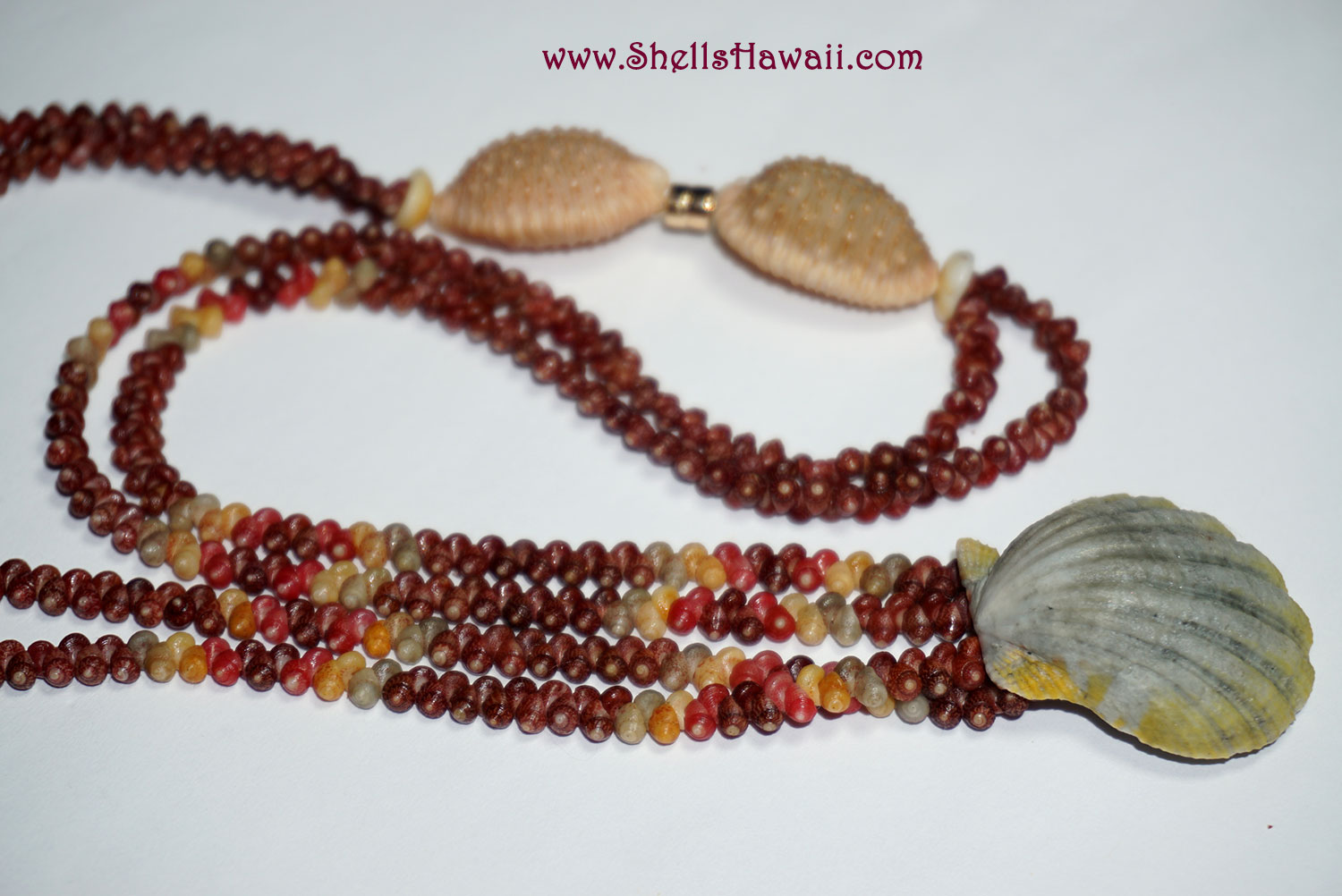
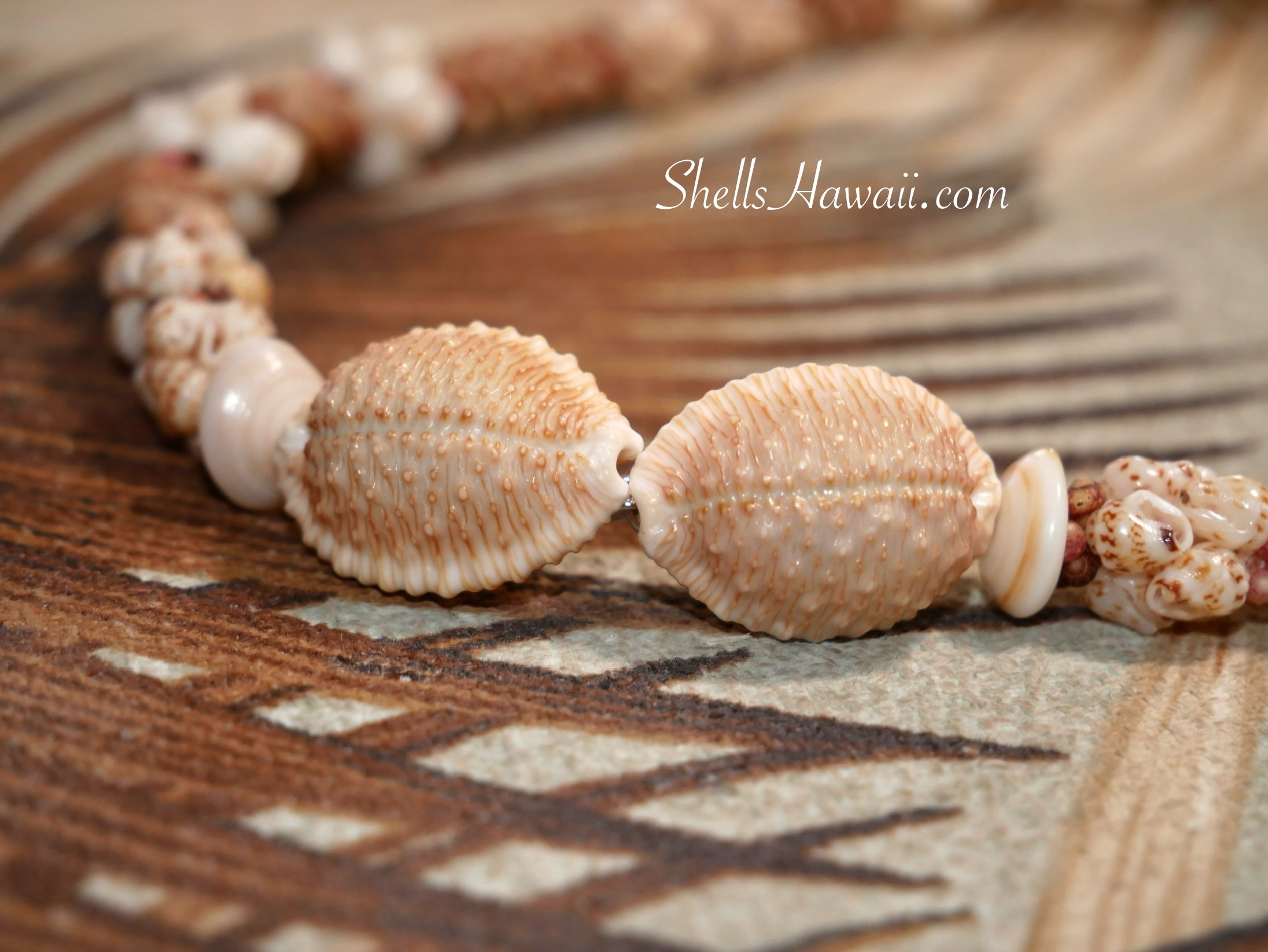
If you would like to see how I use granulated cowrie shells in some of my own designs, I invite you to visit my Four-Strand Niʻihau Shell Lei collection, where you can see some of my creations and the different ways these beautiful shells can become part of the finishing touch.
Sometimes, when you are looking at jewelry online, it can be easy to think that shells naturally come together this consistently. But there is actually quite a bit that happens before you see the finished jewelry. Natural shells can vary greatly in quality, color, size, shape, and condition, so I spend a lot of time sorting, selecting, and matching them before I begin creating.
The same goes for the workmanship. You might think that because I have created the same style many times, each one should simply come together the same way. But please remember, this is handmade jewelry created with natural materials. Every piece is a new piece, and each one can bring its own little challenges along the way.
For me, maintaining that standard matters just as much for a simple pair of earrings or a clasp as it does for a larger statement piece. Whether I am making something simple or one of my more complicated designs, I try to give each piece the same care and attention.
When everything comes together nicely, you may not notice all of those little details — and in a way, that is the point. What looks simple and consistent in the finished piece often has a lot of work behind it.
To Answer Your Questions
Granulated cowries play an important part in Hawaiian and Niʻihau shell jewelry. Their rarity, natural color variations, fascinating transformation from immature to mature shells, and use in lei finishing are all part of what makes them so interesting.
For me as a shell artist, they are also one of those details that can completely change the finished look of a lei. If you look closely at Niʻihau shell lei, you may begin noticing these beautiful clasp shells more and more — and see how even the finishing details become part of the art.
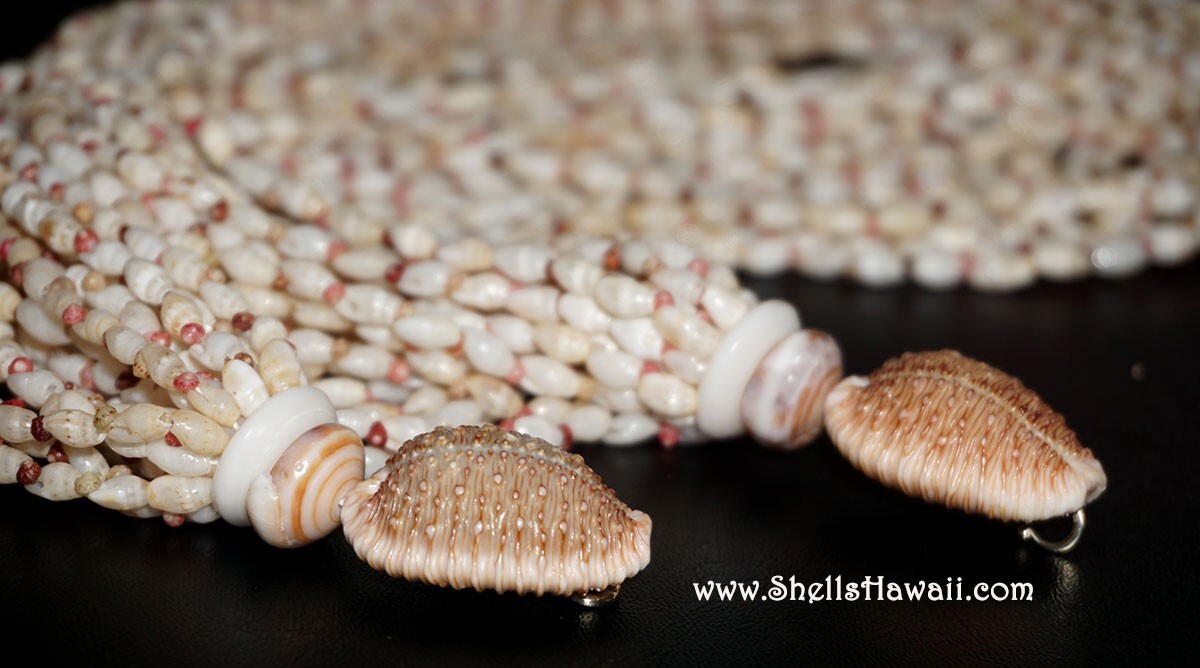
I hope you enjoyed learning a little more about granulated cowrie shells and the role they play in Niʻihau shell jewelry. Now you also have a little more information about what to look for, how mature and immature shells can differ, and why some shells may look smoother from natural ocean wear.
Whether you are looking for granulated cowrie shell supplies or searching for a special shell to use as a clasp in your own creation, I hope what I have shared here helps you look at these beautiful shells with a little more understanding — and perhaps notice some of the details you may not have noticed before.
With aloha,
Janjira