 USD
USD


Aloha and a very warm welcome to my blog everyone.
Today I’d love to sit with you and share one of my favorite Niʻihau shell jewelry styles, Kipona style. It is layered, textured, and full of movement and personality. If you’ve ever seen a strand of Hawaiian shell jewelry that looks full, colorful, and beautifully layered, almost like a gentle waterfall of shells, there’s a very good chance you were looking at Kipona style.
Let’s Get to Know More About Kipona Style
In Hawaiian, the word Kipona means combination or mixed, and that meaning really shows in how this jewelry is created. Instead of using just one shell type, Kipona brings different shells, textures, or stringing approaches together into one thoughtful design. When people refer to Kipona, they are talking about this mixed-shell design style.
This beautiful style truly lives up to its name. Kipona-style jewelry blends multiple shell types, patterns, and colors into one joyful and expressive design. You might see Kahelelani, Momi, and Laiki shells used together in coordinated or contrasting ways, often arranged with playful variation and texture.
It’s All in the Layers
Kipona refers to the combination of more than one type of shell to create a design. It can be a single strand, double strand, or more. As long as there is a thoughtful mix of shell types, colors, or patterns, it is considered Kipona style.
Sometimes the shells are all tied in the same technique, and other times each strand or section may use its own pattern. That’s the beauty of it. There is no one required way to create Kipona.
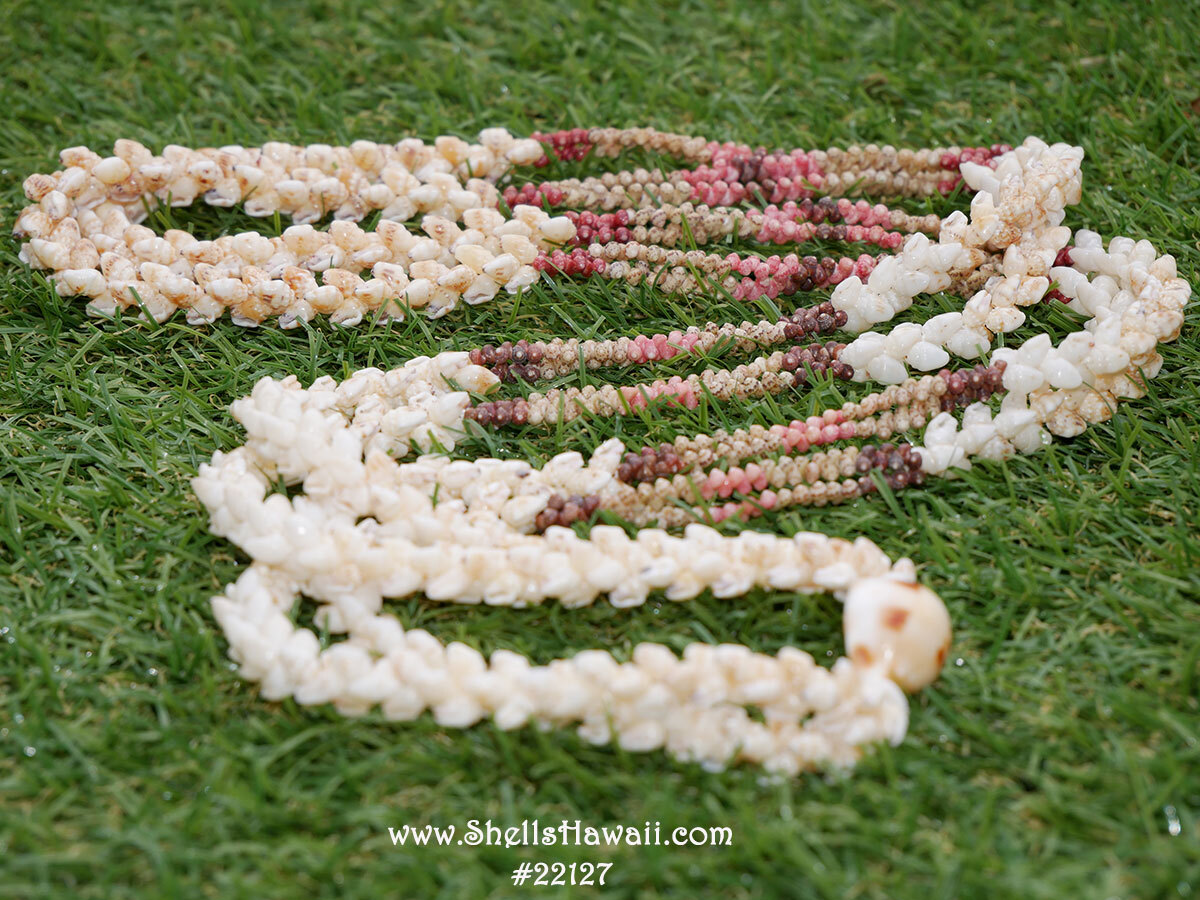
This is a beautiful Kipona style example where Kahelelani and Momi shells are combined in one piece. The balance between the larger Momi shells and the colorful Kahelelani accents creates depth, texture, and movement.
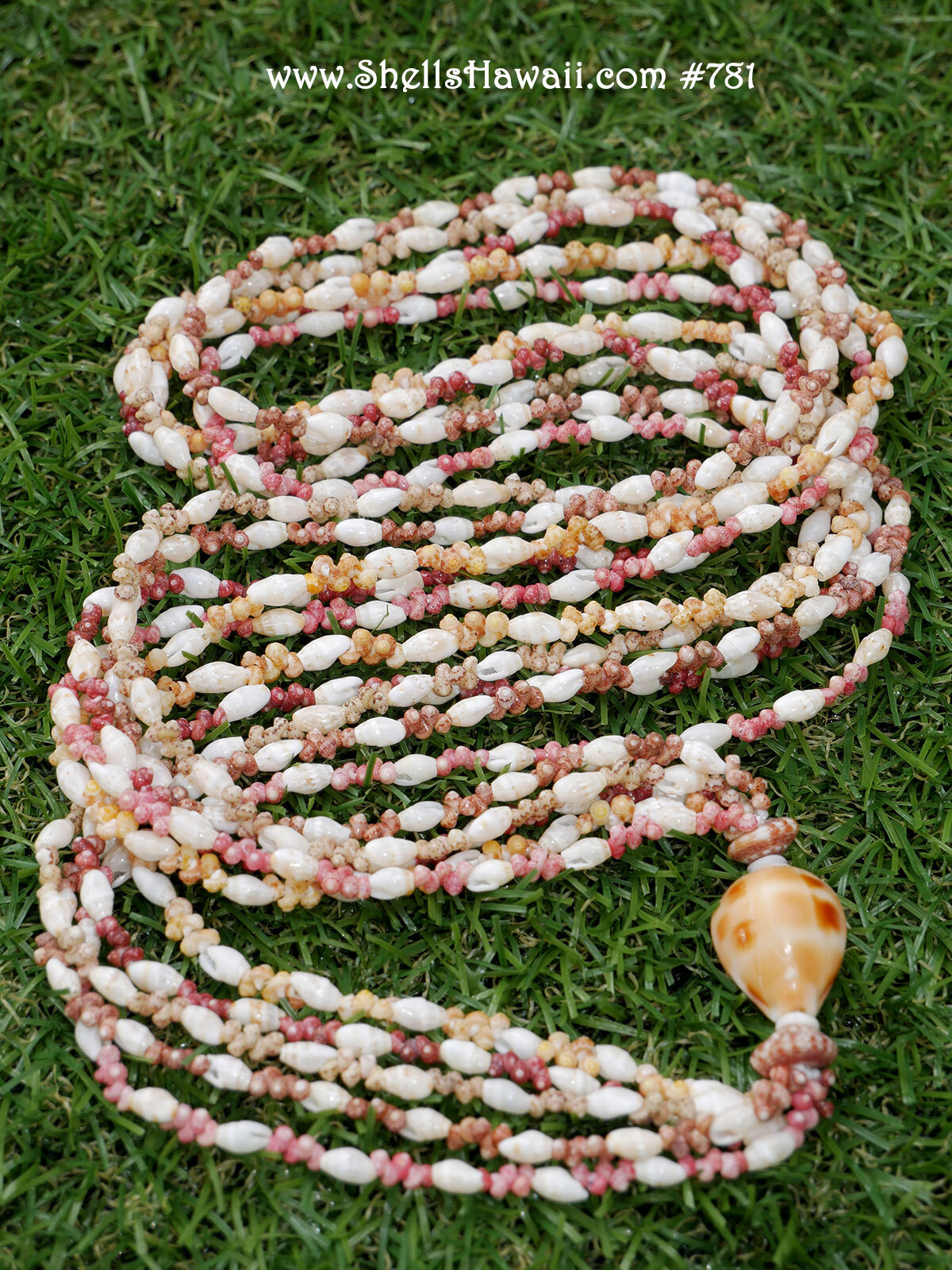
This is a lovely example of Kipona style, where Laiki and Kahelelani shells are combined in one piece to create a layered, colorful, mixed-shell design.
What’s the Difference Between Pikake and Kipona
This is one of the most common questions I get, and it makes sense. Both styles often use Momi shells, and they can sometimes appear together in the same piece. Here is the key difference.
Pikake style is a tying technique. The Momi shells are grouped closely and twisted or layered to mimic the buds of a pikake flower. It usually uses all Momi shells in a soft, continuous strand.
Kipona style is a design style that refers to the mix of different types of shells in one piece, like Kahelelani and Momi, or Momi and Laiki. It describes what shells are used together, not necessarily how they are tied.
A simple way to remember is this:
Pikake describes how it’s tied.
Kipona describes what shells are used together.
You can even have both in one design, a Kipona piece that includes a Pikake-style strand.
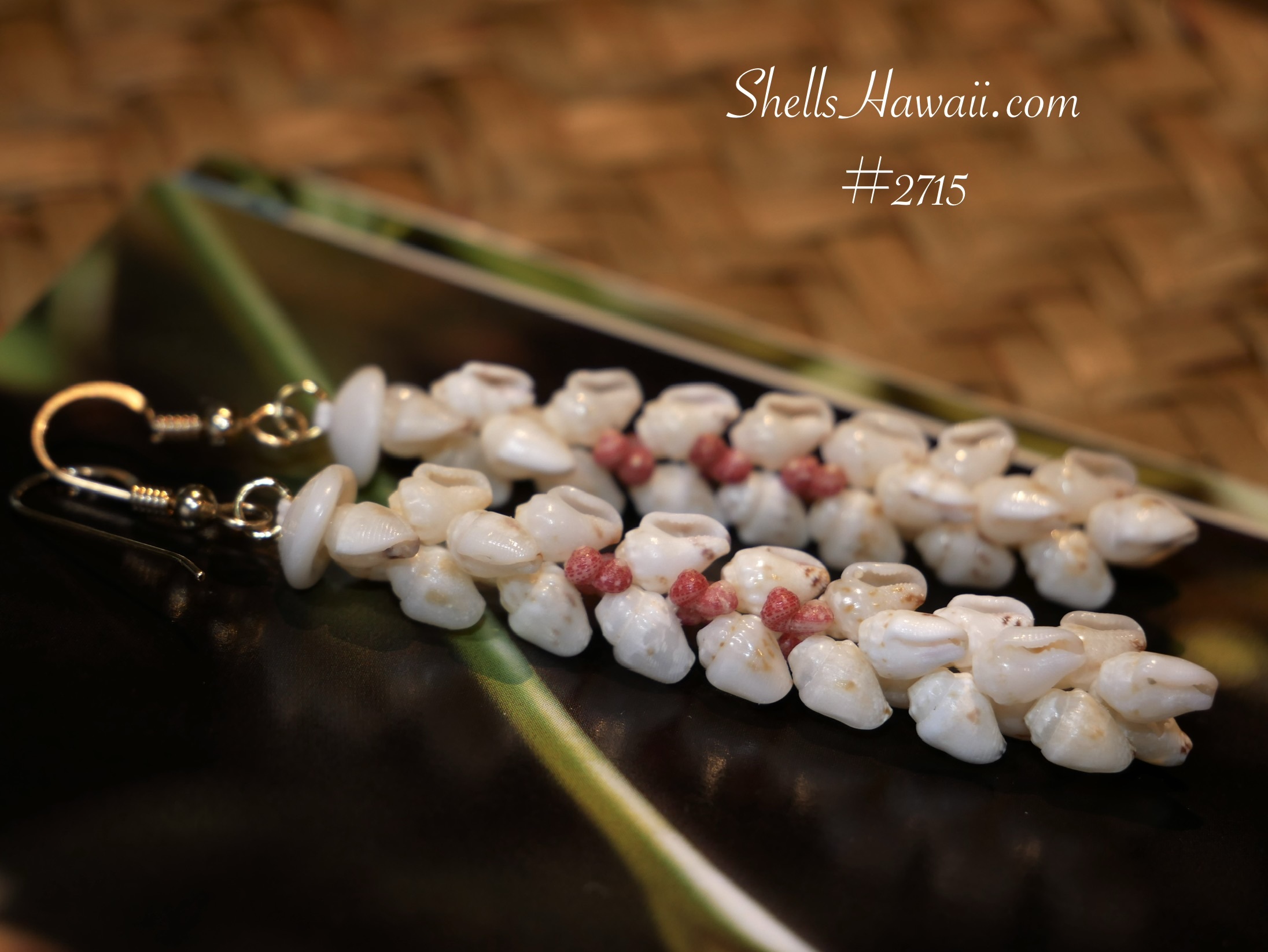
Here’s how Pikake style and Kipona style look side by side.

A Warm Closing on Kipona Style
Whenever I create Kipona style, I feel like I am weaving together more than just shells. It is a challenge, but the fun kind. It pushes me to be creative and thoughtful. It is not about tossing all the shells you have into one design. They have to flow and they have to belong together.
Creating Kipona style with Hawaiian shells is a form of art. It takes vision, patience, and a little bit of courage to mix colors, textures, and patterns in a way that feels right. When it all comes together, it becomes something truly special.
I hope the information above helps you better understand what Kipona style is. When you see Pikake and Kipona styles placed next to each other, I hope you’ll be able to recognize the difference more easily — whether you are studying the styles, creating your own work, or shopping online and seeing the term Kipona style used.
Much of what I share in these blogs comes from my own years of experience — experimenting, reading, observing, and learning as a creator. Many small working details only become clear when you actually handle the shells, sort them, and string them yourself. These are the kinds of things that can be difficult to understand through definitions alone, but much easier to appreciate through experience.
I hope that each time you visit and read one of these posts, you discover something new and perhaps feel inspired to try something for yourself.
As you begin to understand more about the different styles, shell types, and techniques used in Niʻihau shell jewelry, you may also begin to see the deeper story behind the art. This understanding often brings a greater respect for the collectors who carefully gather these tiny shells, and for the artists who have practiced and preserved this beautiful Hawaiian tradition long before our time.
With that awareness, the experience becomes even more meaningful — whether you are viewing a photograph, seeing a piece in person, or owning one of these designs yourself. Over time, many people find they develop a deeper appreciation not only for the shells, but also for the patience, dedication, and artistry that bring this traditional Hawaiian craft to life and help keep it alive for future generations.
If you’d like to see a little behind the scenes of what goes into creating my new Kipona style earrings, you’re warmly invited to take a look here:
Behind the Scenes — Niʻihau Shell Jewelry Kipona Style Earrings Creation
With aloha,
Janjira