 JPY
JPY


Aloha and welcome back to my work table today, everyone.
If you’ve been following my blog, you may have noticed I often talk about how important shell quality is in Niʻihau shell jewelry. And that naturally leads to something just as important — having a good supplier. When you start with a trusted supplier, they have already helped with that first step of sorting, and that takes a lot of work off your hands.
Because when collectors gather shells from the beach, not every shell comes in jewelry quality. I always like to pause here and think about that part for a moment… collectors walking along the shoreline under the hot Hawaiian sun, with the light reflecting off the sand, trying to spot these tiny shells. It’s not easy work at all. It takes patience, experience, and a lot of care.
I understand this deeply… because I am a collector myself. For me, if you want to truly be good at what you do, you have to know every step, learn every step, and experience every step of your craft. That is the only way to fully understand what goes into your work. Truly a labor of love.
Niʻihau Shell Bracelet Creation Day
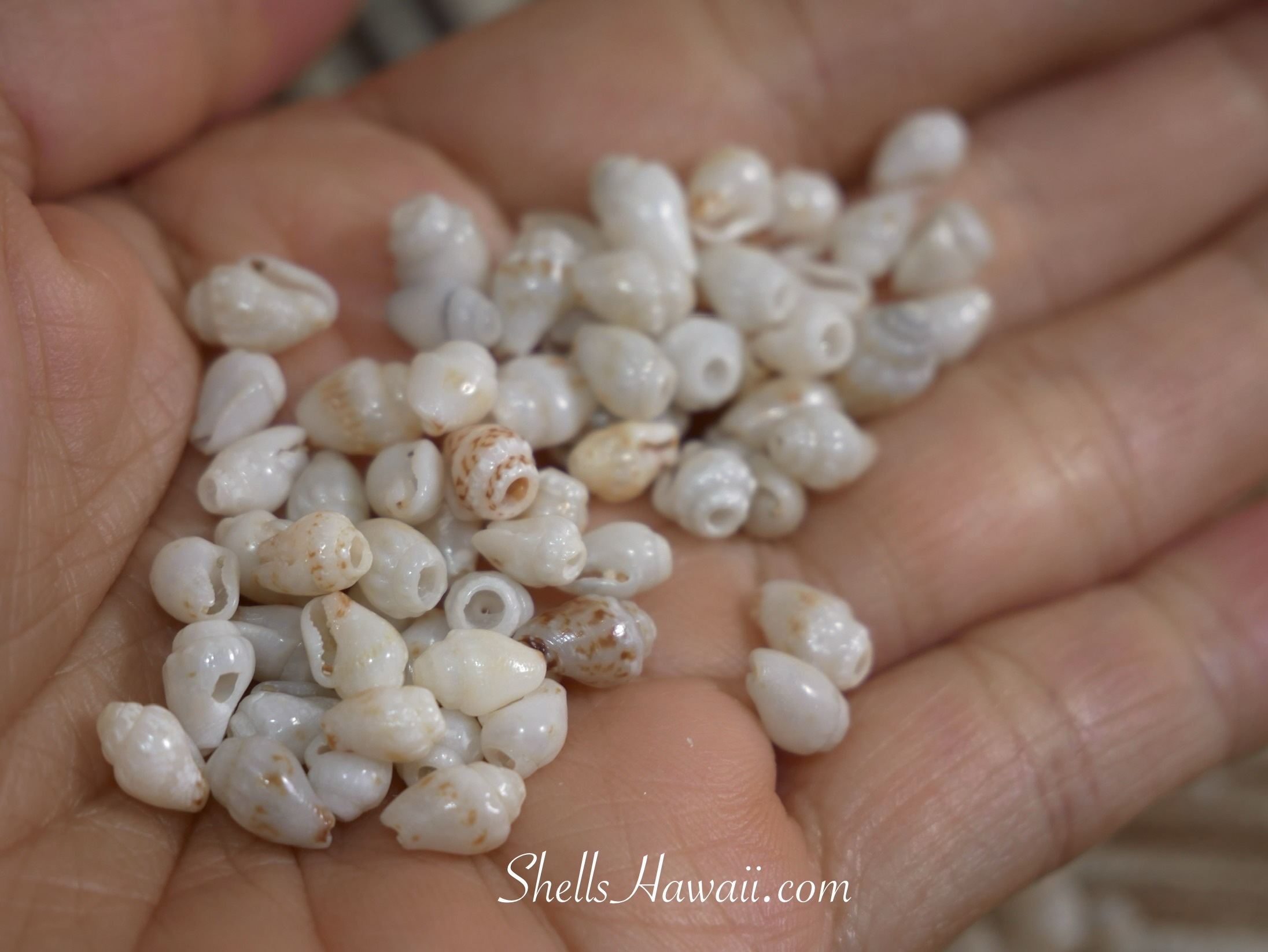
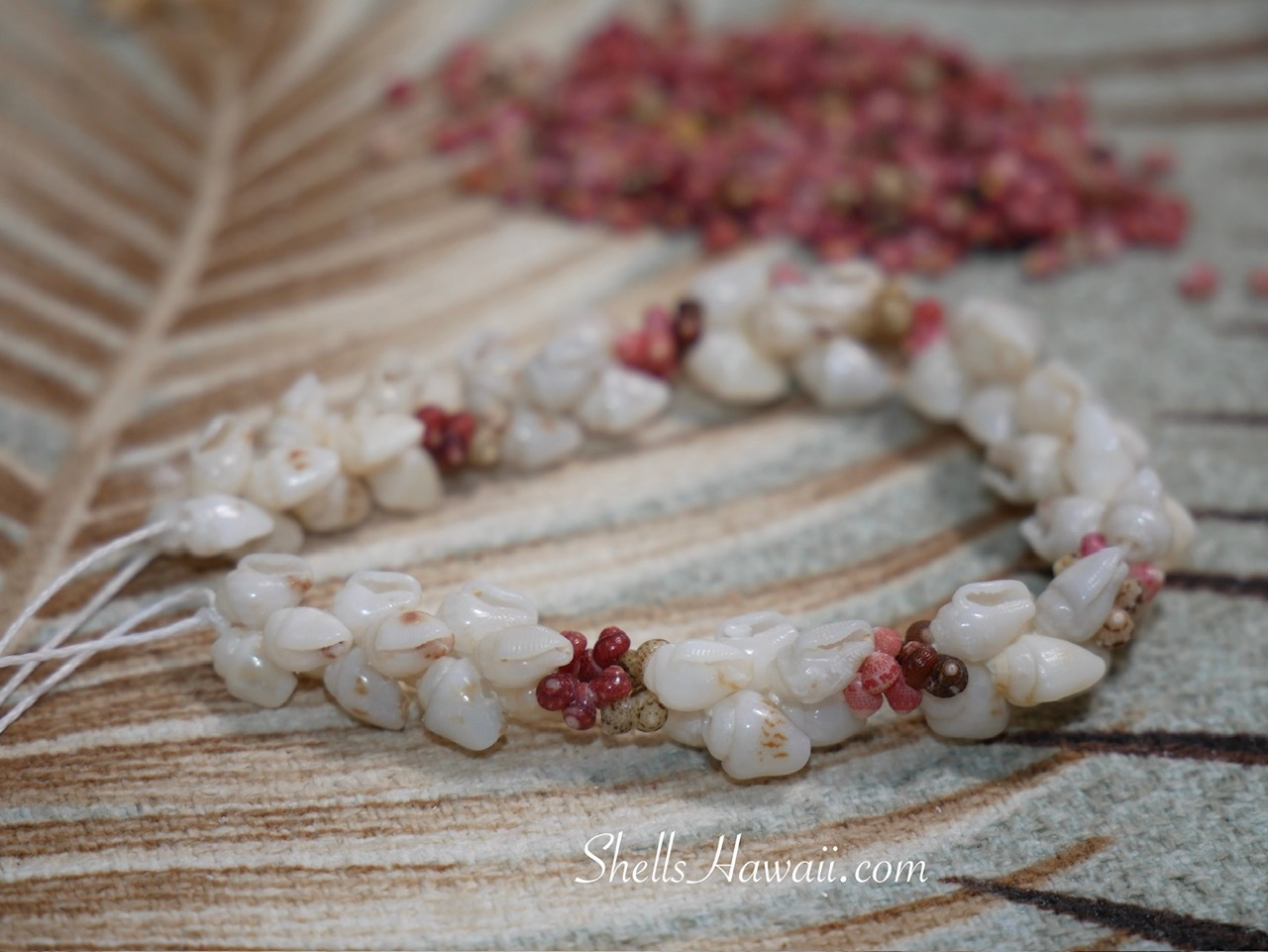
Today I’m working on a Kipona style bracelet using Momi shells in a soft off-white with a gentle light blue undertone, paired with a beautiful variety of Kahelelani shells that really bring the bracelet to life.
For these Momi shells, I’ve already gone through several steps — sorting them, cutting the tips, and cleaning out the sand — so I can begin with the best shells possible. And still, as I’m working, I’m once again experiencing a missed cracked shell in my creation. Even after I check, check, and check… sometimes I still miss it.
How Important Is Sorting, Really?
Even after all the preparation I’ve already done, I still find myself checking again as I work — especially while poking the holes and as I begin stringing. I pause often, just to take another look.
Everything was going so smoothly.
By the time it was pao hana, I still had a few more sets to finish before reaching the length I had in mind. Even after working under bright LED light all day, I know sometimes I may still miss shells that are not in the quality I prefer for my creation. So I decided to stop and continue my work the next day, when I could see everything more clearly.
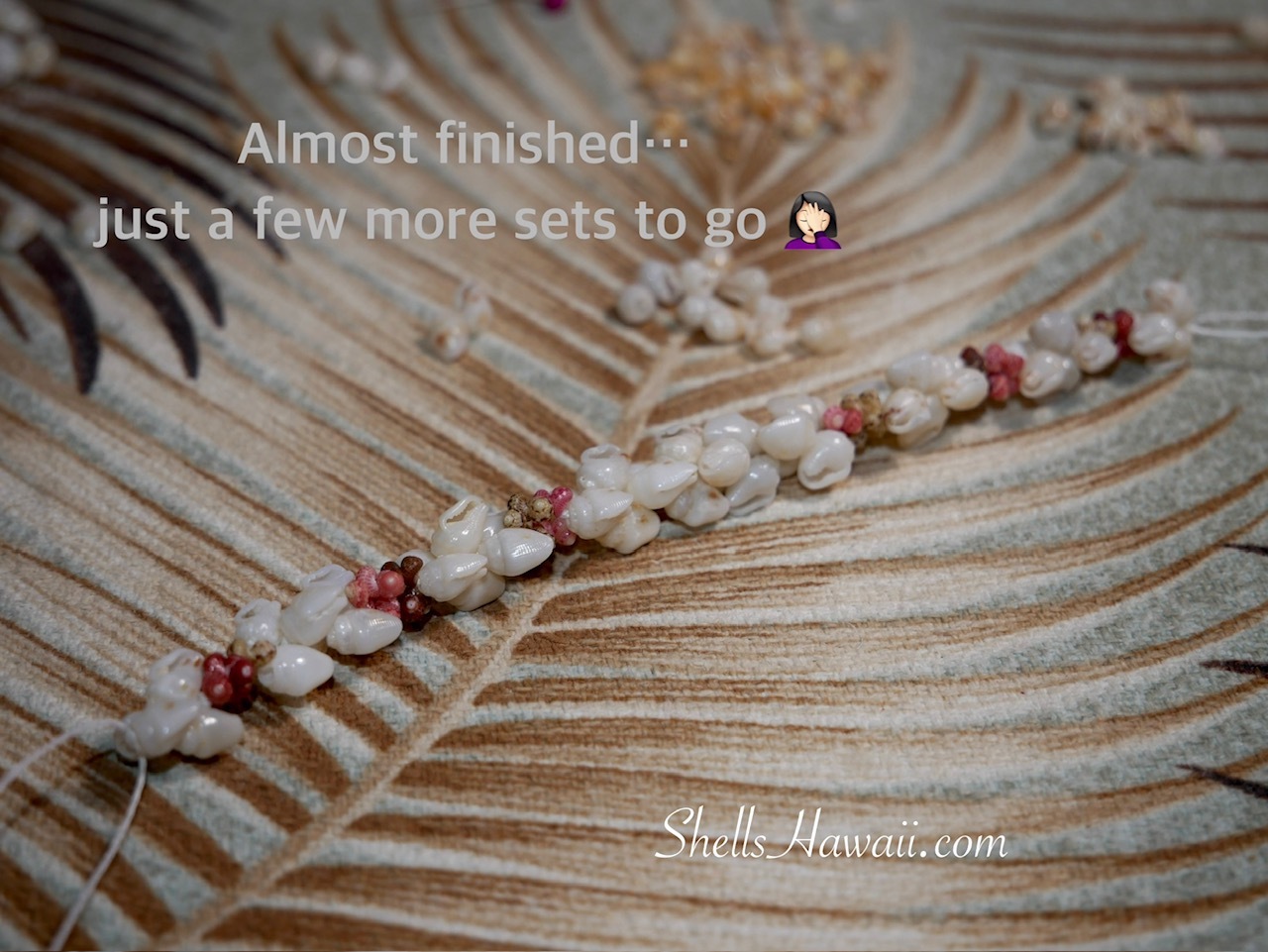
This morning, I came back to my table to finish what I left off — just a little more poking and one last check… and then I saw it. A small crack on one of the Momi shell — the kind that quietly tells you it won’t last. And of course, it was right in the last set, sitting in the middle of the bracelet.
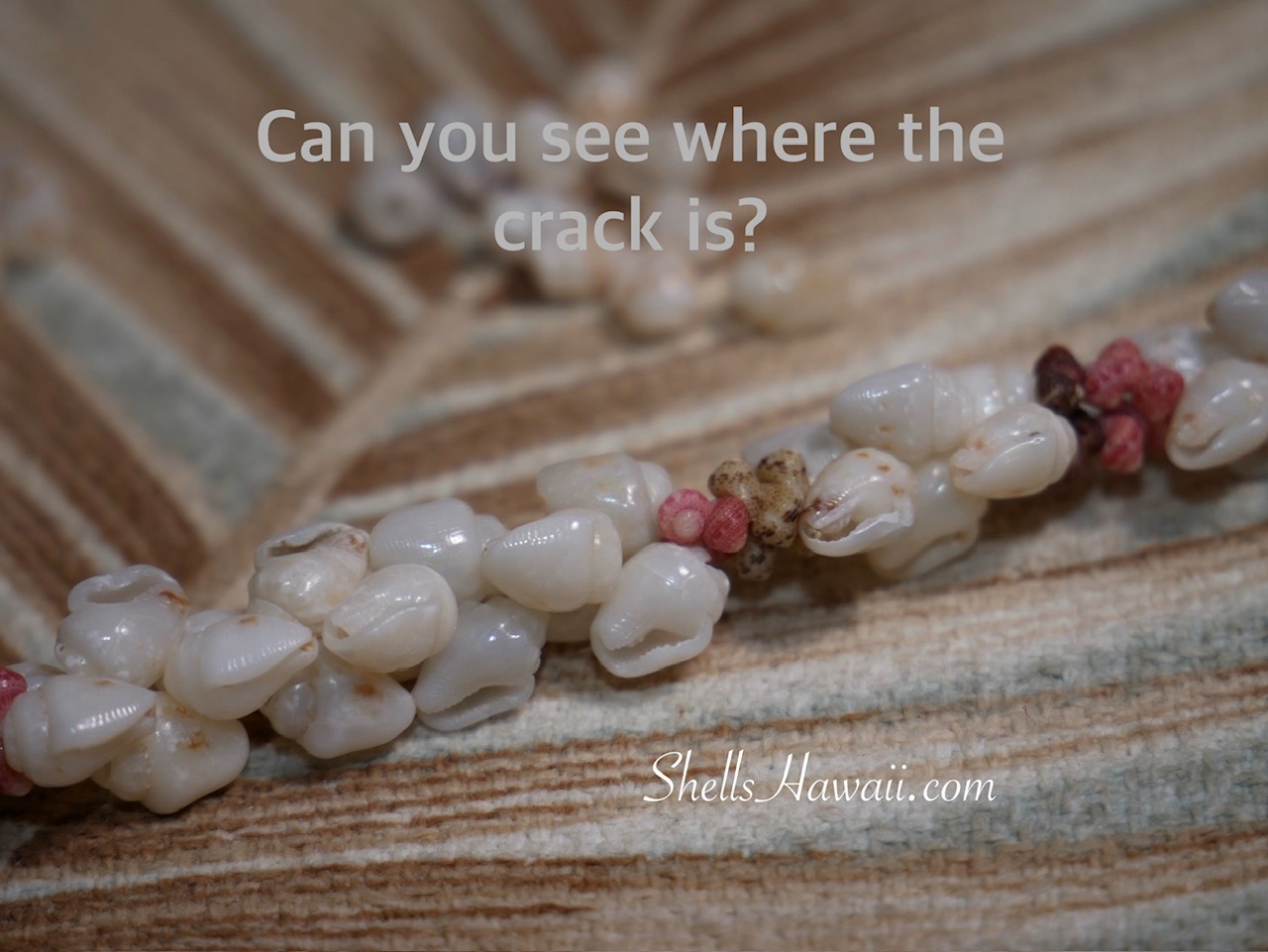
Do You Let It Go… Or Redo It?
Moments like this always bring the same question… do you let it go, or do you undo it and start over?
For me, the answer is always the same — I redo it. Even if the shell doesn’t break while it’s still with me, I know one day it will, maybe while someone is wearing it. And that is something I never want to happen. So even if it means going backward a little, I will always choose to fix it.
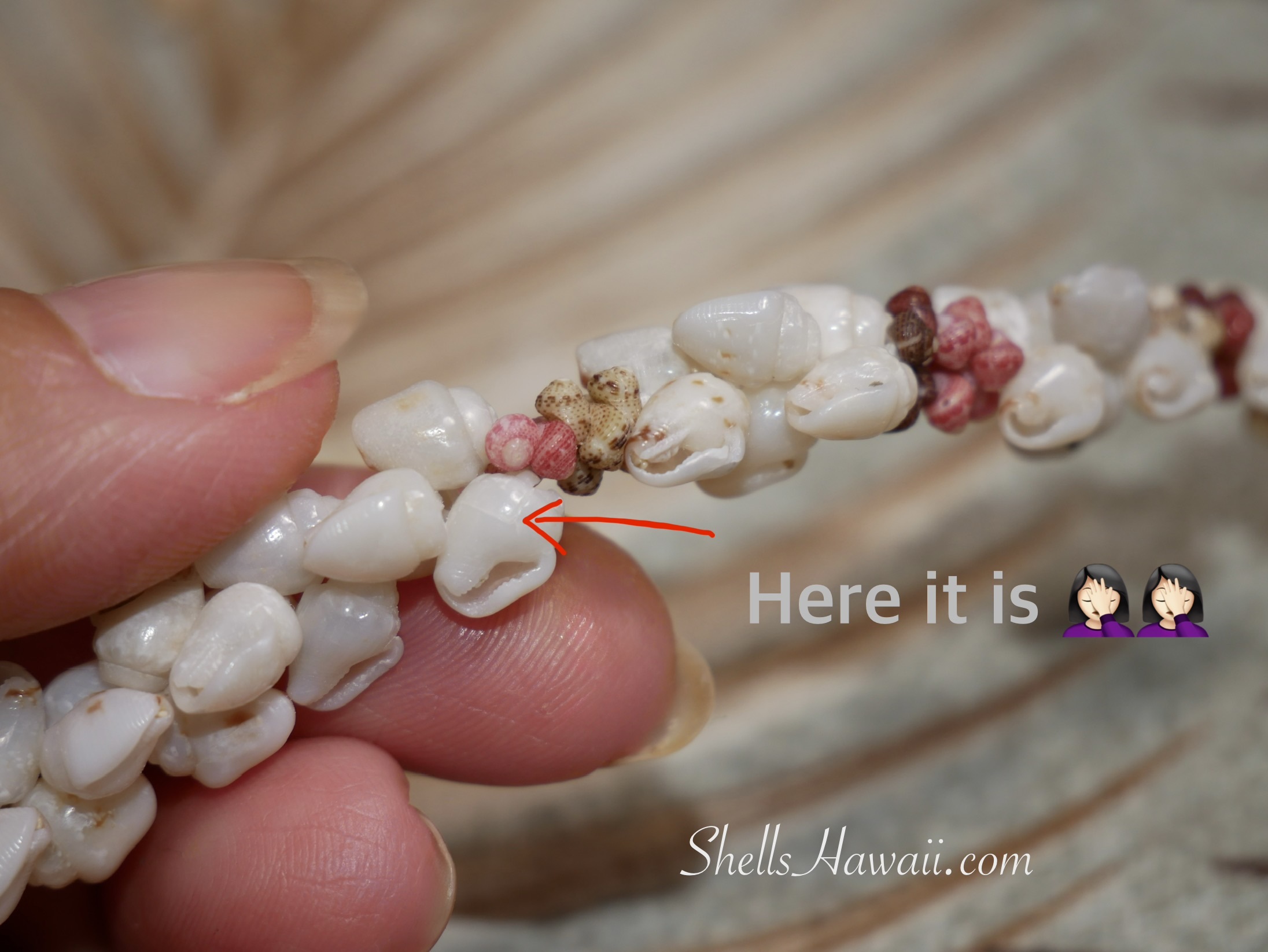
Undoing and redoing the shells using the same string is not easy. The string softens the more you work with it, and each time you pull the shells back through, you have to be very careful not to twist or weaken it even more. Unless the holes were made quite big in the beginning — which can cause the string to show — you really have to move slowly and gently. There is also the risk of breaking other shells as you pull them backward off the string, and that can happen more often than you expect.
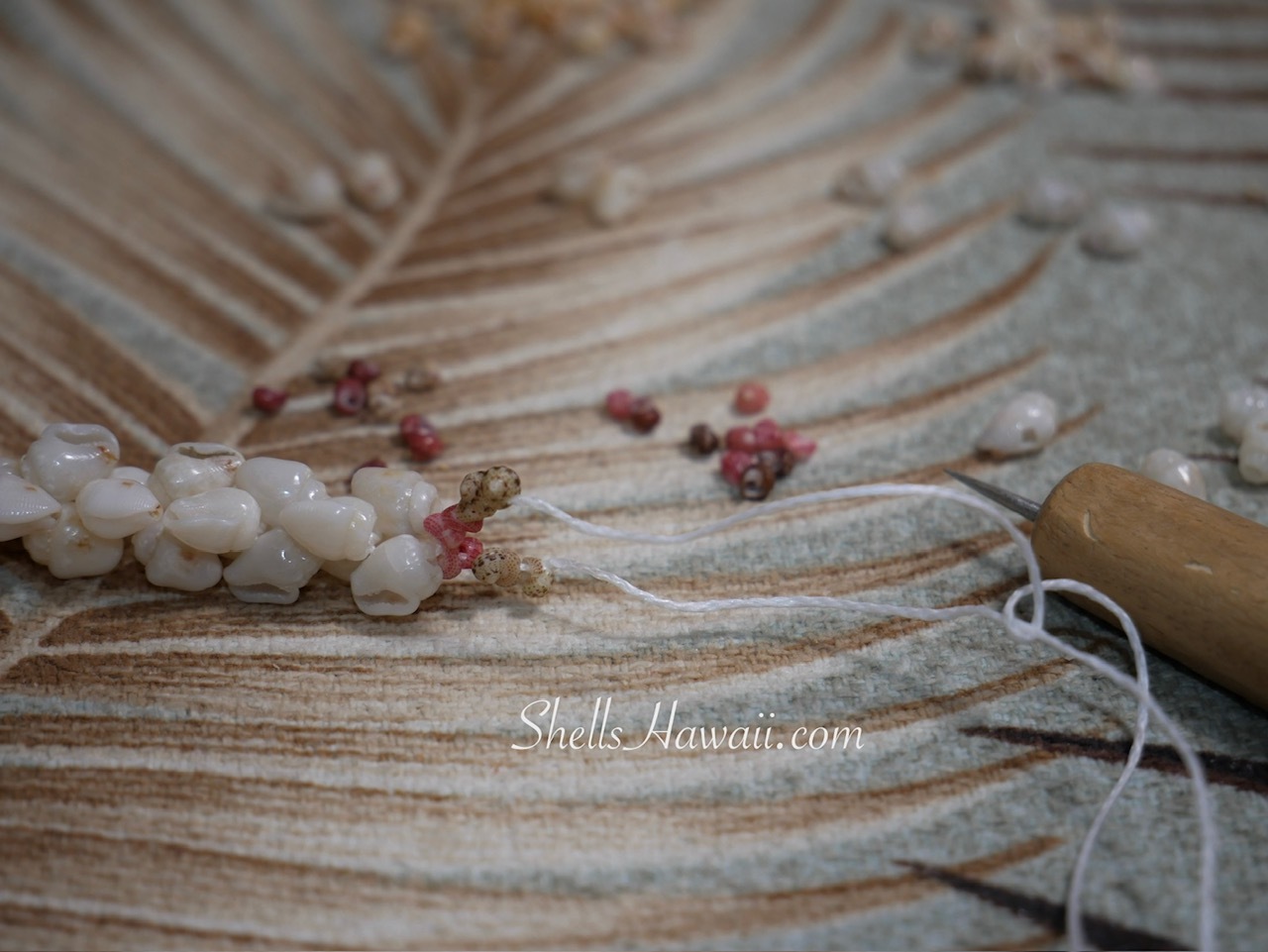
This picture shows undoing the Momi and Kahelelani shells back to the section where the cracked Momi shell needs to be replaced.
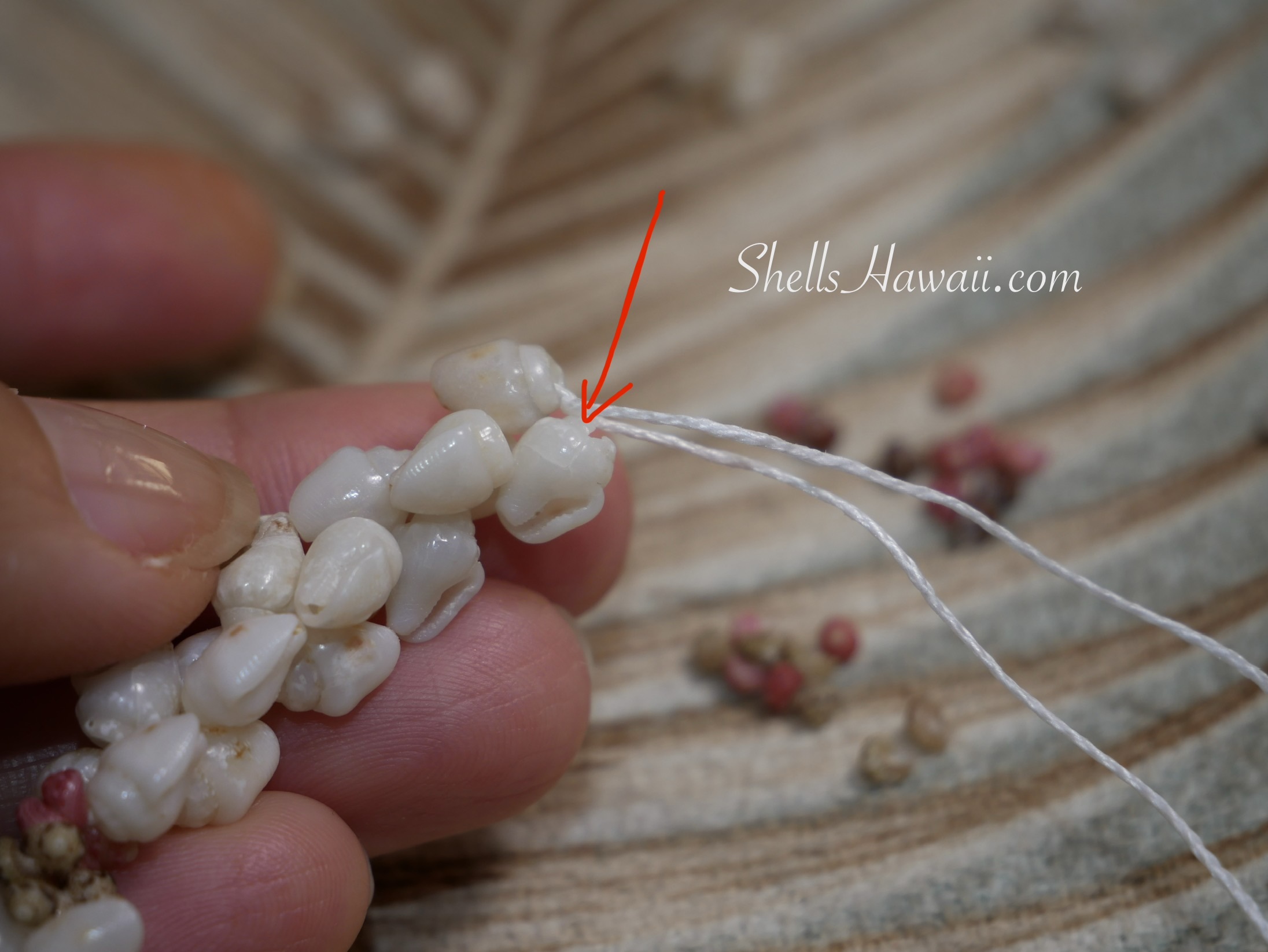
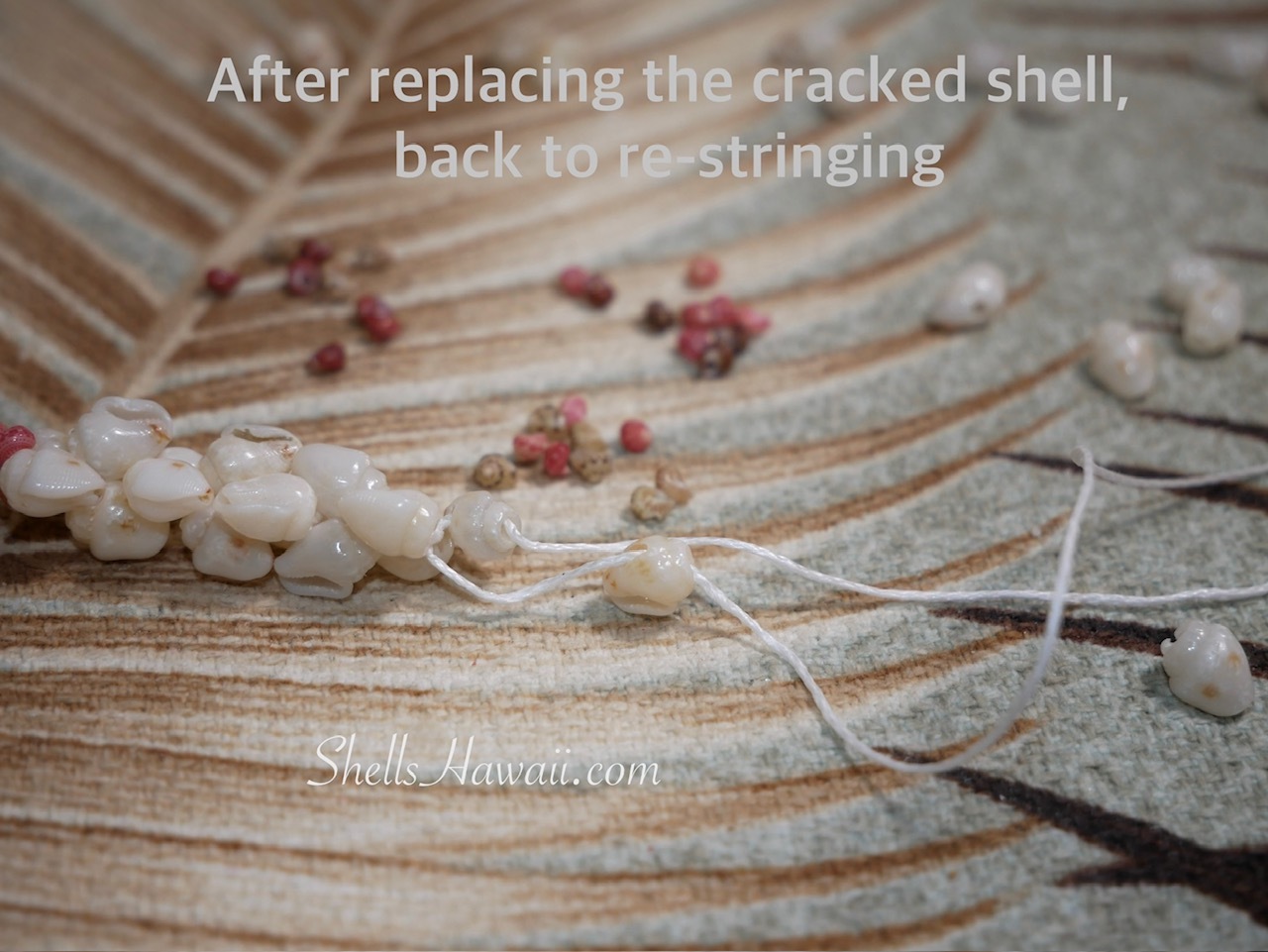
And then comes the next step… re-stringing. Once you’ve undone the section, the string is no longer firm and smooth like when you first started. It becomes softer, less stable, and that makes your work more difficult. You will see in the photos how the string changes after undoing — it’s the opposite of what you want when you begin. But still, I will keep going and finish it. And if I can’t… then I will take the whole bracelet and start over from beginning. Yes… that has happened more than once.
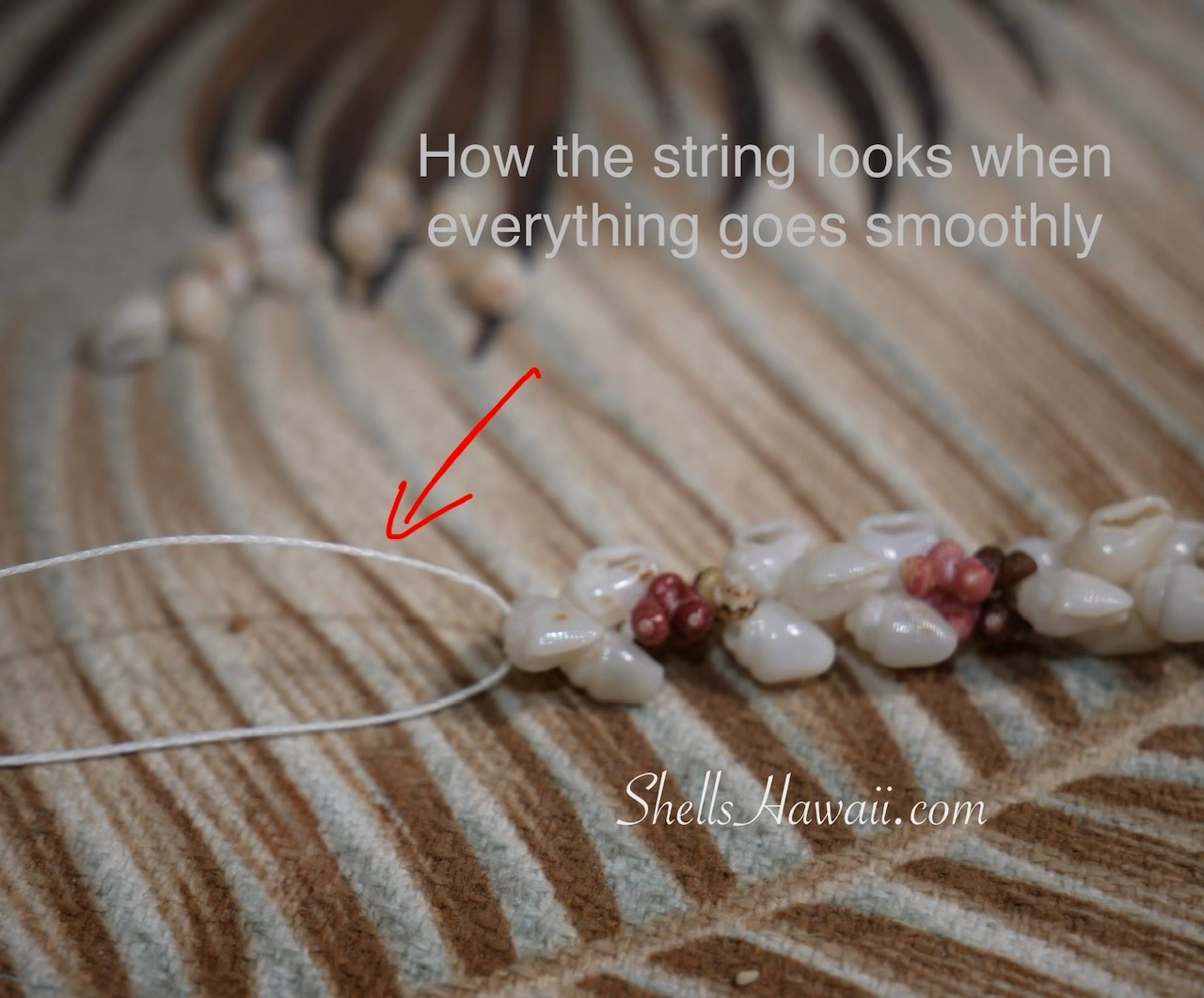
Here is how the string looks on the other end, where the shells didn’t need to be undone to replace the cracked Momi shell. The string stays smooth and firm when everything goes as planned, making it much easier to work with.
There Is Always Something to Learn When We Pay Attention to the Details
As I finish my work with this bracelet, I look back at everything I shared here.
You may have learned a little more, and maybe understand a little deeper how important it is to work with quality shells. And also how important it is to slow down and pay attention to the small details in every step, so you don’t have to go back and redo what I just went through.
After removing and replacing the cracked shell, I took a moment to look over everything once more… and I feel really happy with how this bracelet came together. If you’d like to see the finished piece, you’re always welcome to take a look at the listing here.
Mahalo nui loa for stopping by and sharing this moment with me. These small steps, these little details… they are what make each day at my work table so special.
I hope to see you again next time — I’m already looking forward to what my next creation and adventure with these tiny shells will be. Turning these tiny shells into something beautiful to wear is a process I continue to learn from every day and there is always more to learn behind the scenes… the kind of learning that helps you appreciate the shells and Niʻihau shell art even more.
See you again next time, everyone.
With aloha,
Janjira