 USD
USD


Aloha and welcome to ShellsHawaii. Thank you so much for being here and taking a little time to read along with me.
Momi shells are one of the most commonly used shells in Niʻihau shell jewelry, and they’re often the first shells people discover when learning about this beautiful art form. If you’re new to Momi shells, I invite you to spend a little time getting to know them before continuing this journey with me.
Today, I’d love to share a little more about Momi shell grading. You can find a lot of information online through articles, Google, research, or even AI, but even with all of that information, it can still be difficult to truly understand what shell grading looks like in real life. So in this blog, I simply want to share my own experience — what I’ve learned through years of sorting shells, poking holes, stringing jewelry, breaking shells along the way, and slowly understanding what works and what doesn’t.
This is not meant to be a technical guide or a perfect grading system. It’s simply my personal experience, shared in hopes that it helps you feel more comfortable and confident as you learn about Momi shell grades. Momi shells come in many sizes and colors, and some colors are much rarer than others. If you’d like to learn more about the different colors and types of Momi shells, you’re always welcome to visit the Shells Information section of the blog.
How I Look at Momi Shell Grades
When people ask me about Momi shell grades, I always like to mention that these are not official grading rules or a strict system. Most grading comes from my experience — years of working with the shells every day to create Niʻihau shell jewelry.
For me, grading is not about deciding whether a shell is good or bad. It’s more about understanding what that shell is best suited for. One of the first things I pay attention to is the overall quality of the shells — whether they have cracks, chips, signs of wear from ocean tumbling, and of course, their luster.
Luster (shine)
Some Momi shells have a deep, natural glow — almost like they’re softly lit from within. Others have a quieter, more gentle shine.
Brighter, more even luster is often seen in higher-grade shells, while softer or more worn shine usually comes from shells that have spent more time tumbling in the ocean. Neither is wrong — they simply serve different purposes.
When you look at the photos below, you’ll see three different levels of luster to help compare Momi shell grades.
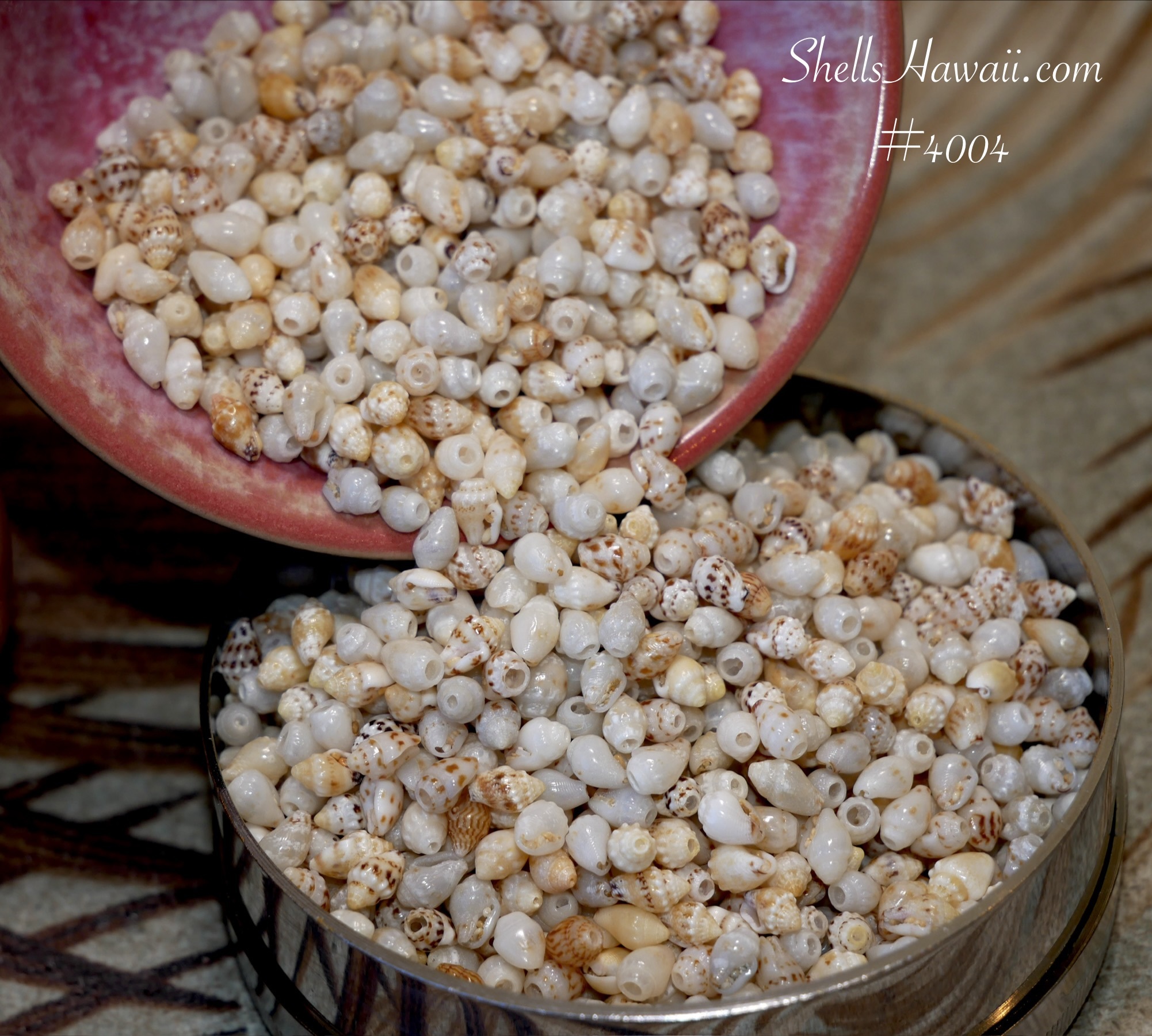
These Momi shells show beautiful high luster and excellent overall quality. The shells have very little to no visible imperfections, with no major cracks or damage, which is what I personally consider A-grade quality.
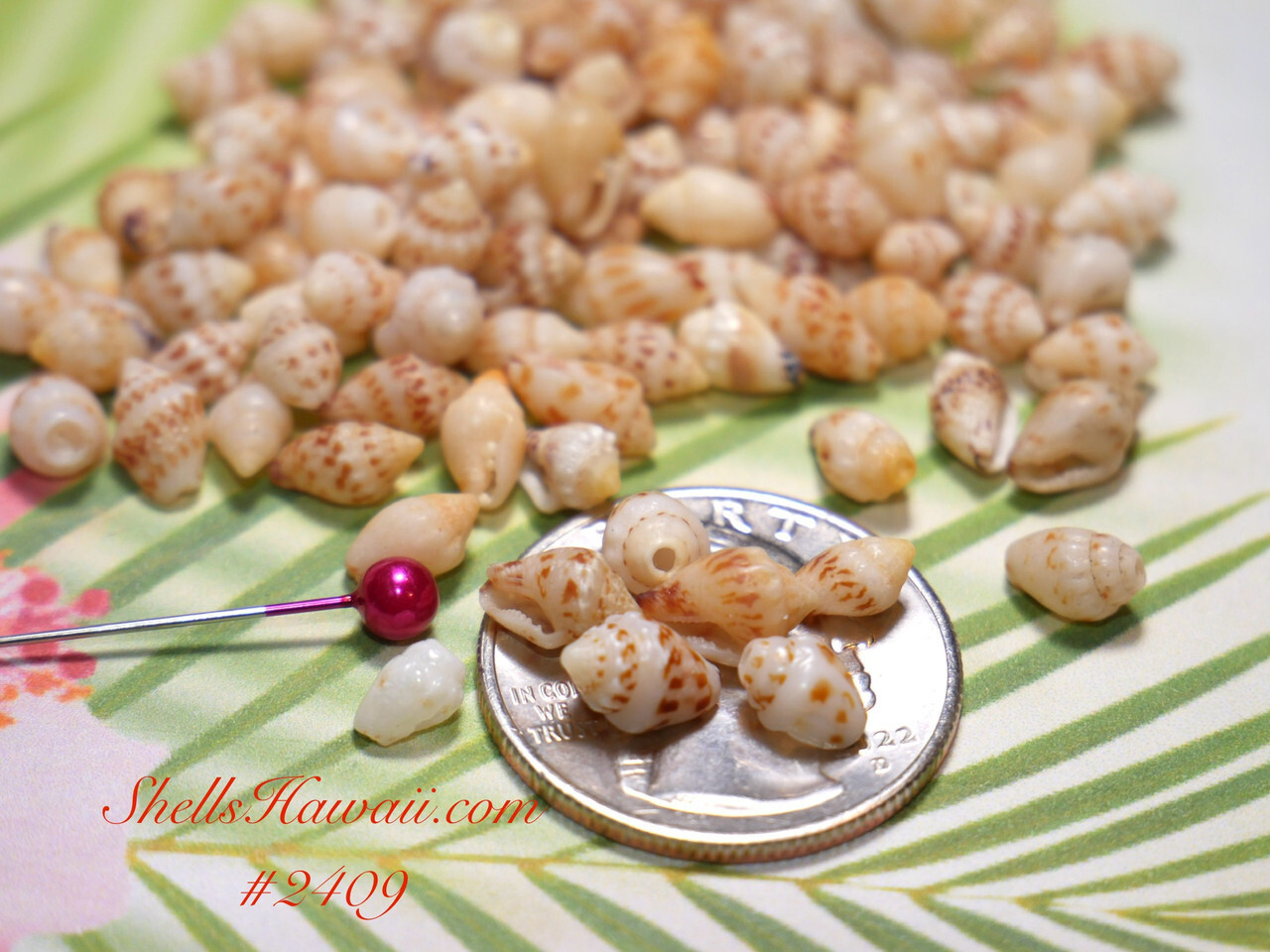
The Momi shells in this photo have less luster and shine when compared to the first photo above. The shells still have some natural glow, but the shine is softer and not as even. This is what I personally consider B-grade quality.
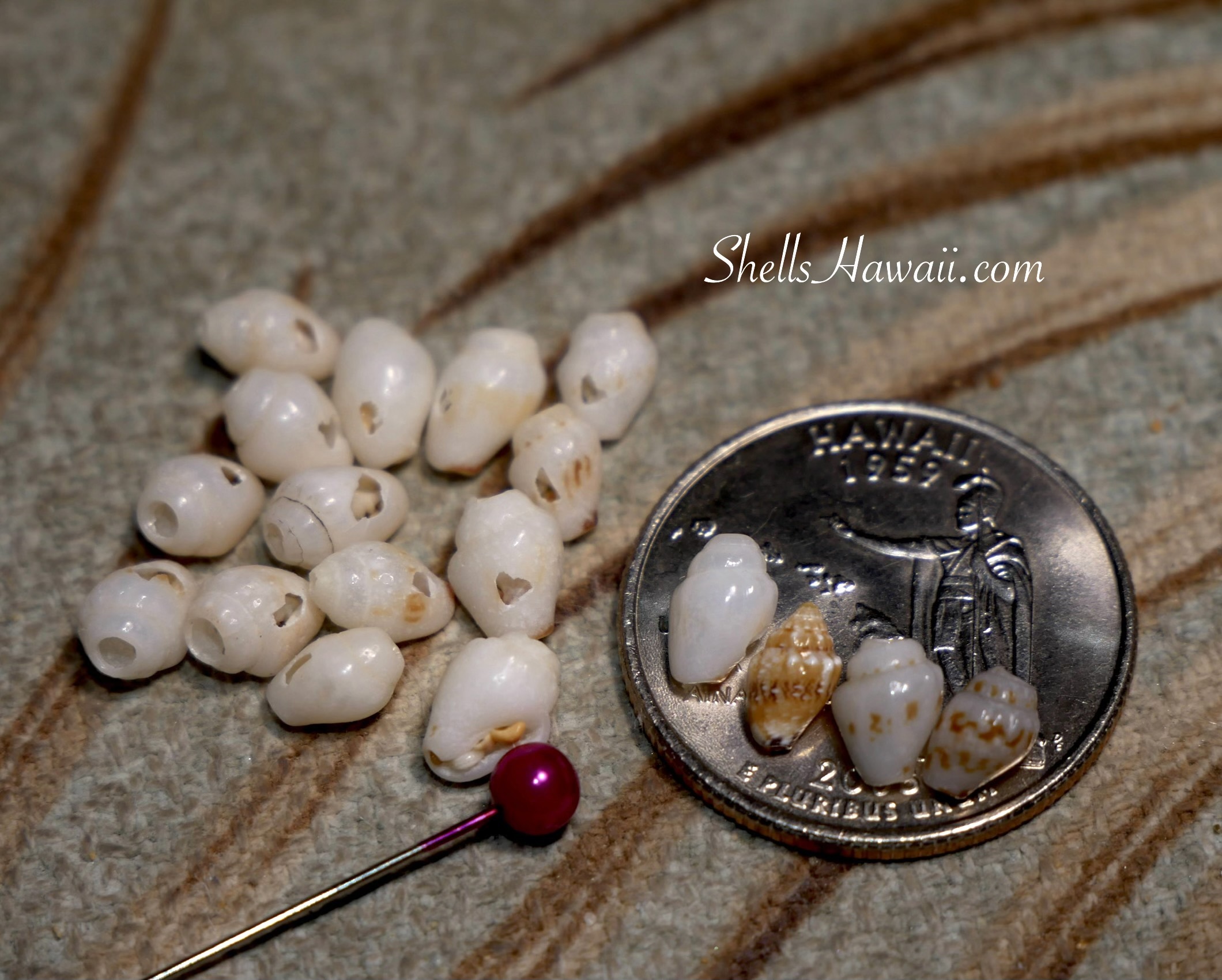
The white Momi shells in this photo show much less luster when compared to the earlier photos, though they are still very good quality for creating Niʻihau shell jewelry. Some shells may almost have a matte finish, giving them a softer and more natural look.
Surface and texture
With Momi shells, the shells that have higher luster almost feel polished. The surface and texture feel smoother and shinier when you rub them with your fingers or hold them in your hand. High-quality shells often feel very smooth, almost silky.
With B- or C-grade shells, you can usually feel less smoothness. The shells often show less luster, and some may almost have a matte finish from natural ocean wear over time.
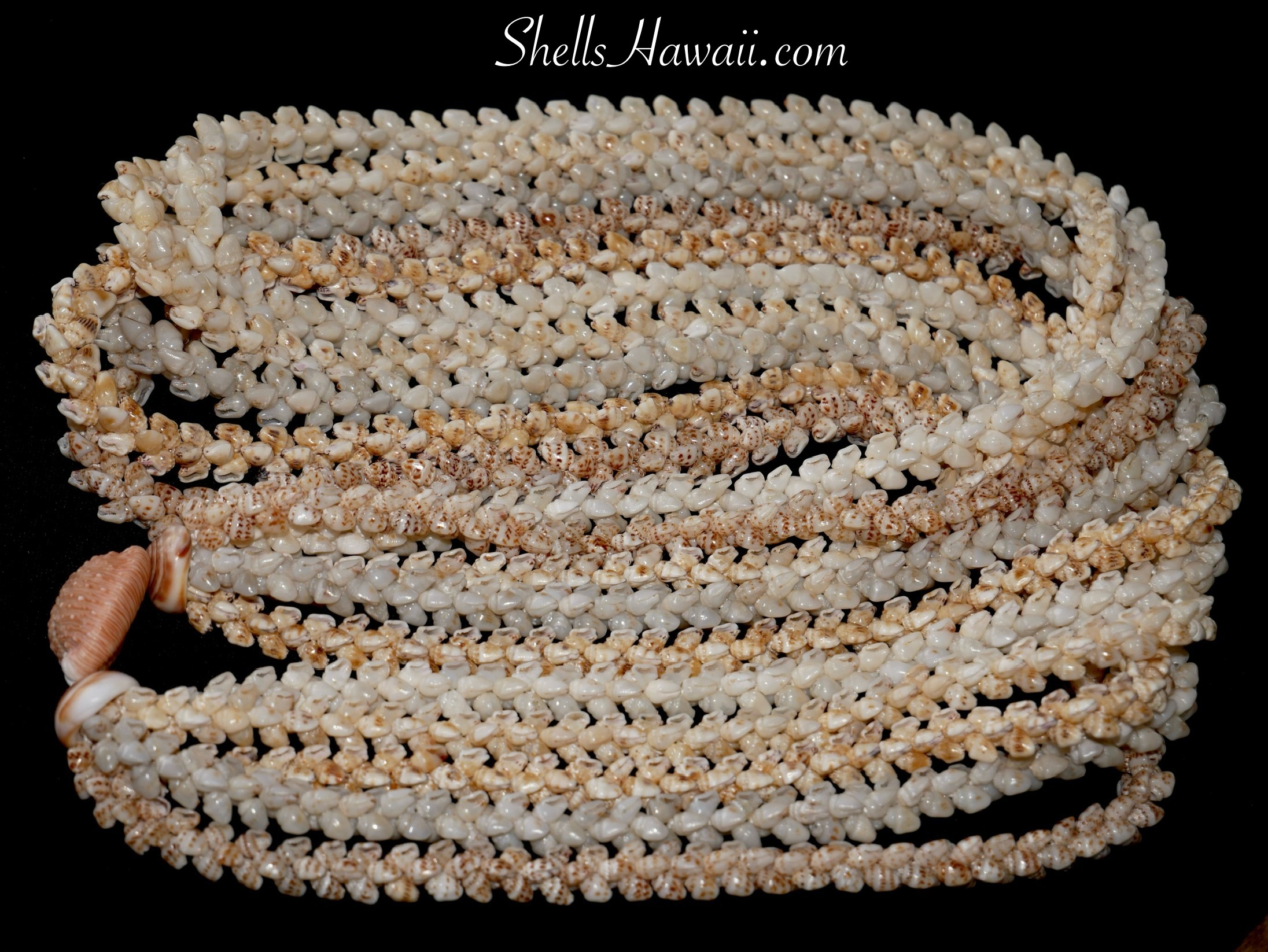
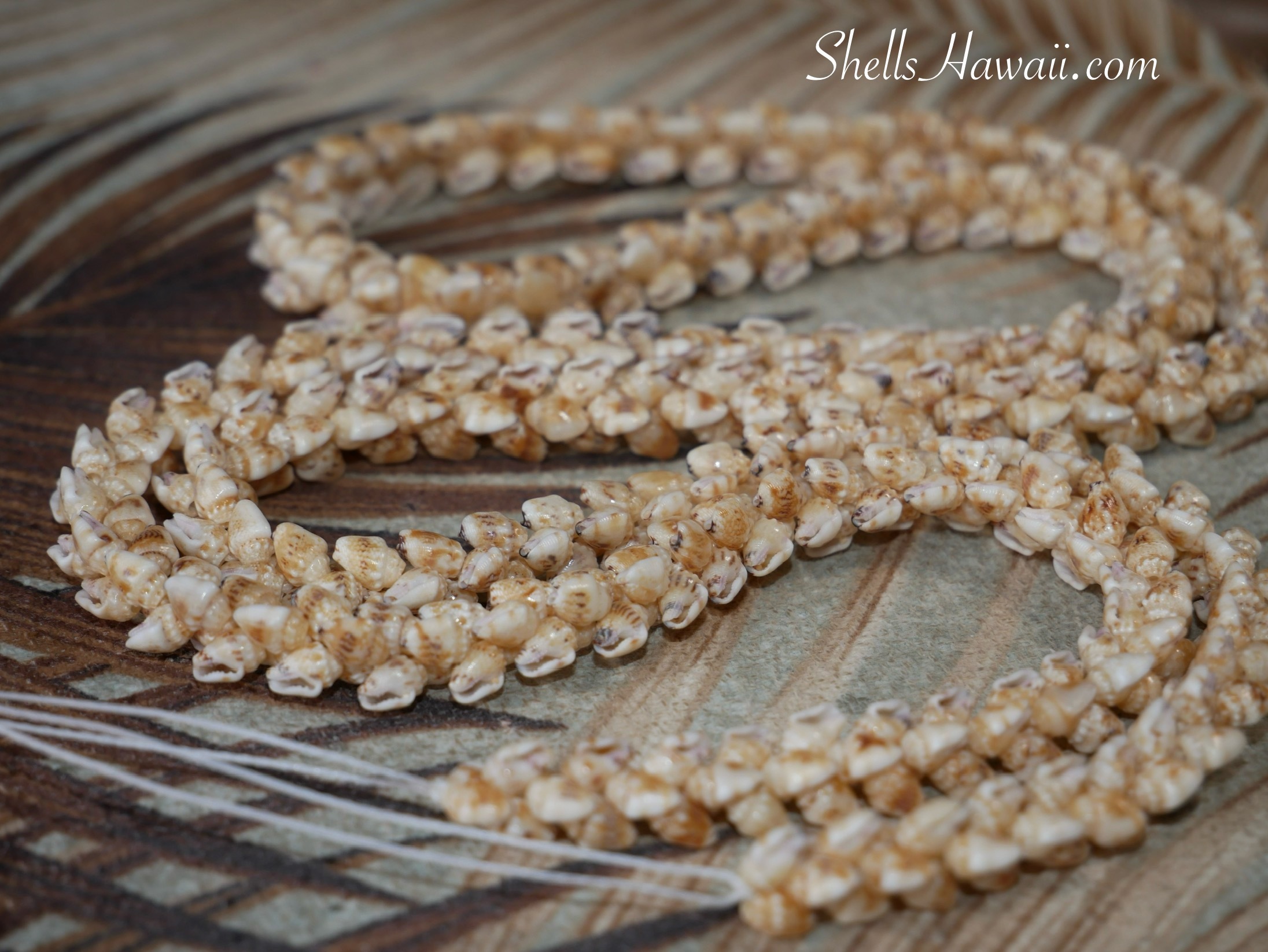
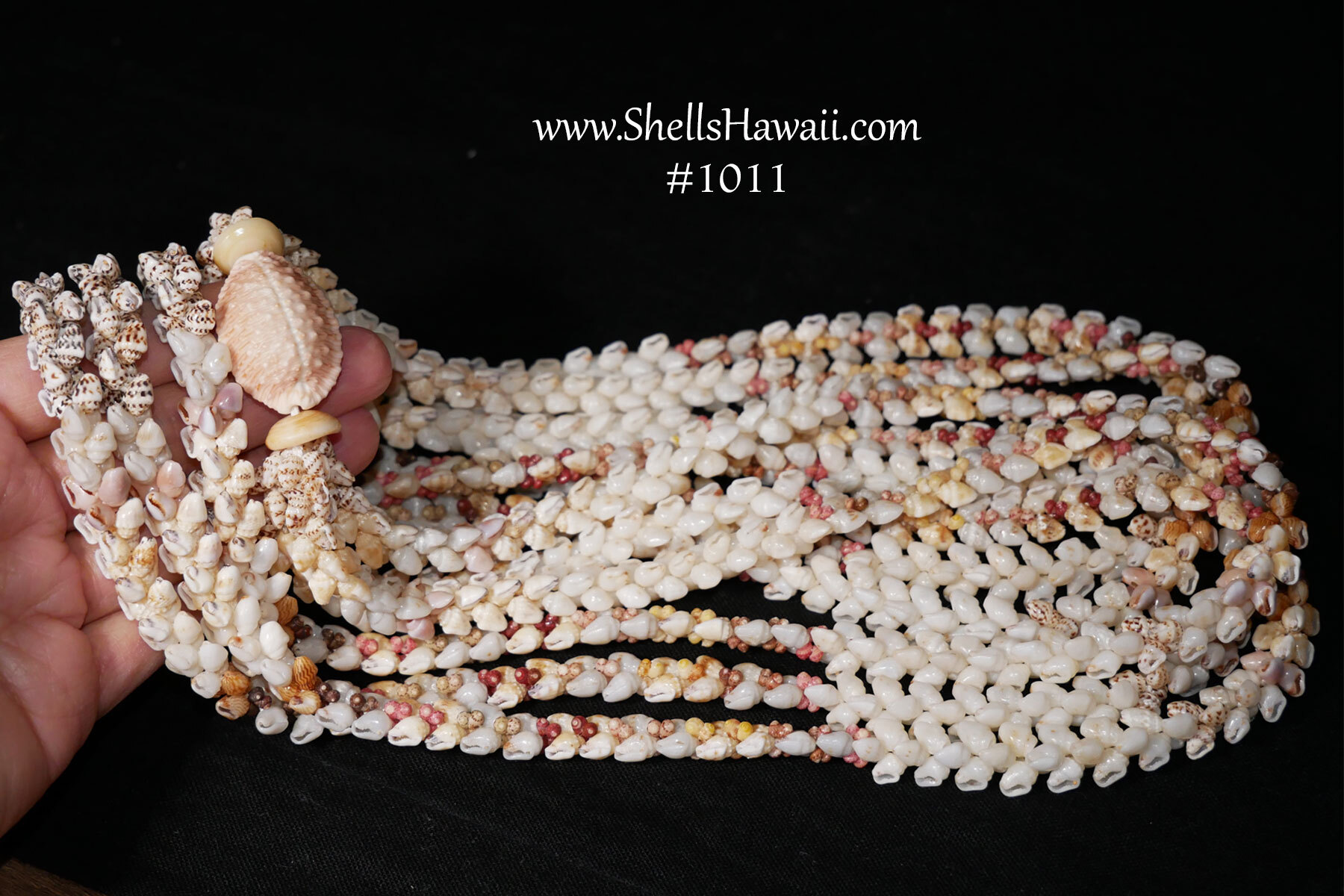
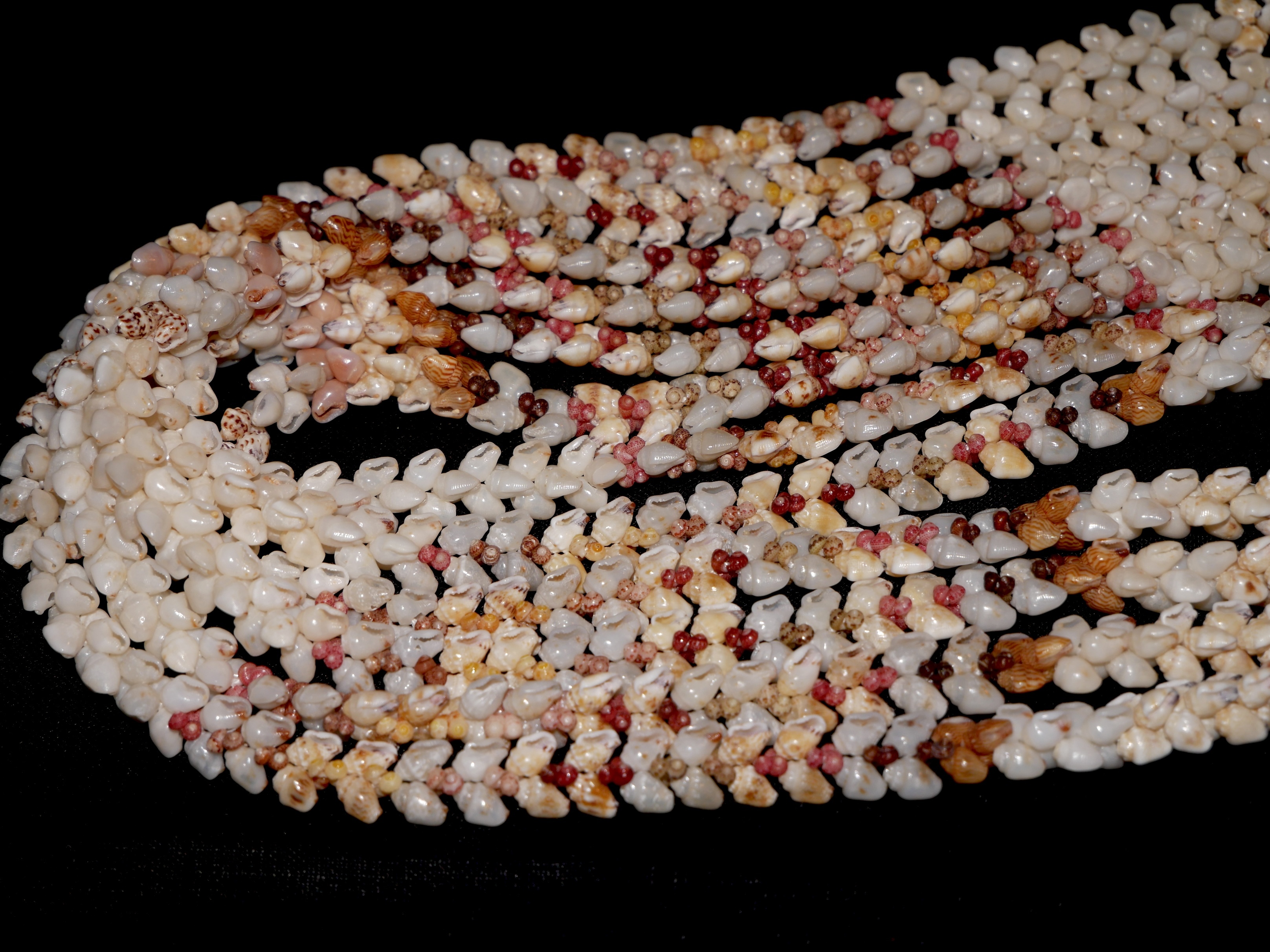
In certain colors of Momi shells, the shells can be very difficult to find and extremely rare. Because of this, rarity, luster, shell quality, and overall balance become some of the most important things to look for in a finished piece of Niʻihau shell jewelry.
These photos feature A-grade Momi shells and show some of the rarer shell colors, along with the workmanship and careful shell matching needed to create a smooth and balanced design.
Imperfect Momi Shells
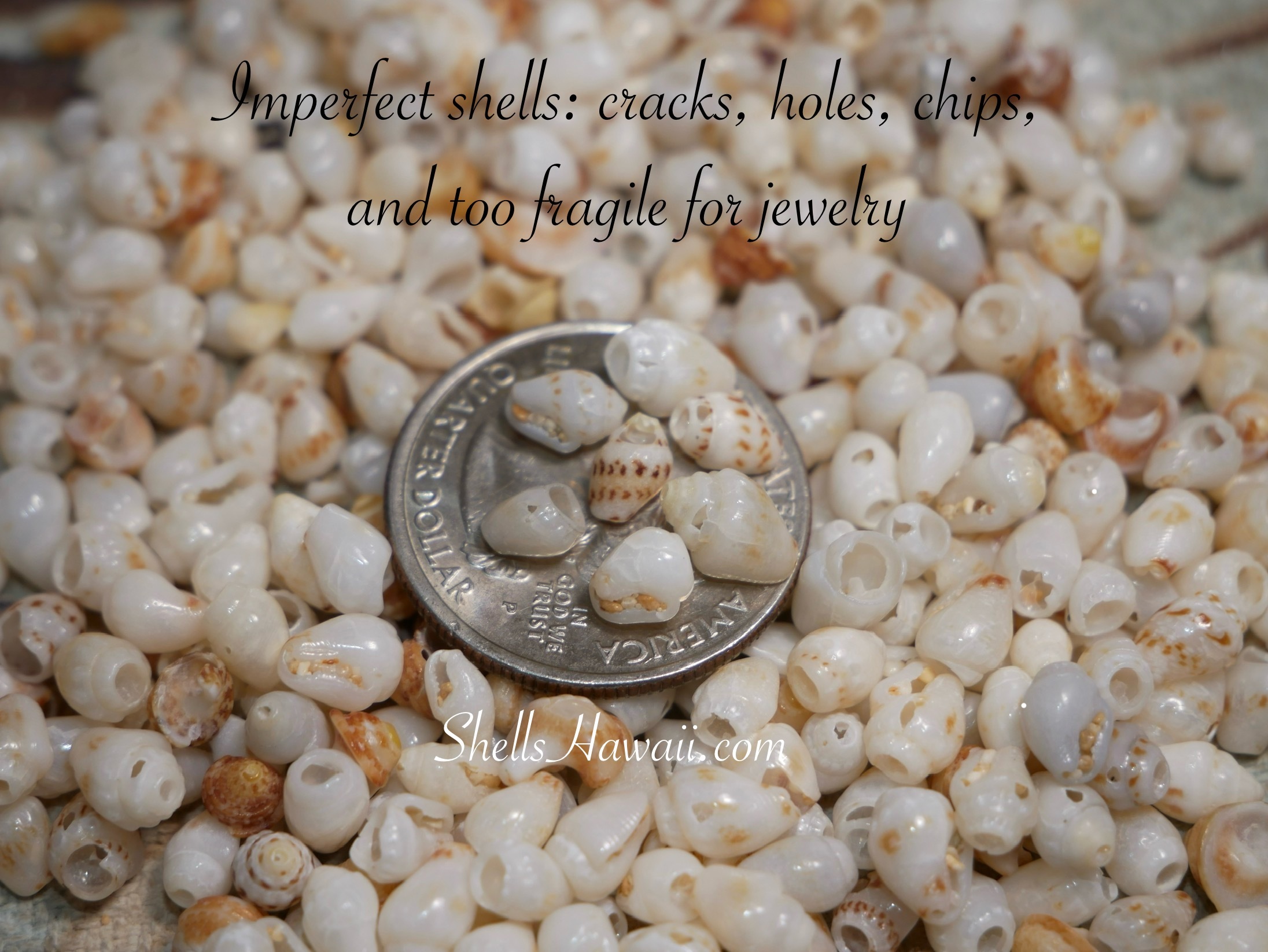
When it comes to imperfections, the most common things I look for are cracks, chips, small holes, or weak areas in the shell. Because Momi shells are larger than Kahelelani or Laiki shells, these imperfections are often easier to see when examining the shells one by one.
Shells with visible damage or weakness are usually not suitable for fine or heirloom-quality jewelry.
Even so, imperfect shells still carry value and remain part of the ocean’s natural story. If you’d like to learn more about what happens to these shells, you can read more in this blog: Imperfect Niʻihau Shells — Something Many Don’t Realize
Final Thoughts on Momi Shell Grading
I hope after reading this blog, you have a better idea of how to understand Momi shell quality and grading. Whether you are looking at loose shells, shopping online, or purchasing a finished piece from a store, I hope this helps you better understand what to look for.
Everything I’ve shared here comes from my personal experience working with shells over many years, and I will always continue learning, creating, and honoring this beautiful art every day.
Thank you so much for being here and taking the time to read my blog.
Much aloha,
Janjira