 USD
USD


Aloha and welcome back everyone,
In Part 1 and Part 2, we explored A-grade Kahelelani shells from Niʻihau and Kauaʻi — how to recognize their color, luster, and shape, and why these details matter in real Hawaiian shell jewelry.
Now in Part 3, we’ll focus on B- and C-grade Kahelelani shells — how to identify them, how they’re used, and the beauty they still carry within Niʻihau shell jewelry and handmade Hawaiian jewelry. Not every shell shines like an A-grade treasure, but each one still holds its own story, character, and aloha.
Whether you’re learning to create Hawaiian shell jewelry, collecting loose shells, or simply exploring different Hawaiian shell types, this section will help you better understand the value and purpose of every grade of Kahelelani shell.
Let’s dive in together and explore how every Kahelelani shell — from brilliant A-grade gems to softer, more natural B-grade tones — carries its own beauty within the world of Niʻihau shell jewelry.
B & C Grade Shells — Let’s Learn How They Look and What to Watch For
For many people who haven’t collected shells themselves, seeing shells in person — whether from Niʻihau, Kauaʻi, or another Hawaiian beach — can feel overwhelming. If sellers don’t clearly explain the quality, it’s easy to assume that everything for sale must be good quality. But that’s not always true.
I’ve been there myself. When I first started buying shells, I remember looking into a bag and thinking, “Oh wow, these colors are so beautiful.” Everything looked fine at first glance, so I bought them. But later, as I carefully sorted through the shells one by one, my heart sank. Many were cracked, chipped, or too small, and instead of removing only a few imperfect shells, I ended up with just a handful of usable ones. That experience taught me how important it is to understand shell grading before making a purchase, because those small details can quickly become a big cost if you don’t know what to look for.
That’s why learning about shell grades is so important.
Kahelelani Shells — B-Grade Quality
With B-grade shells, the surface remains strong and suitable for jewelry, but the shine and color may not reach the brilliance of A-grade shells. These shells are still beautiful, dependable, and full of natural character.
Shells from Niʻihau:
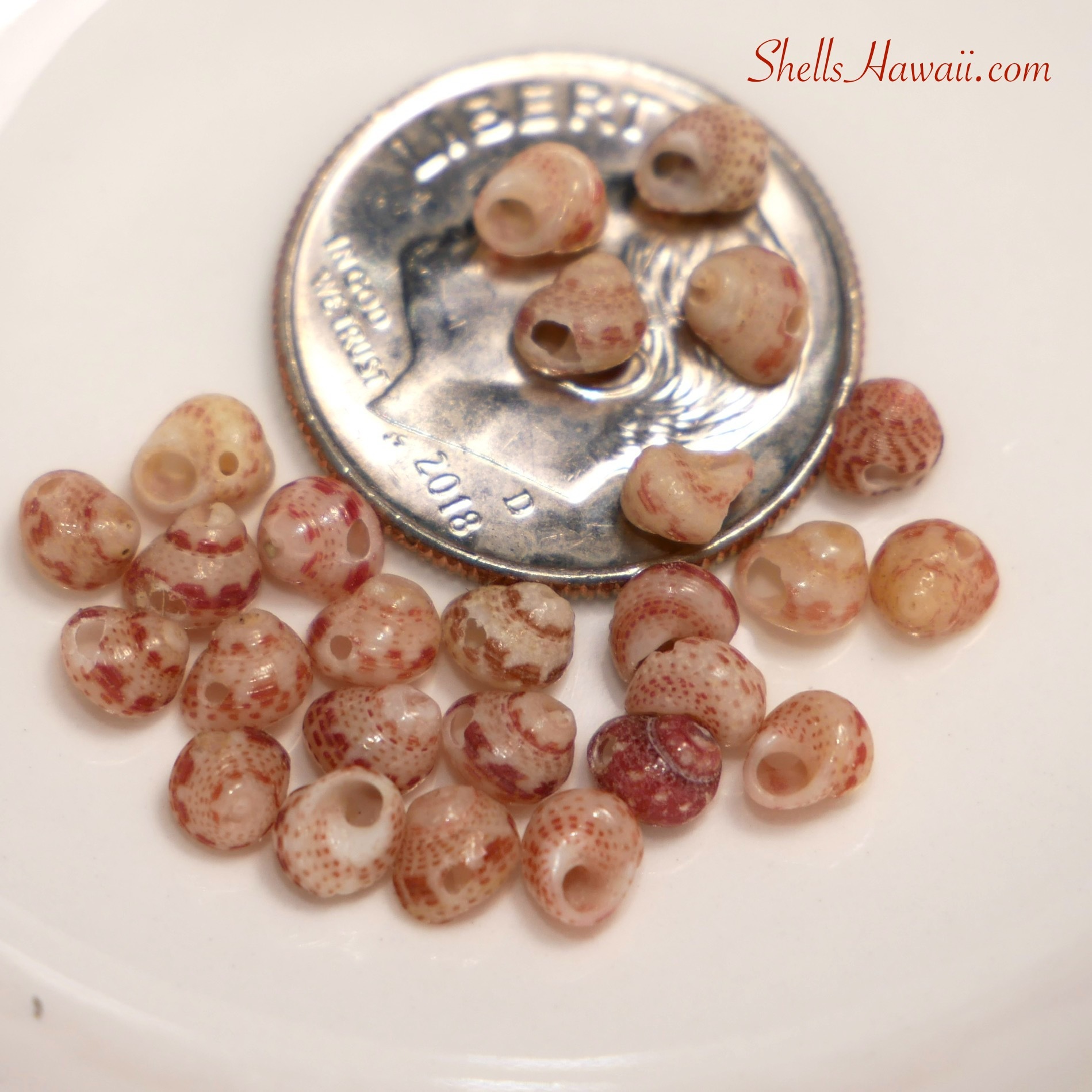
B-grade shells often have a solid outer layer and a soft natural luster. The shine is gentler, and the colors may appear slightly muted or uneven. You might notice small marks, light pits, or subtle shape differences, but overall they remain strong and ideal for creating durable jewelry.
If you look closely at the shells on the right side of the photo, you’ll notice some missing parts or uneven edges, yet they still maintain strong structure and natural glow. In my opinion, they are still considered B-grade because they remain beautiful and fully usable for jewelry.
Shells from Kauaʻi:
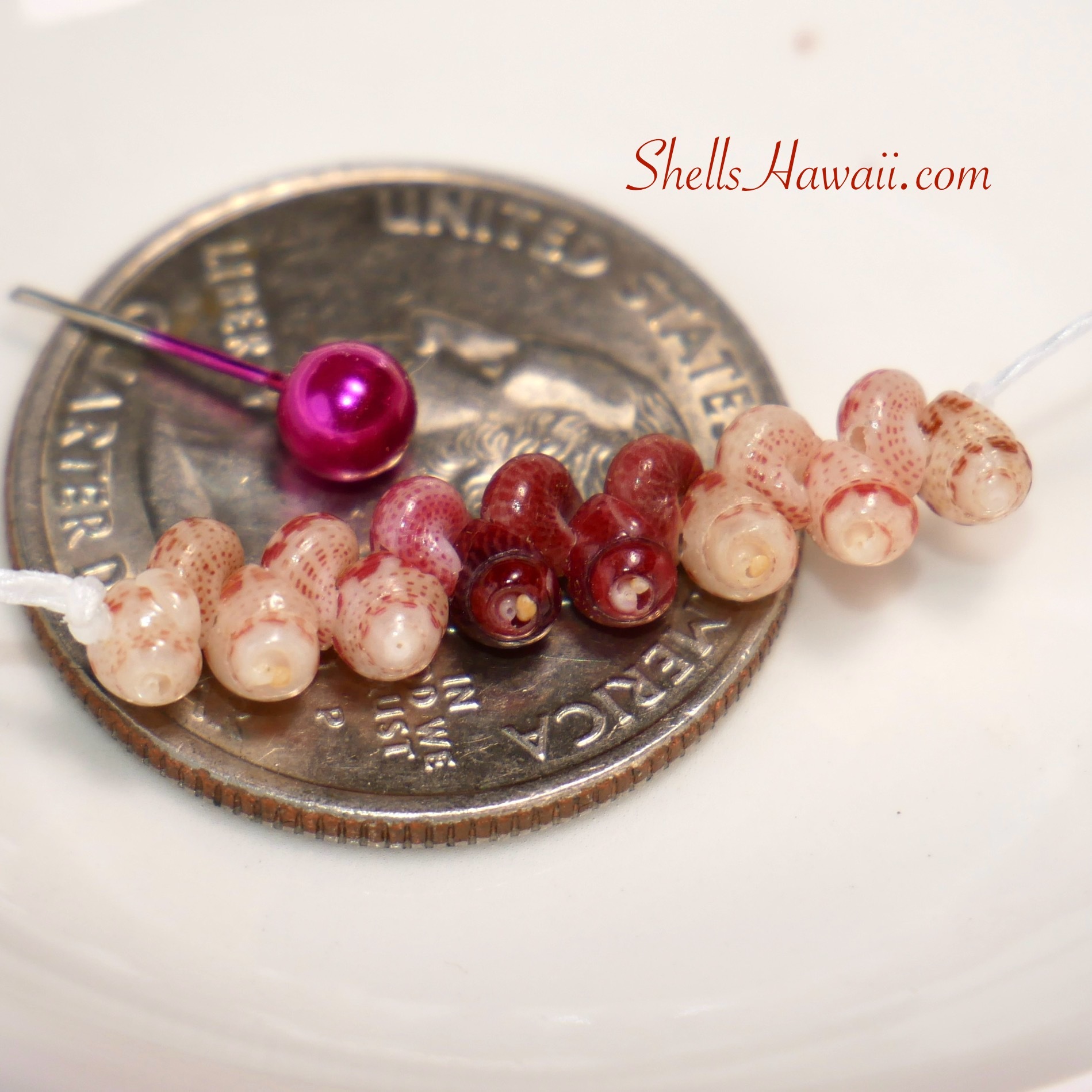
Kauaʻi shells in B-grade condition often share the same sturdy structure, but they usually have a matte or velvety finish instead of a glossy shine. The difference in luster is what often separates them from Niʻihau shells, though both carry their own natural beauty shaped by the ocean and island environment.
Even though B-grade shells are not flawless, they still create beautiful earrings, leis, and bracelets that reflect authentic Hawaiian craftsmanship.
A Note on Grading: B-grade shells still need to meet the same expectations of strength and usability that I mentioned earlier for A-grade shells. Most of the time, you can quickly tell whether a shell belongs in the A-grade group, especially when comparing them side by side. If a shell doesn’t quite reach that level, it naturally falls into the B-grade category. Sometimes, grading simply comes down to using a little common sense, experience, and trusting your eye.
Kahelelani Shells — C-Grade Quality
With C-grade shells, the surface should still be strong enough to use, but this is where you’ll begin to see more visible flaws and natural wear. These shells may not have the same brilliance as A- or B-grade shells, yet they still carry their own beauty and purpose.
Shells from Niʻihau:
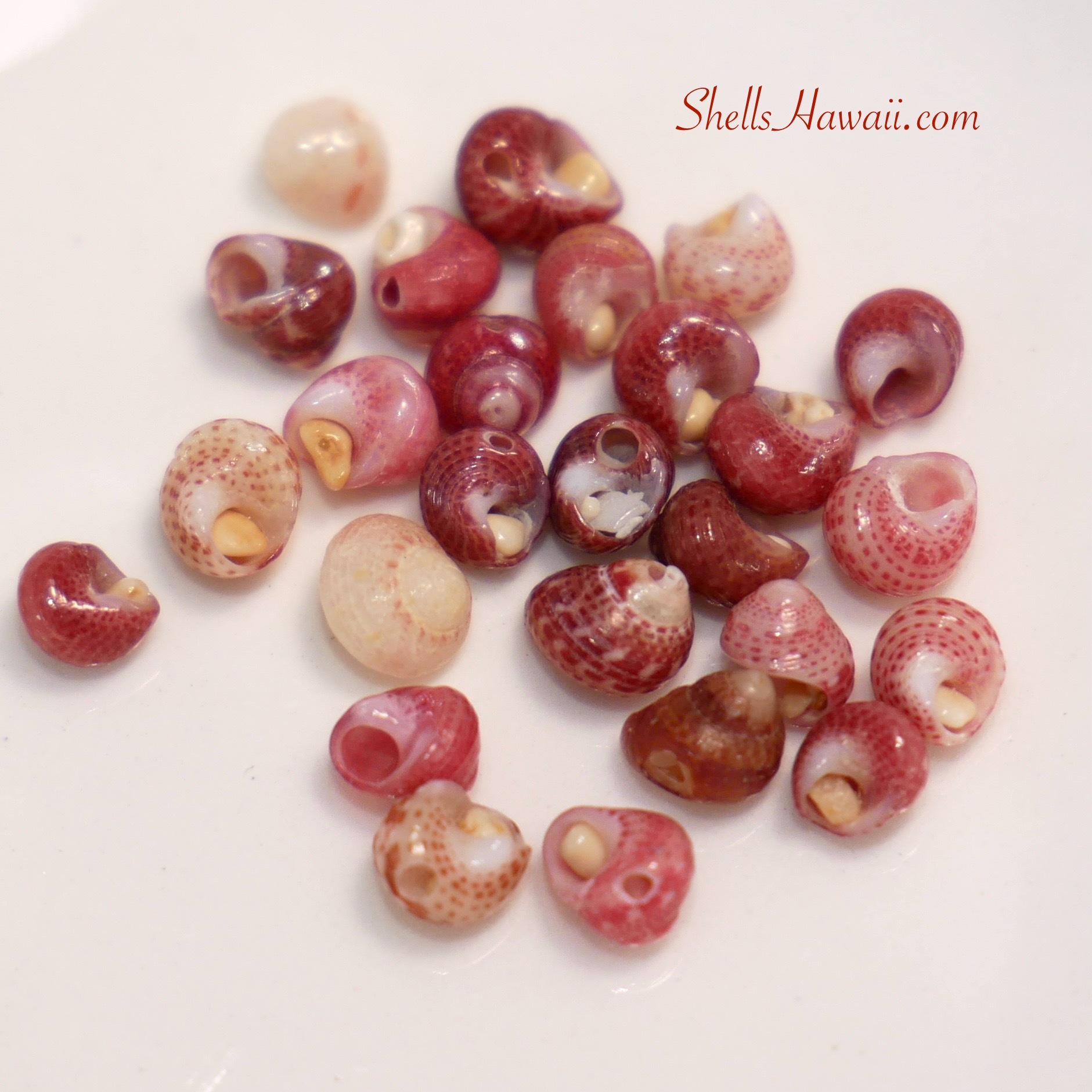
C-grade shells often show more imperfections, such as duller shine or matte finish, uneven color, missing lips, larger natural holes, open edges, or surface wear shaped by the ocean.
Sometimes, Niʻihau shells may still have beautiful shine but contain too many missing parts or open areas to qualify as A- or B-grade. In those cases, they naturally fall into the C-grade category.
If you look closely at the photo below, you’ll notice pink and deep red shells with chips and missing lips — signs of how nature shaped them over time. Even so, many still display beautiful natural color patterns and work well for practice pieces or rustic-style jewelry.
Shells from Kauaʻi:
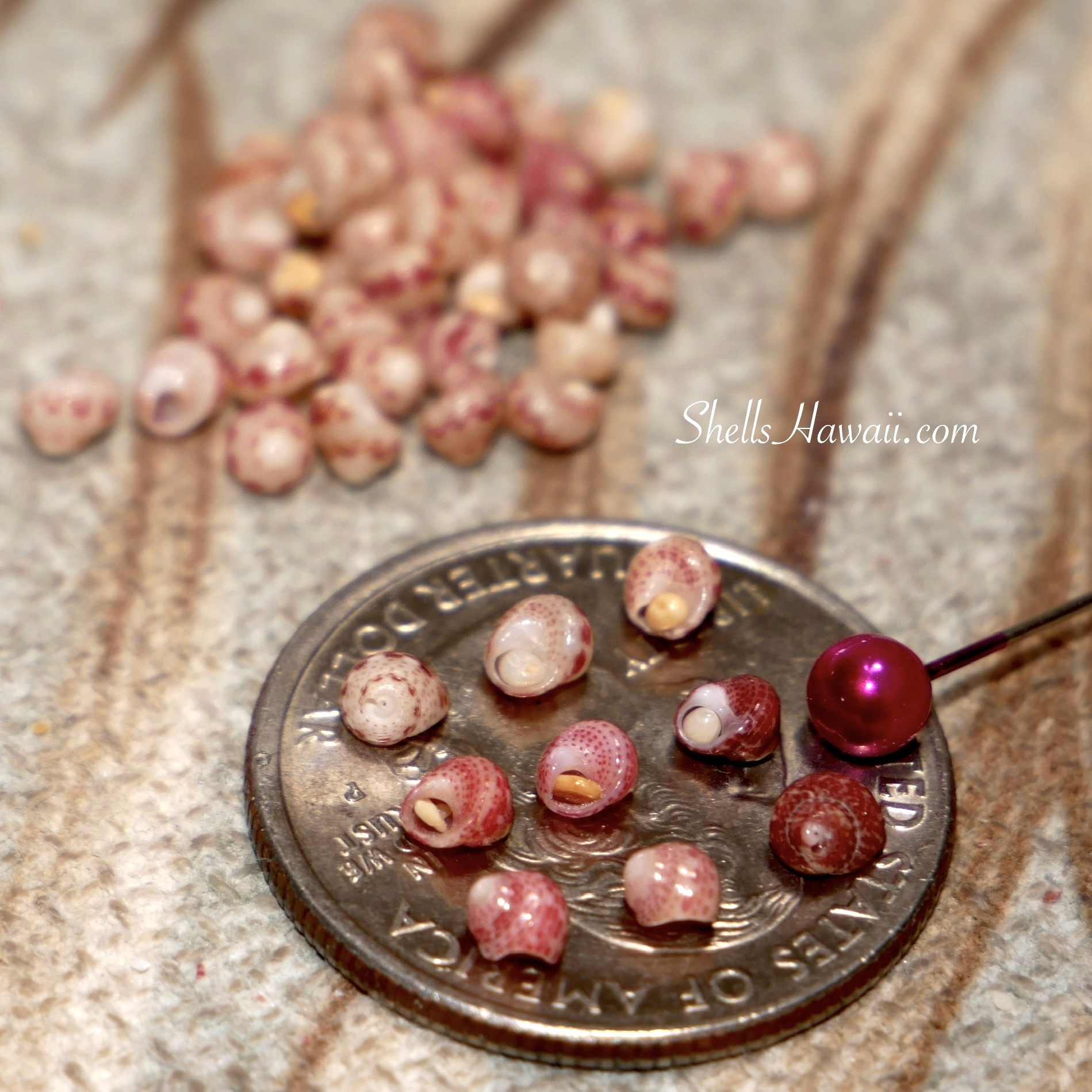
Since Kauaʻi shells naturally have a more matte surface, C-grade shells can sometimes look structurally similar to the shells I described from Niʻihau or other islands. One difference is that shells collected from Niʻihau may still show some natural luster, even in lower grades.
With C-grade shells, instead of focusing mainly on how much luster the shells have, you will usually focus more on the overall strength, shape, and visible flaws of the shells themselves. You’ll often notice small chips, natural holes showing on the shell sometimes in more than one spot, open holes that may be small or larger, uneven edges, or other surface imperfections, yet the outer layer can still remain surprisingly strong and usable for casual designs or beginner projects.
In the photo, I used Kahelelani shells from Kauaʻi to create Poepoe style earrings so you can better visualize how some of these flaws may appear when using B–C grade shells in jewelry creation.
If the surface layer still feels strong, these shells can absolutely be used — especially for practice, learning, or casual jewelry projects. They simply fall outside the A–B grade range because their imperfections are more visible. Sometimes you may also find these shells in rare colors or sizes that are difficult to find in flawless condition, which makes them worth saving for creative projects.
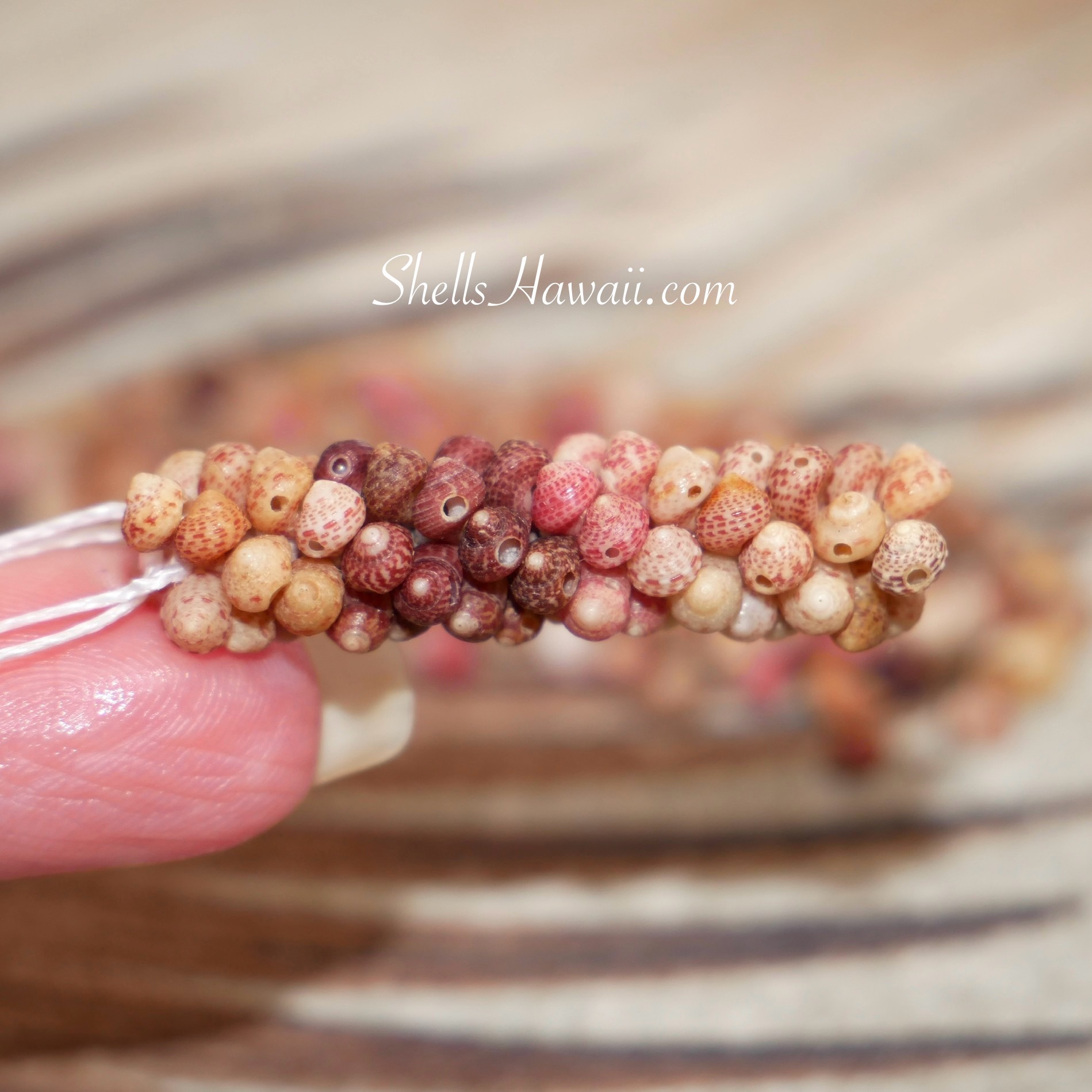
What Imperfect Kahelelani Shells Look Like
Some shells are simply too damaged or fragile to use for jewelry. Common signs include shells that no longer fit within A–B–C grading, very large holes, missing large sections of the shell, weak shell walls, or shells that may have a high possibility of breaking later during use or stringing.
These shells may still be useful for decoration, school artwork, practice sorting, or learning projects instead of finished jewelry. Some people also keep imperfect shells for beginner stringing practice since there is less worry if they break. Personally, for finished Niʻihau shell jewelry, I prefer using stronger A-grade shells that can be enjoyed and cherished for many years.
Closing
I hope this blog and the information above help you better understand shell grades, what to look for, and how I personally describe the shells used in my loose shell supplies and finished jewelry.
Again, this is not meant to be a strict rule or official grading standard. I’m simply sharing from my own experience working with, sorting, and creating with shells over the years. Every creator has their own style and way of viewing shell quality, and that’s part of what makes shell jewelry so personal and unique.
I simply hope this little guide helps make shell grading feel a little easier and less confusing when you browse through shells or jewelry in the future.
With aloha,
Janjira