 USD
USD


Aloha and welcome to my blog
In a few past blogs, I shared beginner guides to help you before buying Niʻihau shell jewelry and loose shell supplies. Today, I’m back to talk about this topic again — because it’s one of the most common areas of confusion.
In this blog, I will do my very best to explain everything in the simplest way possible, so it’s easy to understand and helpful when making a decision before purchasing Niʻihau shell jewelry such as a lei, earrings, bracelet, or pendant. And for anyone who is still new and interested in creating your own pieces using shell supplies, I truly hope this information will guide you and give you more confidence before you buy.
What Is Niʻihau Shell Jewelry?
Niʻihau shell jewelry is traditional Hawaiian jewelry made from tiny seashells that naturally come from the ocean around Niʻihau, a small island near Kauaʻi. The shells are not dyed or painted. Every color you see — pink, red, yellow, white, green, and brown — forms naturally in the ocean over many years. Each shell is carefully collected, sorted by size and color, poked by hand, and then strung one by one. Because the shells are so small, it can take hundreds or even thousands of shells to create a single piece.
Niʻihau shell jewelry is rare because the shells cannot be farmed and are only found in limited areas. Finding enough shells that match in size and color takes a very long time. For generations in Hawaiʻi, these shell pieces have been worn and gifted to mark special moments. Today, Niʻihau shell jewelry is treasured not just as jewelry, but as a symbol of patience, tradition, and respect for the ocean.
Common Shells Used in Making Niʻihau Shell Jewelry
- Momi shells are the most common shells you will see used in Niʻihau shell jewelry. They come in a variety of colors and sizes and are widely used in many traditional designs.
- Kahelelani shells are the smallest shells used in making Niʻihau shell jewelry. They come in a wide range of natural colors and sizes and are highly valued for their beauty and rarity.
- Laiki shells are very small and delicate, resembling tiny grains of rice. They are often used to create traditional wedding lei, and some makers also use them in Kipona style designs, blending them with Kahelelani shells to add texture and detail.
- Puka shells are beautiful and unique shells sometimes used in Niʻihau shell jewelry designs. They are often used to create necklaces that may be worn by men, and can also be used as closures for earrings, lei, or bracelets. Sometimes, they are chosen as a natural clasp to give the finished jewelry a more organic, traditional look.
These shells are the most commonly used shells you will see in Niʻihau shell jewelry. There are other shells that can also be used, and you can learn more about those later if you’d like, but these are the most important shells to recognize and become familiar with. Along with knowing how the shells look and learning their names, the next thing to understand is style. Different styles can change the overall look and feel of a piece, and you can learn more about these styles in my blogs as well.
Styles of Niʻihau Shell Jewelry and Poking Techniques
In Niʻihau shell jewelry, style plays a big role in how a piece looks and feels. Even when the same shells are used, different styles can create very different results. Some styles are flat, some are rounded, and some are fuller and more detailed. Below are the most common styles you will often see mentioned in Niʻihau shell jewelry titles and descriptions:
Pikake style is one of the most common and traditional styles in Niʻihau shell jewelry. The name pikake means jasmine flower, and this style has a soft, rounded look created by grouping shells closely together. If you would like to learn more about Pikake style and how it is made, please click here to read the full blog.
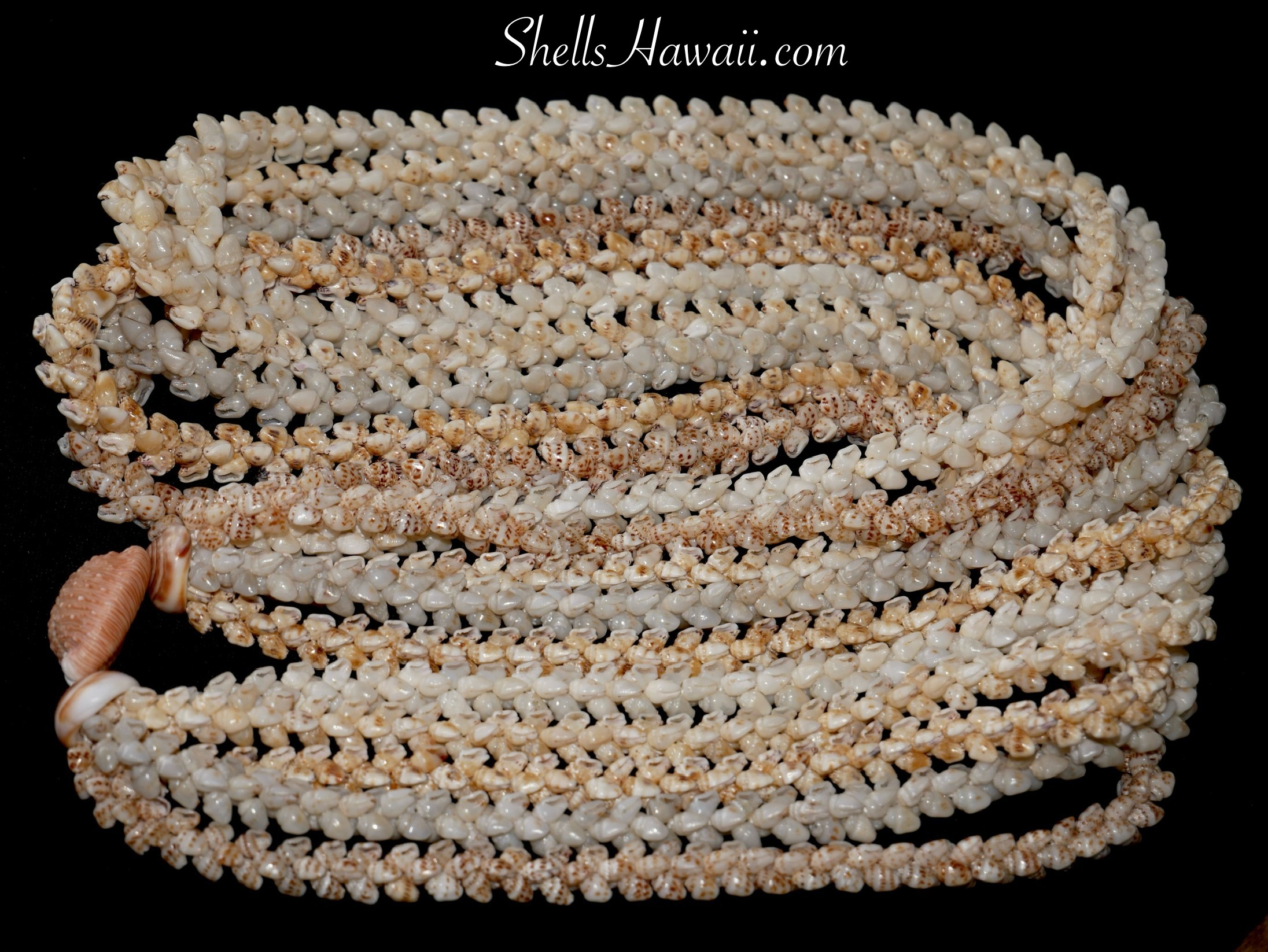
Poepoe style has a rounded, rope-like appearance created by tying and twisting multiple strands together. This style often looks fuller and more dimensional and is commonly seen in leis and statement pieces. If you would like to learn more about Poepoe style, please click here to read the full blog.
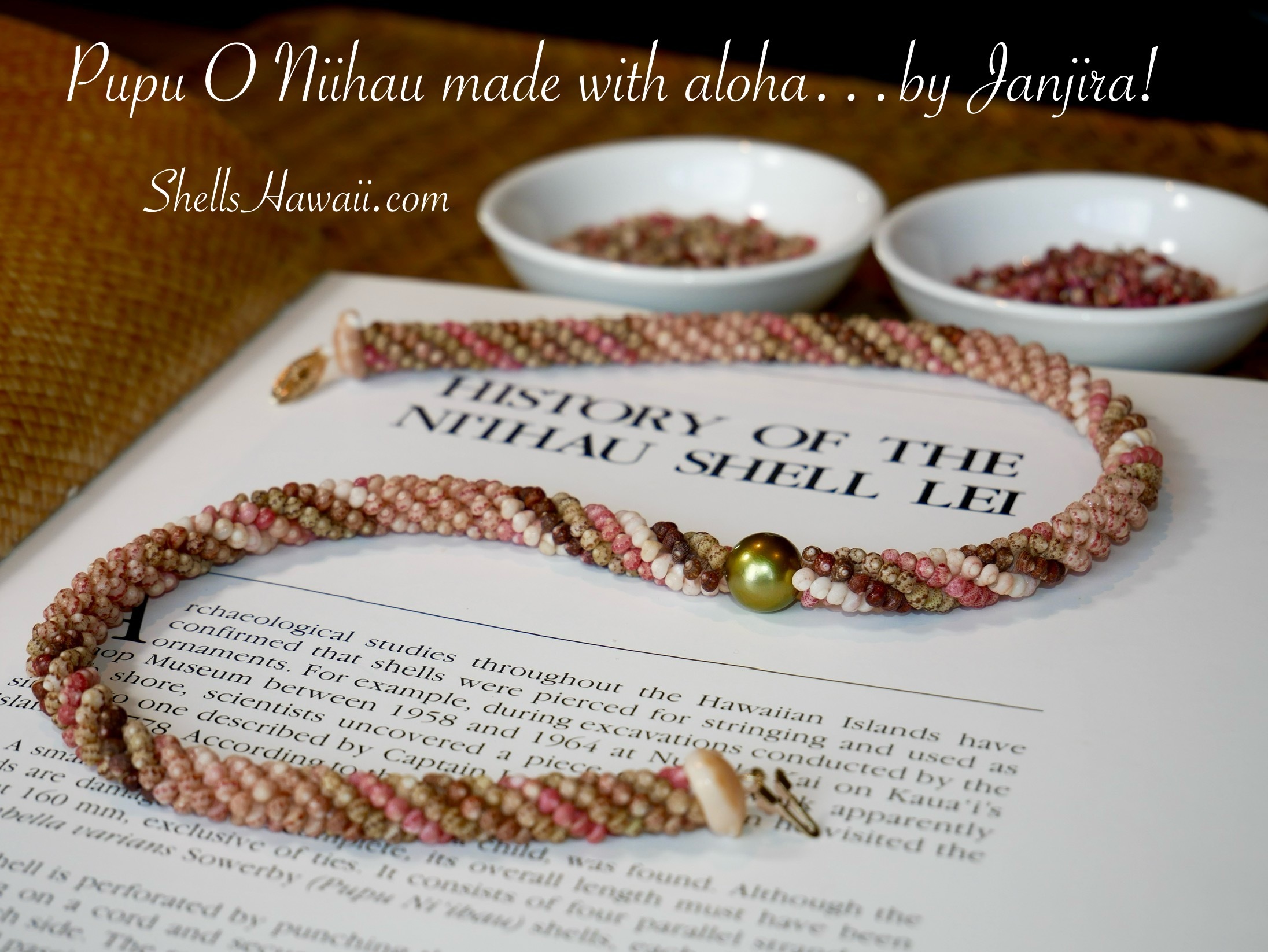
Kipona style refers to a beautiful combination or mix brought together in one design. In Niʻihau shell jewelry, Kipona style most often combines smooth, slightly larger Momi shells with tiny, colorful Kahelelani shells, creating rich contrast and flowing patterns. Kipona designs often use multiple strands laid side by side to create a fuller and bolder look. What makes it Kipona is the visual blend and harmony created when the shells come together. If you would like to learn more about Kipona style, This will be post in furture blog.
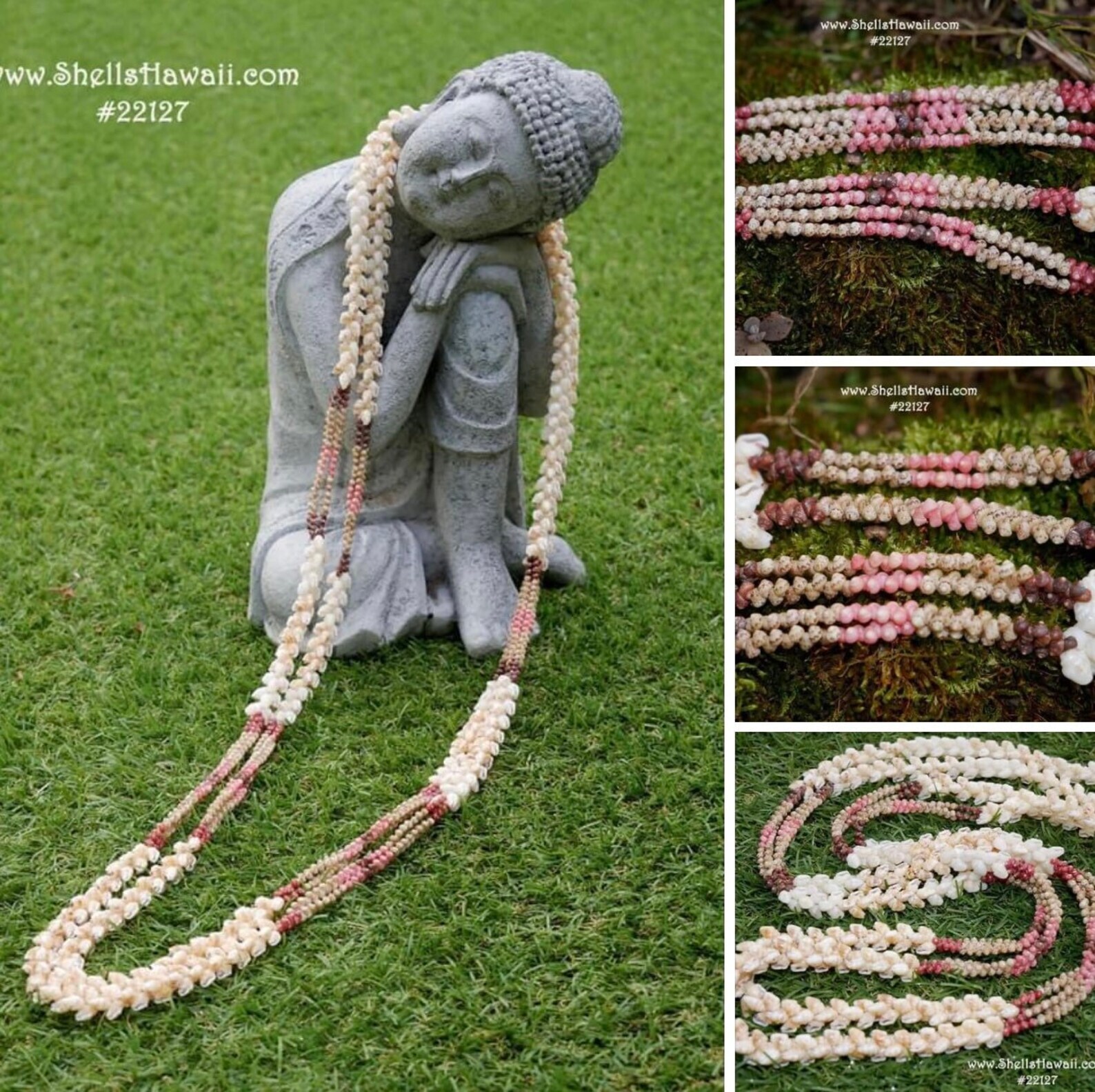
Heliconia style is a more decorative style inspired by the shape and flow of the heliconia flower. This style often has a graceful, floral feel and is used to create eye-catching designs. If you would like to learn more about the Heliconia style, please click here to see how I create earrings in this style, or you can click here to read about the behind the scenes.
Yes — some of the same shell species can be found on other Hawaiian islands. Shells used in Niʻihau shell jewelry, such as Momi or Kahelelani, also exist in other places. These are Hawaiian marine shells, which means they naturally occur around the Hawaiian Islands. Because of this, shells found on different islands can appear identical in shape, size, and color.
This is where many people become confused. Many people mix up shells from Niʻihau with Niʻihau shell jewelry, but these are not the same thing.
• Shells from Niʻihau describe where the shells were collected.
• Niʻihau shell jewelry refers to traditional jewelry made using shells collected from Niʻihau and crafted using specific styles, techniques, and cultural practices.
Because the shells can look the same, it is easy to assume they are the same. But in Niʻihau shell jewelry, origin and craftsmanship both matter. Understanding this difference helps you better understand what you are buying and why Niʻihau shell jewelry is so special.
Ask the Right Question Before Buying
When buying Niʻihau shell jewelry or shell supplies, it helps to understand that there are two different things that are often mixed up:
• Where the shells come from (origin)
• How the jewelry is made (style)
Because many of the shells used are Hawaiian marine shells, they can look identical in shape, size, and color — even when they are collected from different islands. This is why it’s important to pause and ask yourself the right question before buying.
Do you want authentic Niʻihau shell jewelry, made with shells collected from Niʻihau and crafted using traditional techniques? Or are you comfortable with jewelry made in traditional Niʻihau shell jewelry styles, such as Pikake or Poepoe, using similar Hawaiian shells collected from other islands?
These shells can look the same in shape, size, and color, and the style name does not change — what changes is where the shells come from. For example, Momi shells collected from Kauaʻi or Oʻahu can still be used to create Pikake style jewelry. Pikake refers to the style, not the shell’s origin.
Both exist.
Both can be beautiful.
But they are not the same, and understanding the difference helps you make a confident and informed decision.
There is no right or wrong choice — what matters most is knowing what you are buying and choosing what feels right for you. This kind of clarity helps protect buyers, honors the culture behind Niʻihau shell jewelry, and keeps the connection between the shells, the maker, and the story honest and transparent.
Never Be Afraid to Ask Questions
If you are new and love the idea of owning a piece of Niʻihau shell jewelry, but feel unsure about what is what, please don’t hesitate to ask the seller for help. Asking questions can make a big difference and helps avoid misunderstandings or disappointment later. If you plan to buy loose shells and don’t fully understand everything yet, that’s okay too. Never hesitate to ask questions. Knowing very little is not something to feel uncomfortable about — it simply means you are learning, and learning takes time.
Sometimes, you simply want to buy a beautiful piece of jewelry. Maybe you admire its beauty, the history, and the story behind it. Maybe you visited Hawaiʻi and learned about Niʻihau shell jewelry while you were there, and now you want a piece to carry that memory with you. Or maybe you live in Hawaiʻi and love Hawaiian seashells, tradition, and the history that comes with them.
You don’t have to be an expert to own Niʻihau shell jewelry or to want to create jewelry yourself. All you need to do is ask questions and allow yourself a little help along the way. If a seller cannot answer your questions or doesn’t make you feel comfortable, it’s okay to move on. There are many shops and creators who truly love what they do and are happy to share this beautiful art so more people around the world can learn about Niʻihau shell jewelry.
I am honored to do what I do, and I truly love it. I believe that sharing this information with those who want to learn and understand helps keep this art alive and honors the Hawaiian tradition behind it.