 USD
USD


Aloha and welcome to my ShellsHawaii blog.
Today I want to talk about something that many shell lovers, buyers, and collectors don’t always think about — imperfect Niʻihau shells.
When people imagine shell collecting, they often picture a peaceful moment on a Hawaiian beach: warm sun, ocean breeze, the sound of the sea, and shells scattered across the sand. It looks relaxing, even joyful. Many people think, “I could do that all day.”
But the reality is simple — this is work.
Shell collecting is physical labor. Collectors spend long hours under the bright, hot sun, walking the shoreline, bending down again and again, carefully picking shells one by one from the sand. It takes patience, focus, and endurance — day after day, year after year. Even surrounded by the beauty of the Hawaiian sea, the work itself is demanding.
And it all begins right here.

What Happens Before a Finished Piece
For every finished piece of Niʻihau shell jewelry, there are hundreds or even thousands of shells gathered long before a single design ever takes shape. Shells may be collected carefully by hand, but that does not mean every shell is suitable for jewelry.
Many shells are imperfect. Some are naturally thin. Some are worn smooth by the ocean. Some have small chips, cracks, or weaknesses that make them unsuitable for stringing. These shells are a normal and unavoidable part of shell collecting, whether you are a longtime collector or someone just beginning to learn.
What many don’t realize is that what you see in a finished piece is only the very end of a long journey. Behind it are countless hours of collecting, sorting, rejecting, and selecting shells one by one. Many shells are gathered, but only a small portion ever reach the quality required for fine jewelry.
With this understanding, when you see truly high-quality shells or a finished piece that looks flawless, you may begin to appreciate it differently. You may better understand the time, effort, and care involved — and why some exceptional pieces are kept within private collections or worn by musicians and longtime collectors, rather than offered for sale in the open market.
Not every shell collected becomes jewelry.
And not every finished piece is meant to be sold.
How Imperfect Shells Are Sorted and Understood
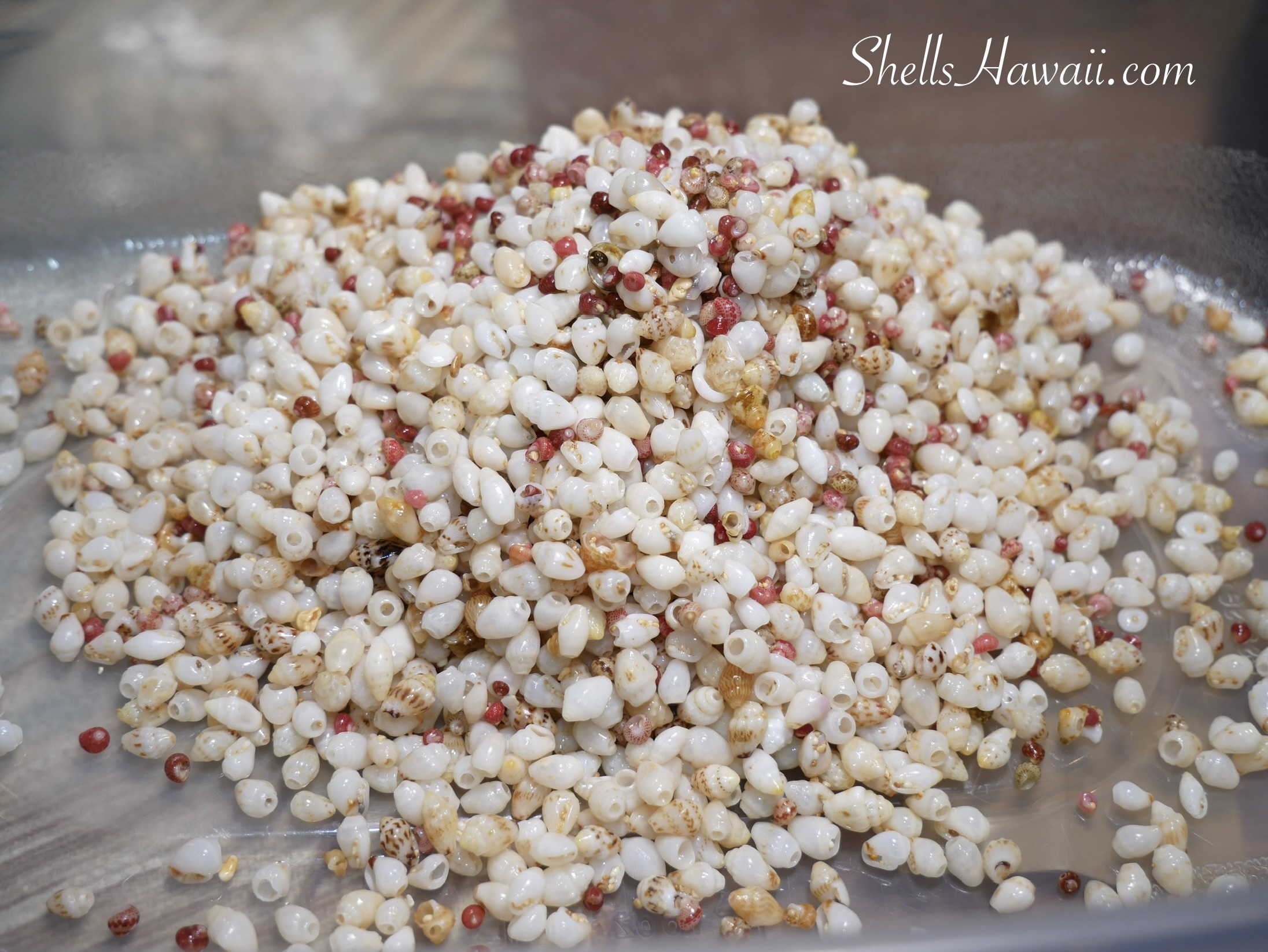
When I receive loose shells, they always arrive with mixed quality. This is normal in the shell world. The price often reflects what is inside each bag — the overall quality, the colors, and the quantity of shells.
Once the shells arrive, they are carefully sorted. Imperfect shells are separated and set aside, while shells suitable for jewelry are selected with care. This sorting process takes time and attention, and it is an essential step before any shell can be used.
In a past blog, I shared examples of A, B, and C grade shells, based on my personal experience working with these tiny shells every day — sometimes for many hours at a time. I shared those examples simply to help show the differences that shell lovers and collectors may encounter when working with real Niʻihau shells.
In the shell world, there is no strict or universal rule for grading. Much of it comes from experience, handling, and understanding what the shells can realistically be used for. My hope is that sharing these examples helps create a clearer picture and a better understanding of shell quality.
What I Do With Imperfect Shells
Once shells are sorted and set aside, their journey doesn’t simply end there.
After I sort out the imperfect shells, I never see them as waste. When I was living on Kauaʻi, I would take my loose shells and return them to the ocean. That felt like the right thing to do at the time. Later on, I found another path for them — one that felt just as meaningful.
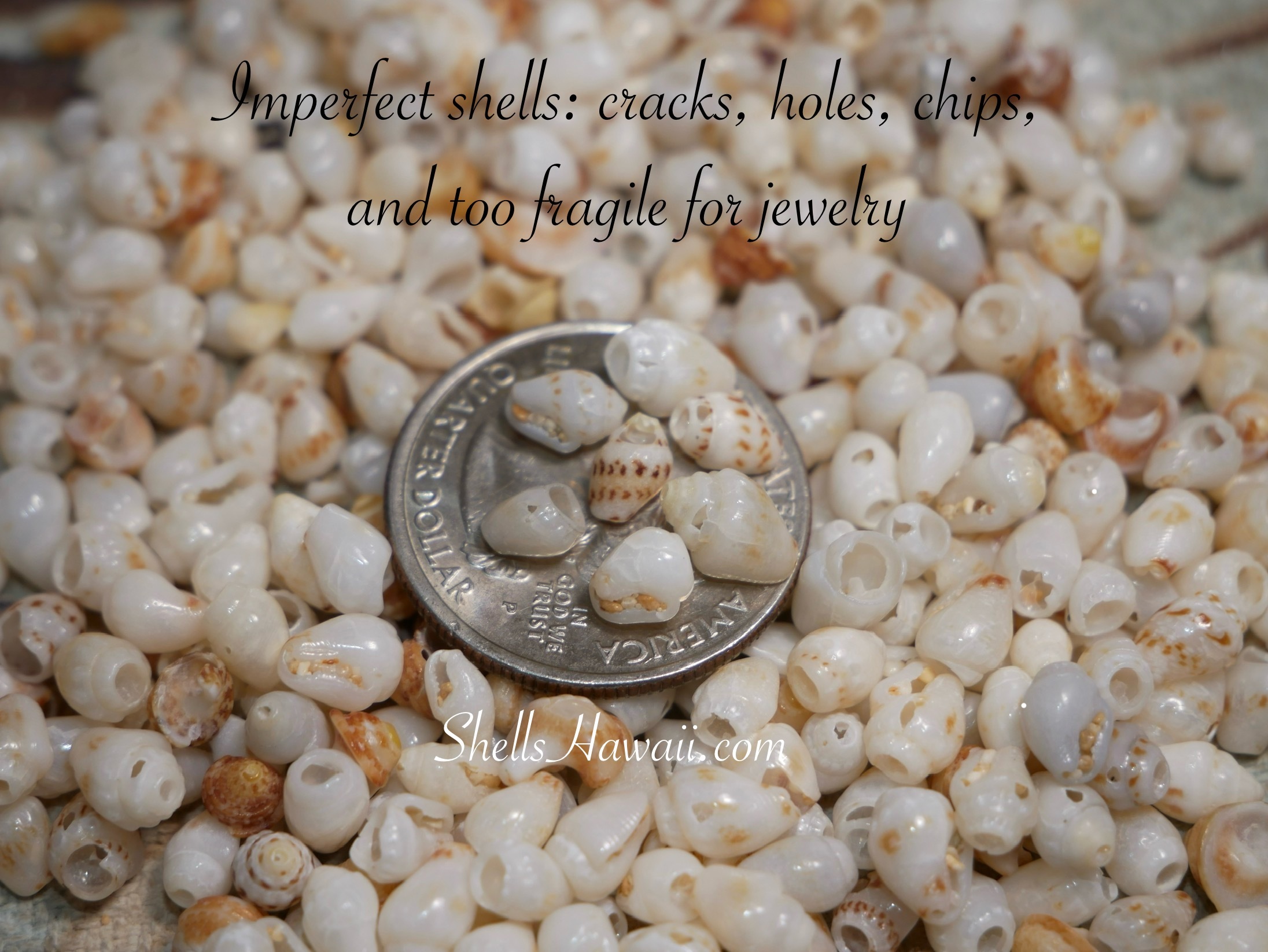
Over the years, I began giving imperfect shells to people who truly appreciated them. Some reached out asking if I had shells they could use for school projects in Hawaiʻi. Others wanted them for study, learning, or simply to keep in a small jar on their work table — a quiet reminder of a special trip, a beach walk, or a memory connected to the Hawaiian sea.
The amount I give away has added up. Each time, it is usually five to ten film canisters of shells. When you pause and think about it, that is a lot — especially when you consider how many pieces of jewelry could be made if those shells were all good quality and suitable for fine work.
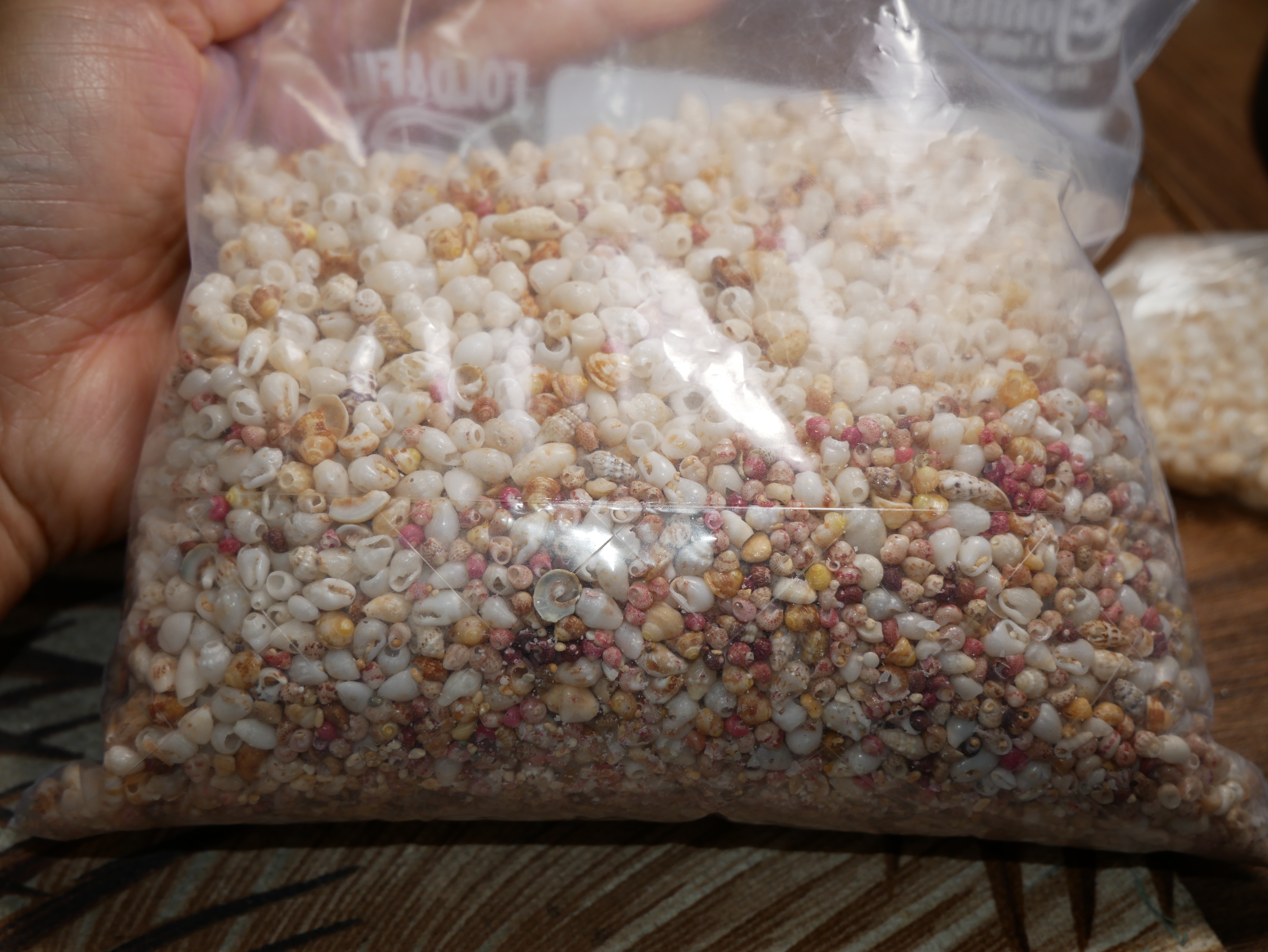
Some shells found a new home in aquariums, becoming shelter for small crabs. Others were used in art projects or creative work. Each time, the shells continued their journey in a different way — and that brings me joy and makes me very happy.
Yes, I paid for those shells. And if you’re curious whether imperfect shells are still paid for, the answer is yes — they are. I’m grateful that even when they are not used for jewelry, they can still be used with care, appreciation, and purpose.
Sometimes, it can be difficult for creators or collectors to leave these shells behind or choose not to use them in jewelry. Shells are paid for, and a great deal of time and effort goes into collecting them, sorting them, and understanding their quality. Letting them go is not always easy.
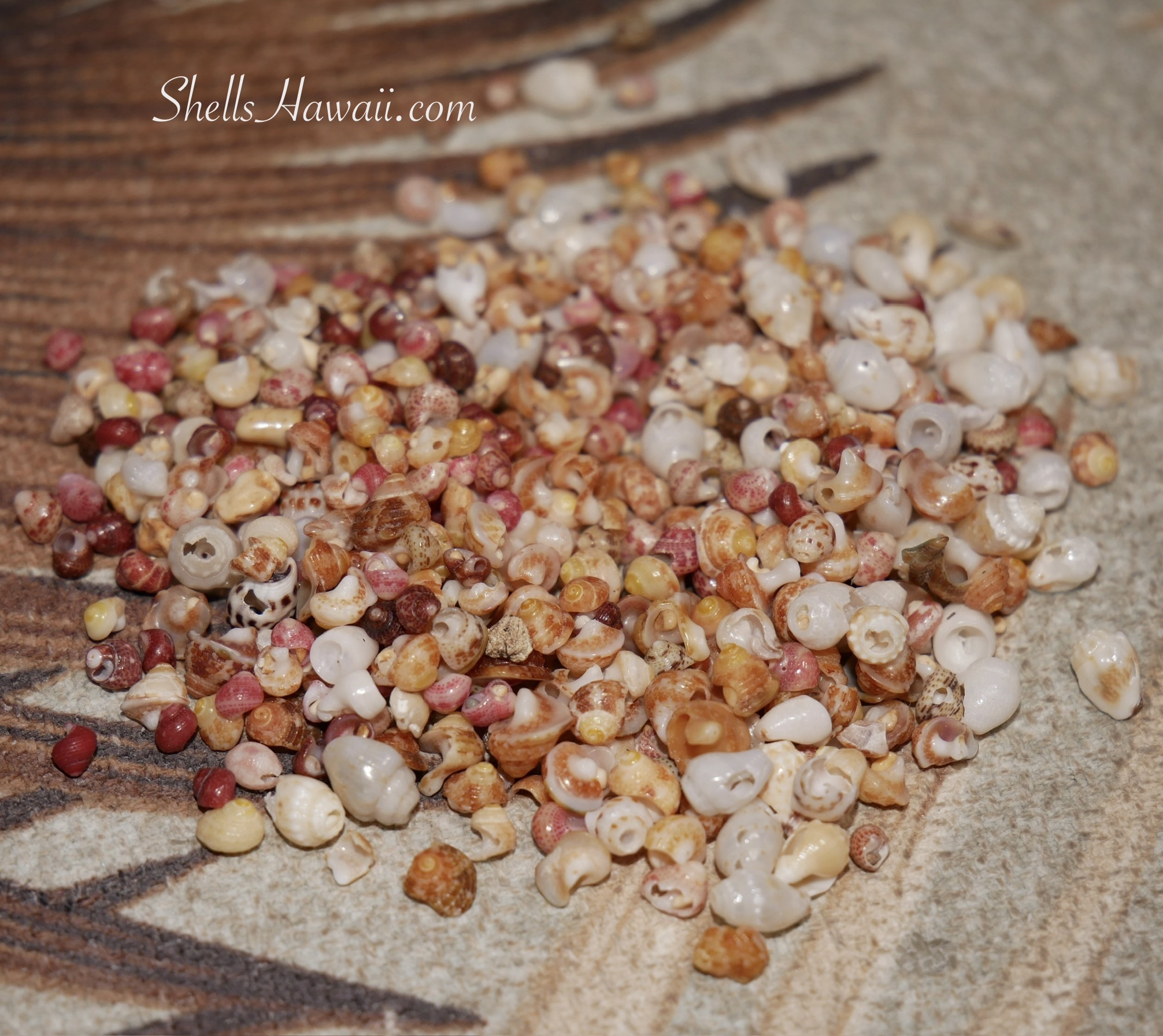
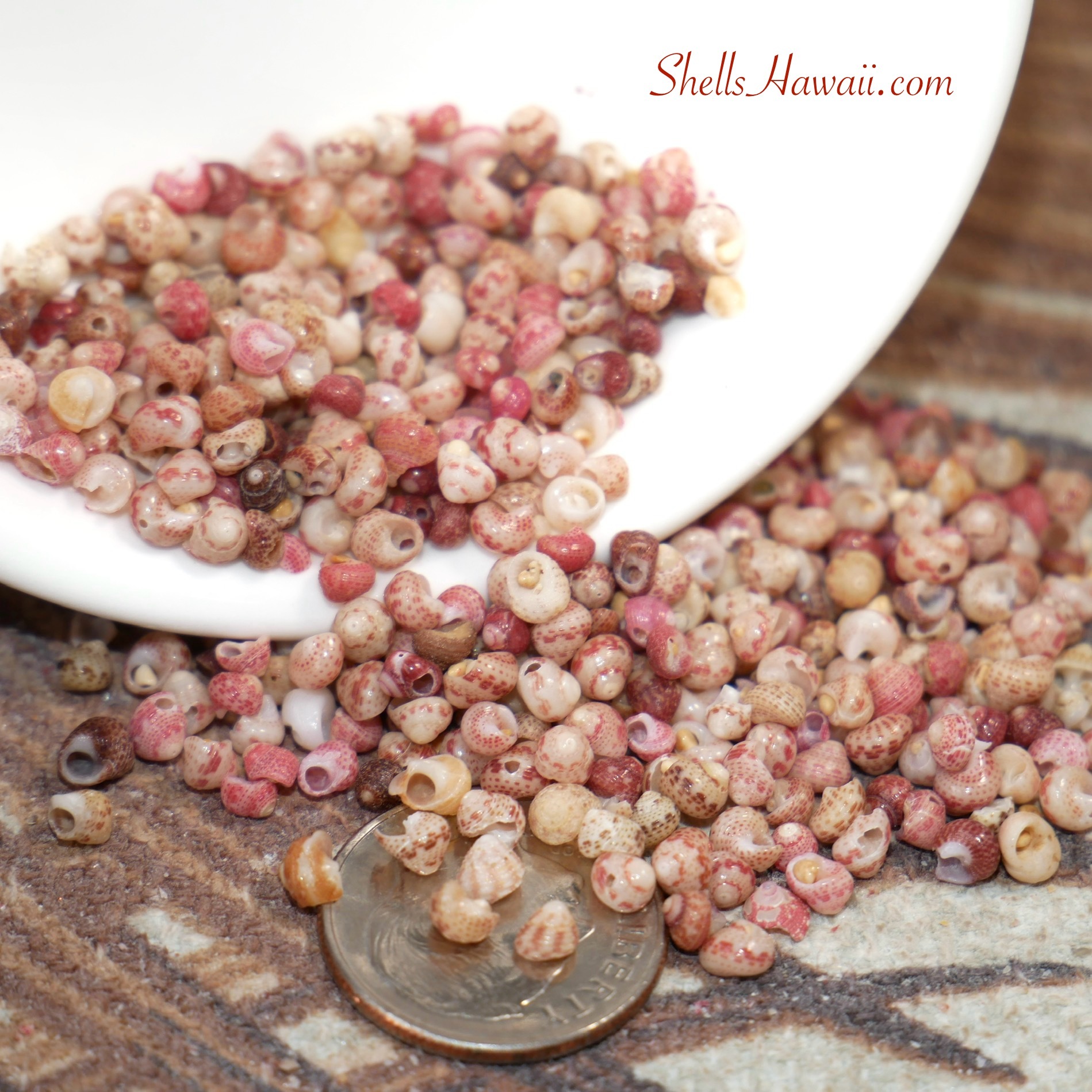
Choosing not to use imperfect shells in my creations is simply my personal preference. It does not mean that using B or C grade shells is wrong — it is not. What matters is being honest about shell quality and sharing that information clearly, so others understand what they are choosing.
For me, this choice comes from respect — respect for the shells, for quality, and for the tradition behind Niʻihau shell jewelry. When people search for quality Niʻihau shell jewelry, there is often guidance on what to look for. I simply follow and practice those principles in my own way, as a way to honor this beautiful art.
And when it comes to buying shells for your creations, having good suppliers truly matters. How important that is — and why it makes such a difference — is something I’ll be sharing in my next blog.