 USD


Aloha and welcome to the ShellsHawaii blog, everyone!
In my previous blogs about the Poepoe style in Niʻihau shell jewelry, I've shared what Poepoe means, the different ways this style can be created, and how the number of strands and techniques used can change both the process and the appearance of the finished piece.
If you're new to Poepoe, the Hawaiian word means "round." Depending on the technique, Poepoe can be created with a square-shaped or rounded appearance. Twisting three or four strands of shells together can create a rope-like design with a spiral pattern, while the tying technique gives the finished jewelry a completely different look.
If you'd like to learn a little more about this beautiful style, feel free to visit my earlier blog about the Poepoe style with Kahelelani shells. I also enjoy using this technique to create earrings and pendants with a simple, minimalist look that's lovely for everyday wear. As we go along, I'll share links to my other blogs and some of my jewelry creations, so you can explore anything that catches your interest.
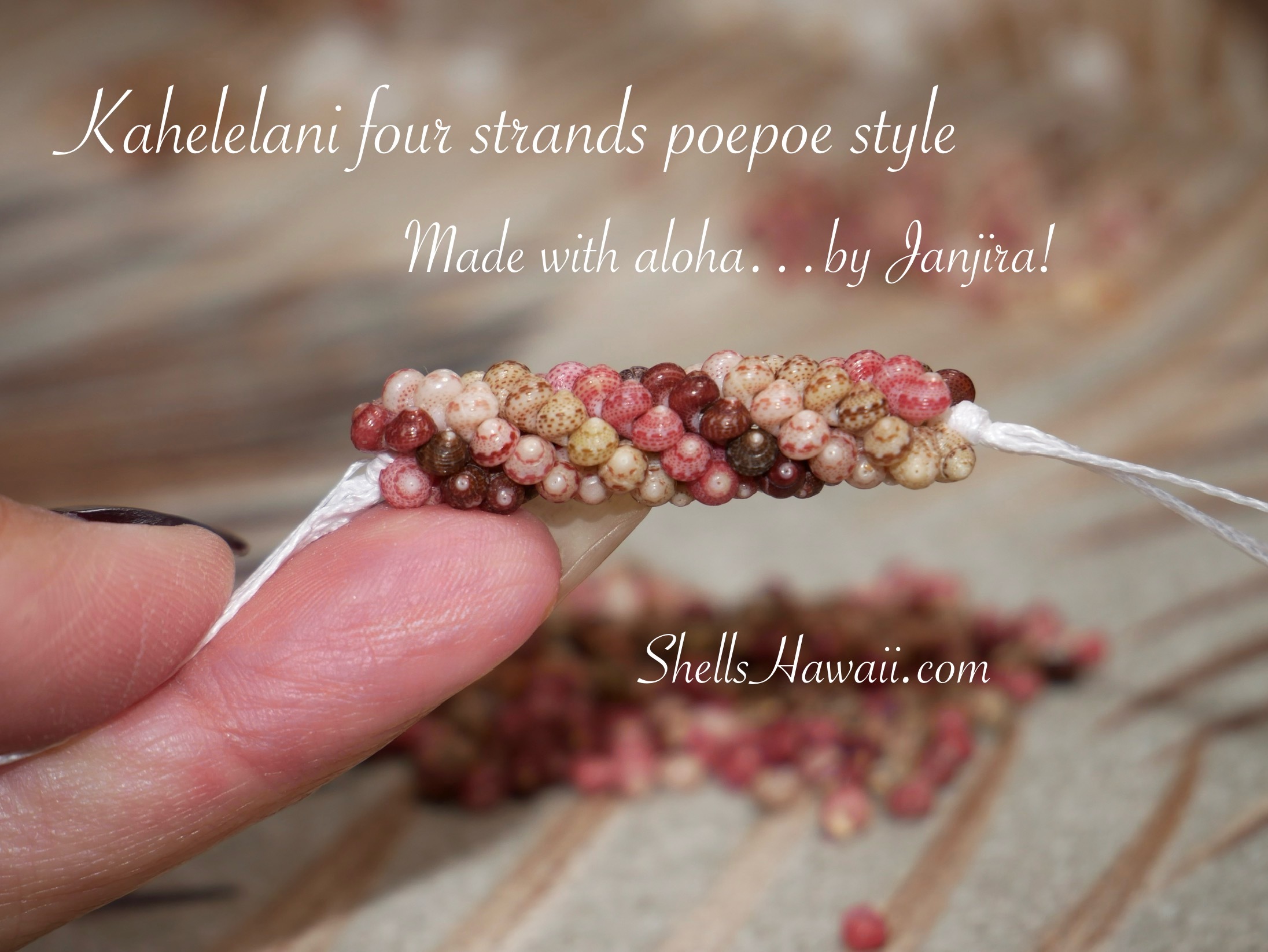
Now, shall we get started? Today, we're looking at the four-strand Poepoe style, created by twisting strands of tiny Kahelelani shells together.
How the Four-Strand Poepoe Style Is Created (Twisted Method)
Four strands! Yes, it's exactly what it sounds like. This style uses four separate strands of shells, which are twisted together to create a beautiful, rounded, rope-like design.
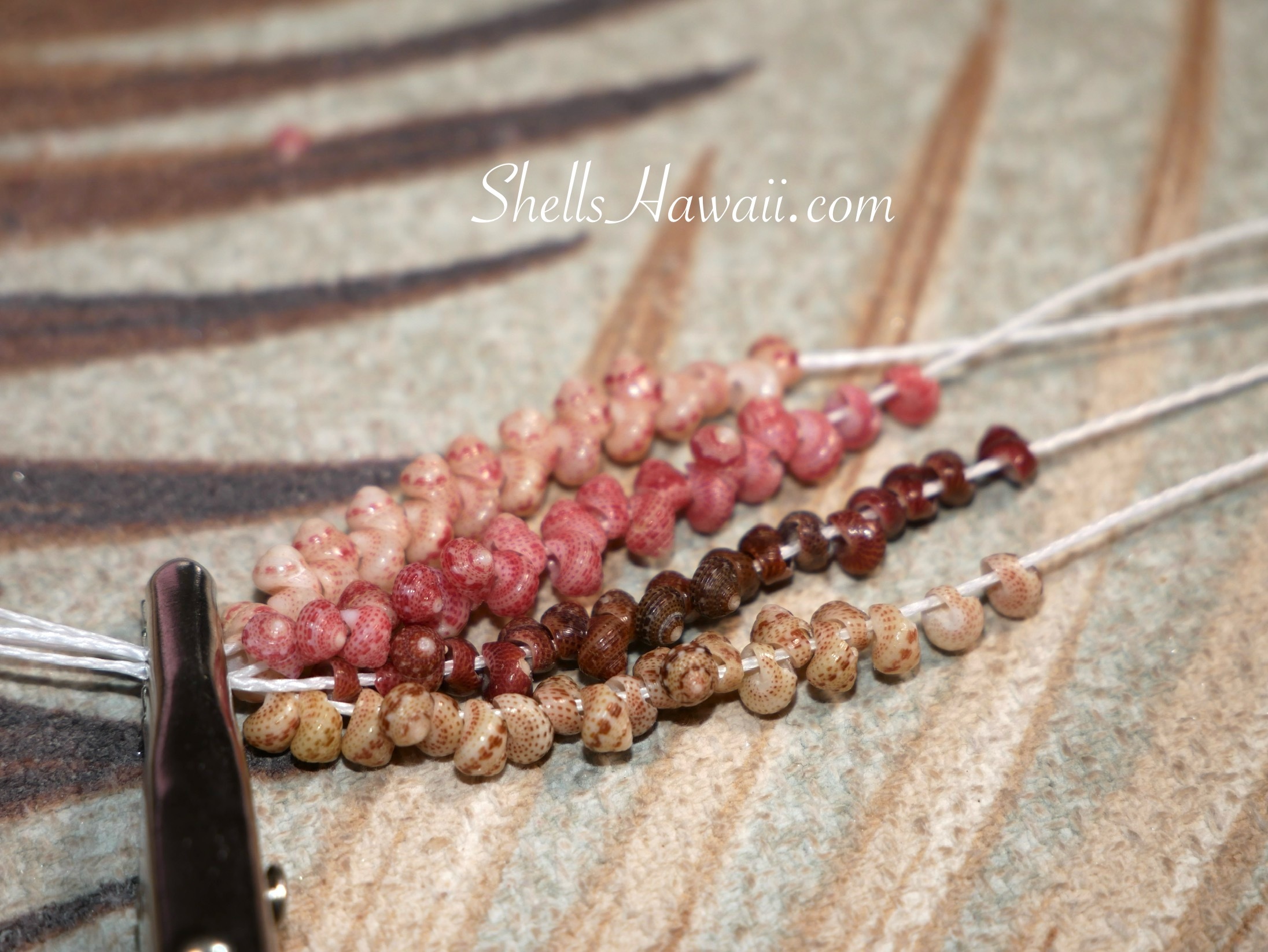
Sounds pretty simple and easy, right? Well, not so fast!
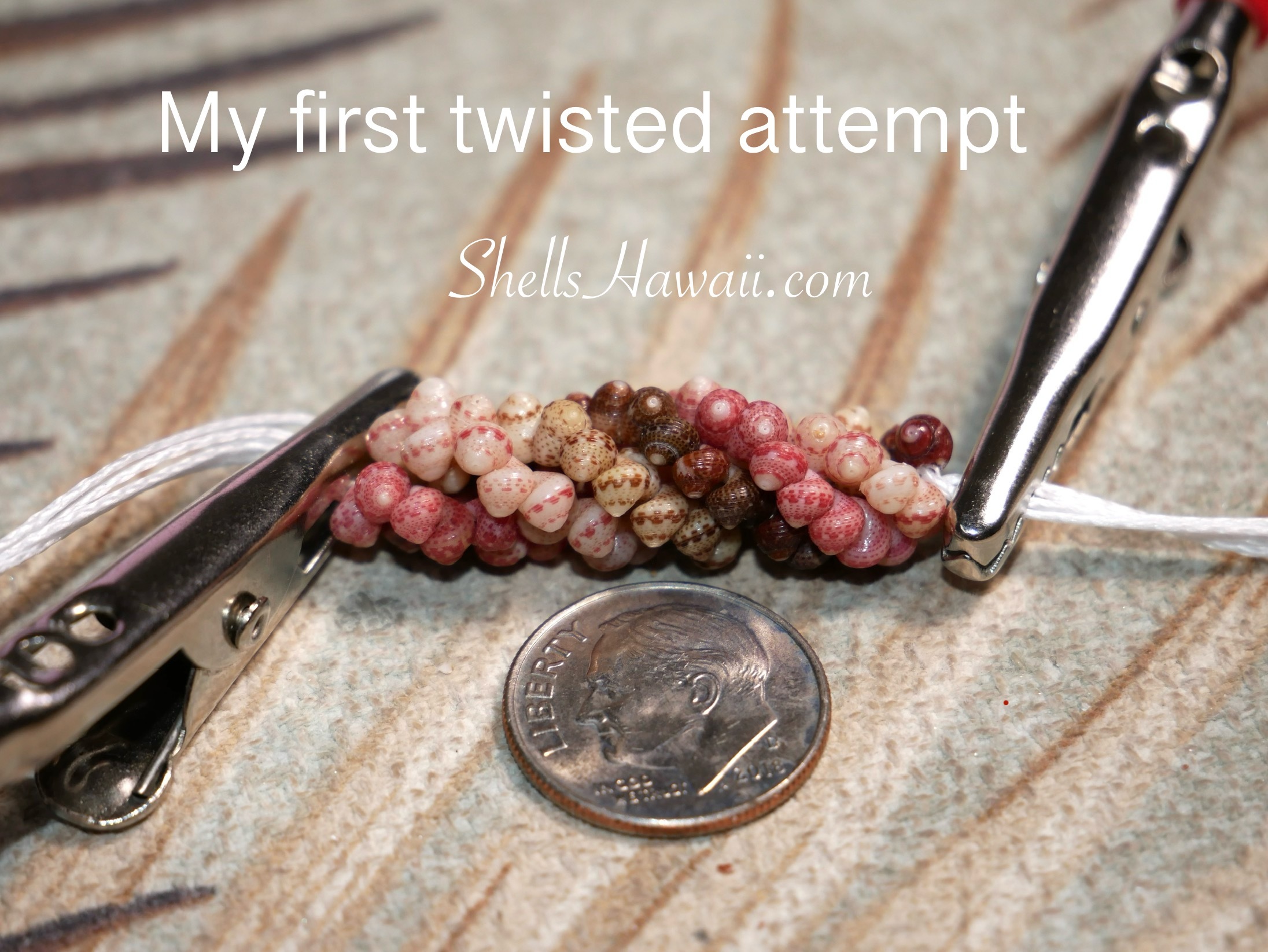
Whenever you see a finished piece of Niʻihau shell jewelry or read about how a particular style is created, you might think you can simply buy the shells and make something just like the photo. Sounds easy enough, right? Well, believe me, it's never quite that simple! There's so much more involved, from sorting and matching those tiny shells to all the preparation before the actual stringing even begins.
If you'd like to learn more about some of the problems and unexpected challenges I've faced while creating different Niʻihau shell jewelry styles, designs, and patterns, please feel free to explore my behind-the-scenes blogs, where I share my personal experiences and what I've learned along the way.
Why Shell Size, Hole Placement, and Color Matter
Shell size, hole placement, and color selection all play an important role in creating this Poepoe style. Even the smallest mistake can show in the finished piece.
To create this twisted Poepoe pattern, the shells in each strand need to be almost exactly the same size throughout the section you're working on. The holes you poke in each shell also need to be consistent. Otherwise, the shells won't line up properly when the strands are twisted together.
So when you see a beautifully made Poepoe piece with every shell lined up so perfectly, remember that it takes more than patience and skill. It also takes a large collection of shells to find just the right sizes, shapes, and colors to make it all come together.
Twisting and Weaving the Four Strands
Once each strand is prepared with the shell sizes and colors I've selected, it's time to twist all four strands together until they begin to form that rounded, rope-like shape.
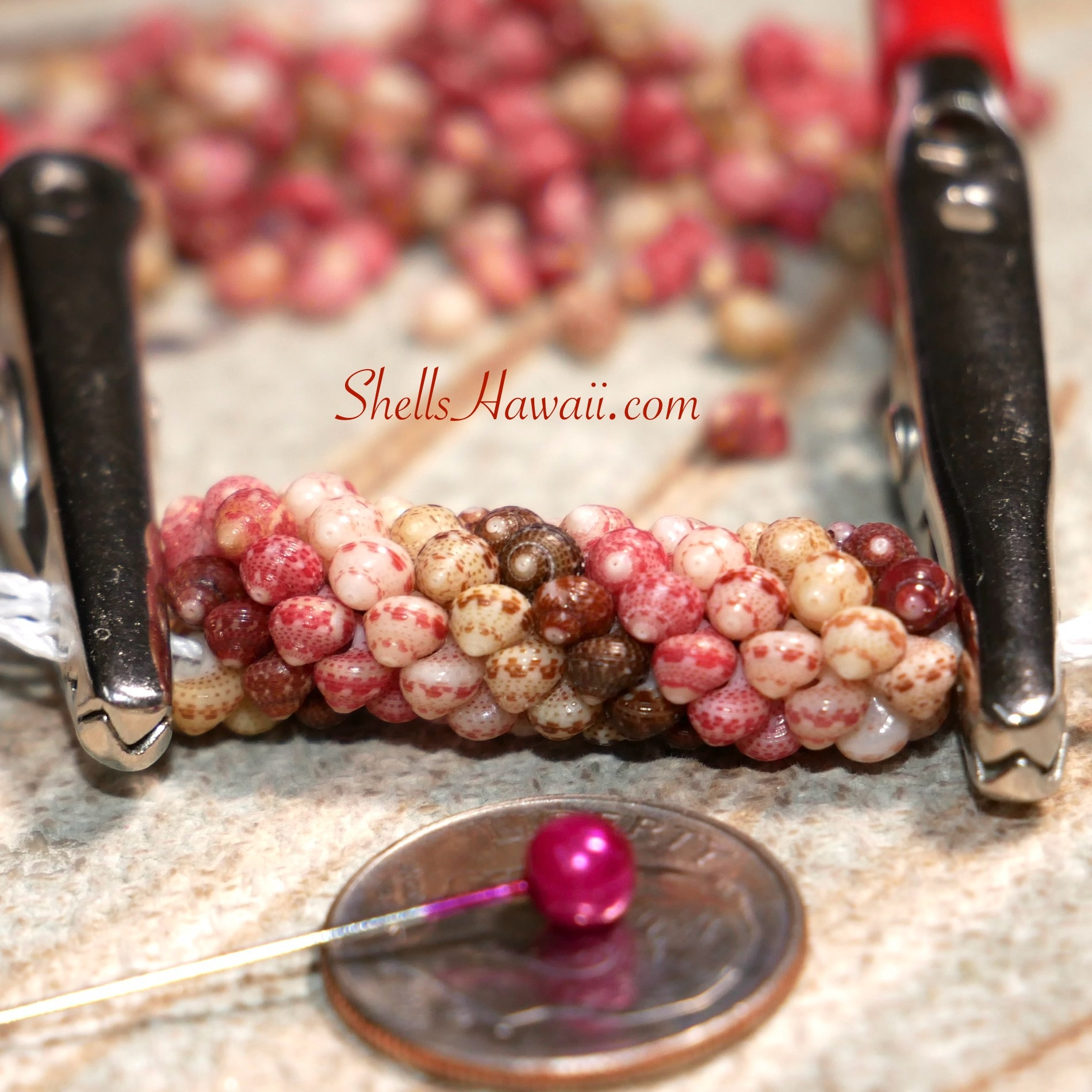
After twisting the four strands into a rounded, rope-like shape, the shells need to be secured through weaving. This is one of the most important parts of the technique. Proper shell sizing, consistent hole placement, and knowing exactly which rows to weave under all play a big role in creating the smooth, even spiral pattern that this Poepoe style is meant to have.
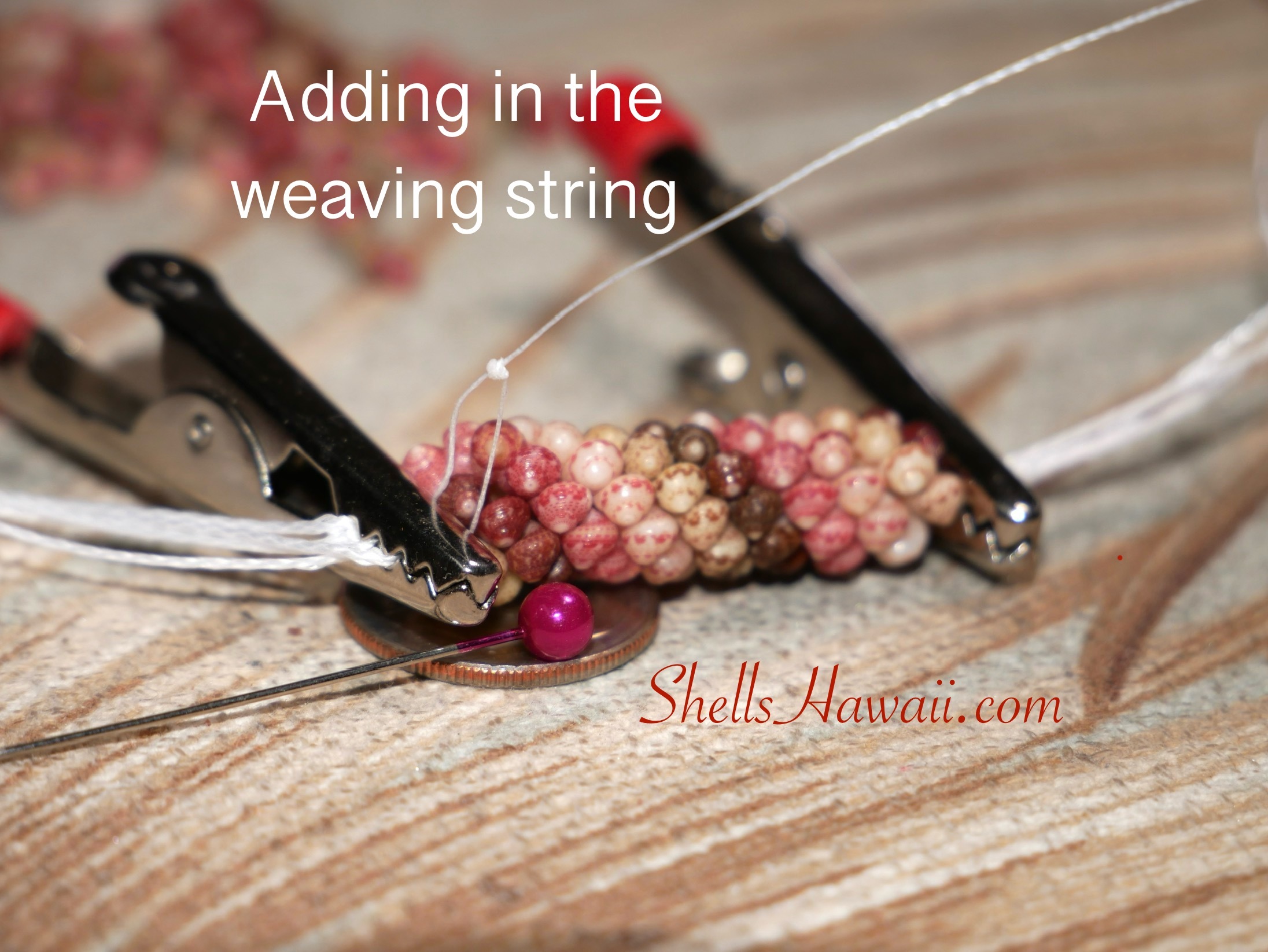
Sometimes, when you look at finished Poepoe jewelry, you may notice that the shells don't line up evenly or the spiral pattern changes direction and becomes uneven. This can happen when the shells aren't properly matched or when the maker is guessing where to weave rather than fully understanding the technique. Just because the shells are twisted together doesn't necessarily mean the Poepoe style has been created correctly.
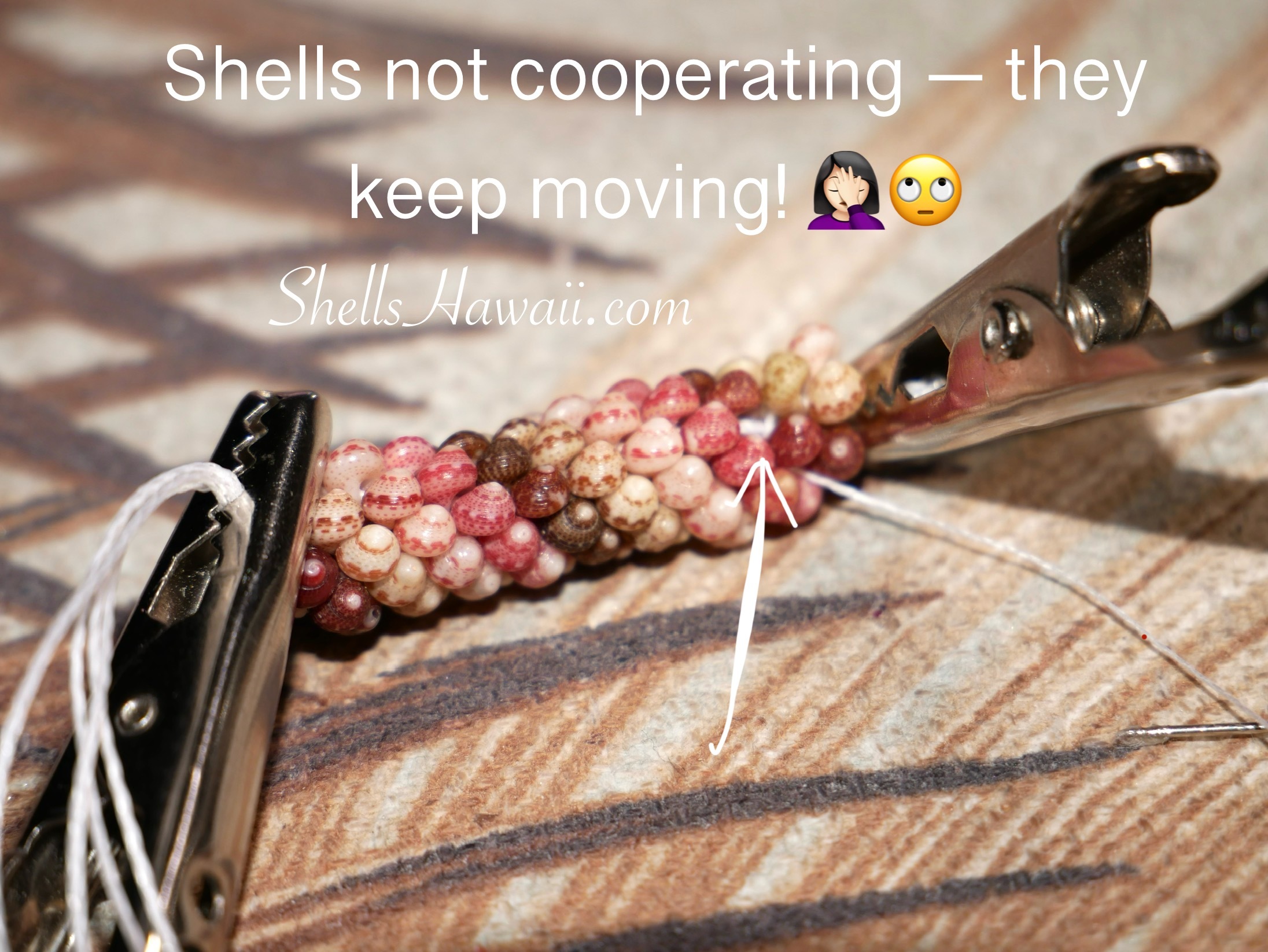
But please don't misunderstand me. That doesn't mean the finished jewelry isn't beautiful! You may love the way it looks, and there's nothing wrong with choosing a piece exactly as it is. I simply want to share what I've learned about how this traditional style is supposed to look when the technique is done correctly, so you can recognize the difference in workmanship when choosing your Niʻihau shell jewelry.
Checking Shell Sizes Before Weaving
Here's one very important thing I constantly check and double-check before moving on to weaving: shell size consistency.
How do I check? I run my fingers up and down the twisted strands, feeling for even the slightest bump. If I feel one, I need to find the shell causing it and correct the problem before I begin weaving.
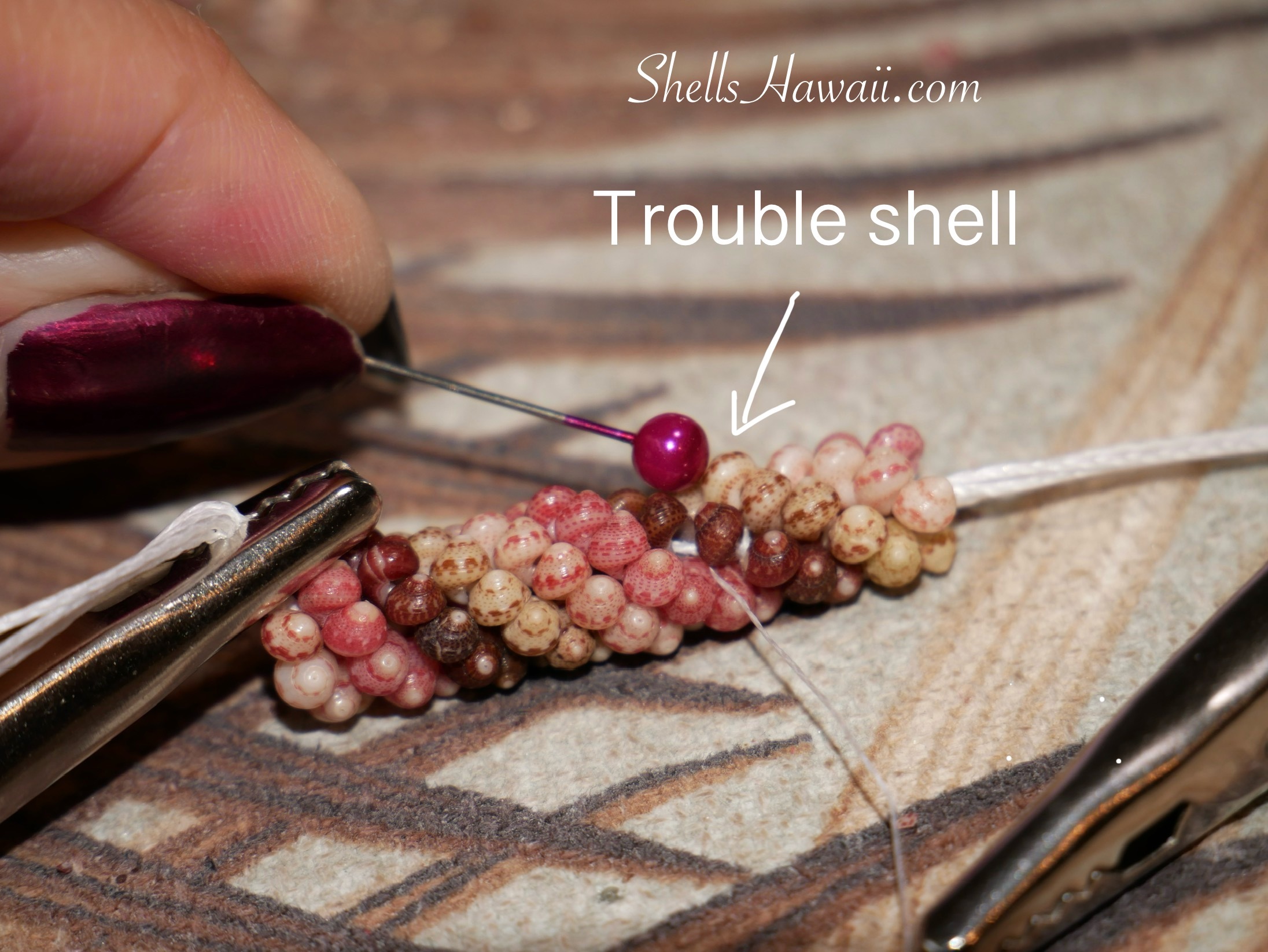
Believe me, you don't want to discover that problem halfway through, especially when you're working with a more complicated color pattern!
If I find an oversized shell after weaving has started, I may have to break it off to remove it. And here's where things can get really frustrating. If my design requires a specific color sequence or number of shells, I may need to remove the other shells, replace the broken one with the correct color and size, and then restring everything in the proper order.
The more times this happens, the weaker the string becomes, making it harder to pass through those tiny shell holes. What started as one little sizing mistake can turn into a much bigger problem!
That's why I take my time checking every strand before weaving. A tiny bump might not seem like much, but in a four-strand twisted Poepoe style, it can make a big difference.
The Workmanship Behind Four-Strand Twisted Poepoe
As you can see, creating a four-strand twisted Poepoe style takes a great deal of skill, patience, and careful shell selection. The longer the lei becomes, the more challenging it is to create. And when you begin mixing different colors and patterns within each section, the process becomes even more complicated.
This is a very intricate style and design, where every little detail matters. The workmanship itself becomes part of what makes the finished piece so special, not just the beauty, rarity, or uniqueness of the shells used to create it.
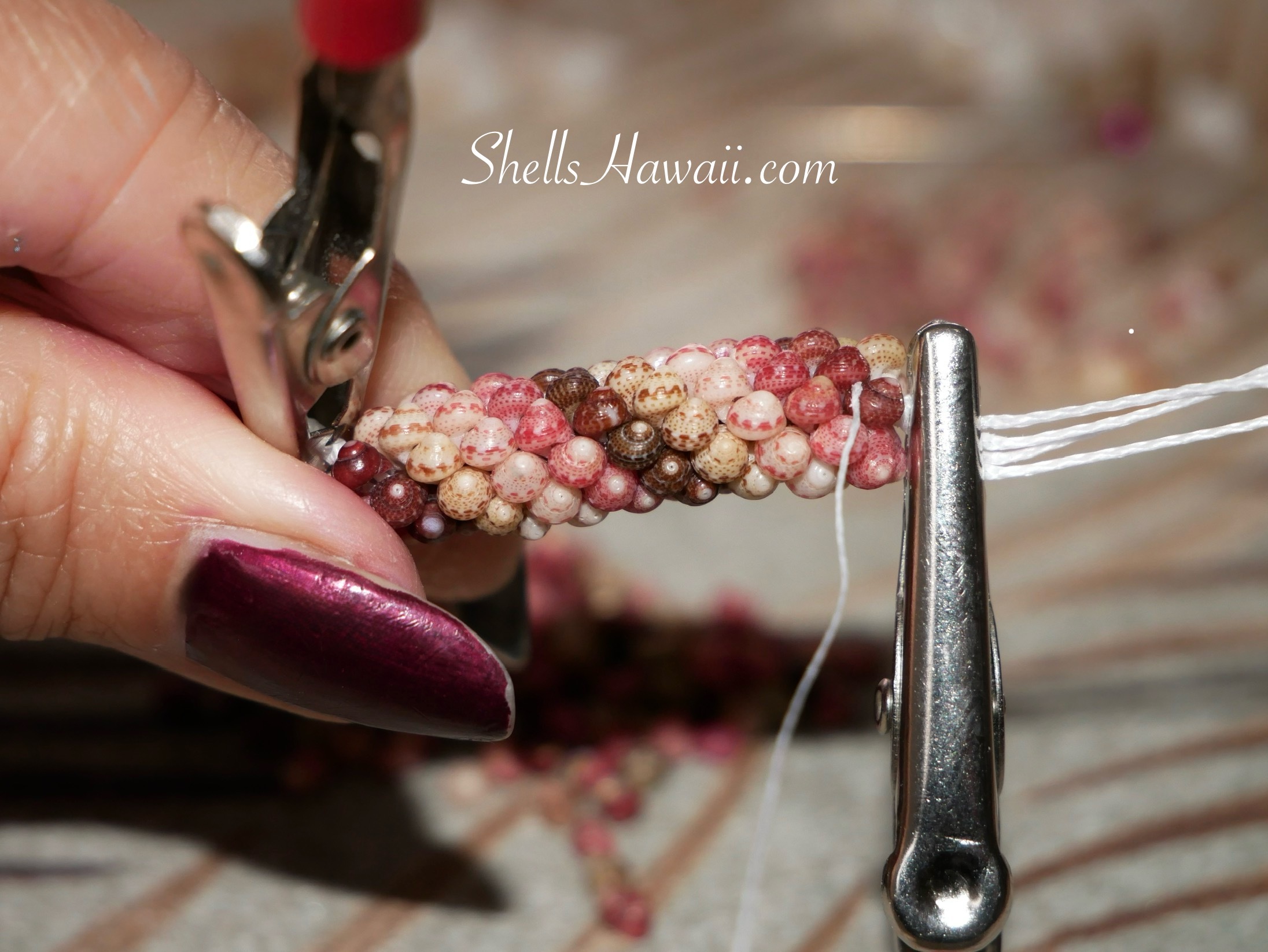
And this is one of the reasons I find Niʻihau shell lei such an amazing and beautiful Hawaiian art form. These tiny shells are truly gems of the Hawaiian sea, and the skill and craftsmanship that bring them together make each finished creation even more remarkable.
My Hope for the Future and a Final Thought on Poepoe
I hope that sometime in the near future, I'll finally be able to create an entire lei in this four-strand twisted Poepoe style myself. After all these years of practicing and collecting the right shell sizes and colors, it's something I'm really looking forward to accomplishing.
And when I'm ready to begin creating that lei, I'll definitely share some behind-the-scenes experiences with you along the way!
I also hope this blog has helped answer some of the questions you may have about the Poepoe style and given you a better understanding of what to look for when choosing a Niʻihau shell lei. Whether it's the beauty of the shells, the design, or the workmanship, I hope it helps you find that one-of-a-kind piece you truly love and will cherish for many years to come.
Mahalo nui loa for being here, reading my blogs, and visiting my website. I truly appreciate your time and support, and I hope to see you here again next time!
With aloha,
Janjira