 USD
USD


Aloha and welcome back to the ShellsHawaii blogs everyone.
In my previous blogs about Niʻihau shell jewelry styles, we learned about what Poepoe style is and how different Poepoe structures can look using the four-strand tie method and the two-strand twisted style.
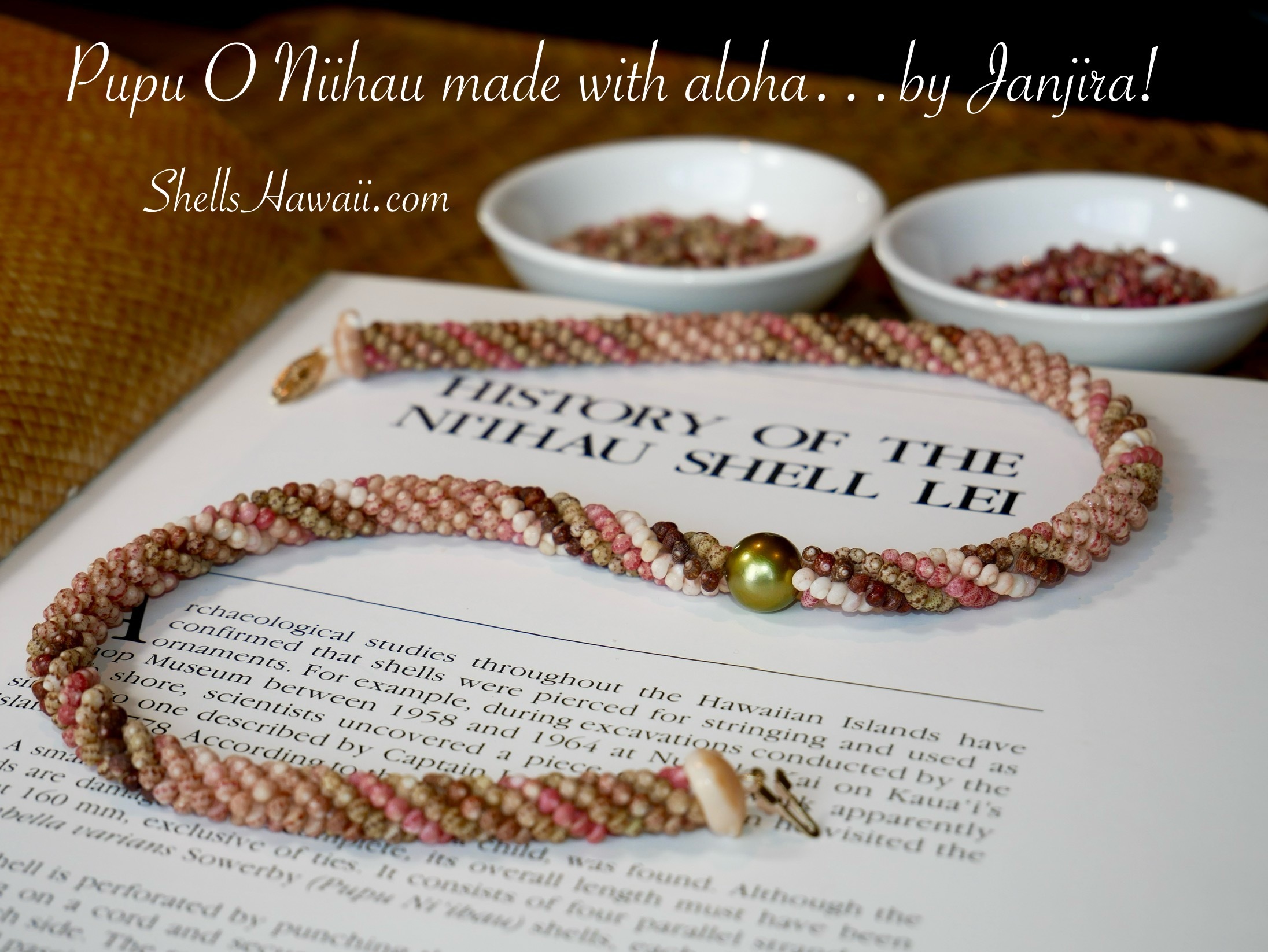
Today, we’re going to take another step further into the world of Poepoe style and explore how the triple-strand poepoe created its own unique rounded spiral look. Even though it is still considered a Poepoe style, the overall shape, movement, and structure turn out very differently once three strands begin twisting together.
What Is Triple Poepoe Style?
Triple Poepoe style is exactly what it sounds like — working with three strands together and continuously twisting them as the shells are added.
Even though it may sound simple at first, once the weaving begins, the structure starts forming its own unique movement and shape. Unlike the four-strand tie method, where the rows often sit more straight and organized, the triple-strand twist slowly develops into a softer spiral form.
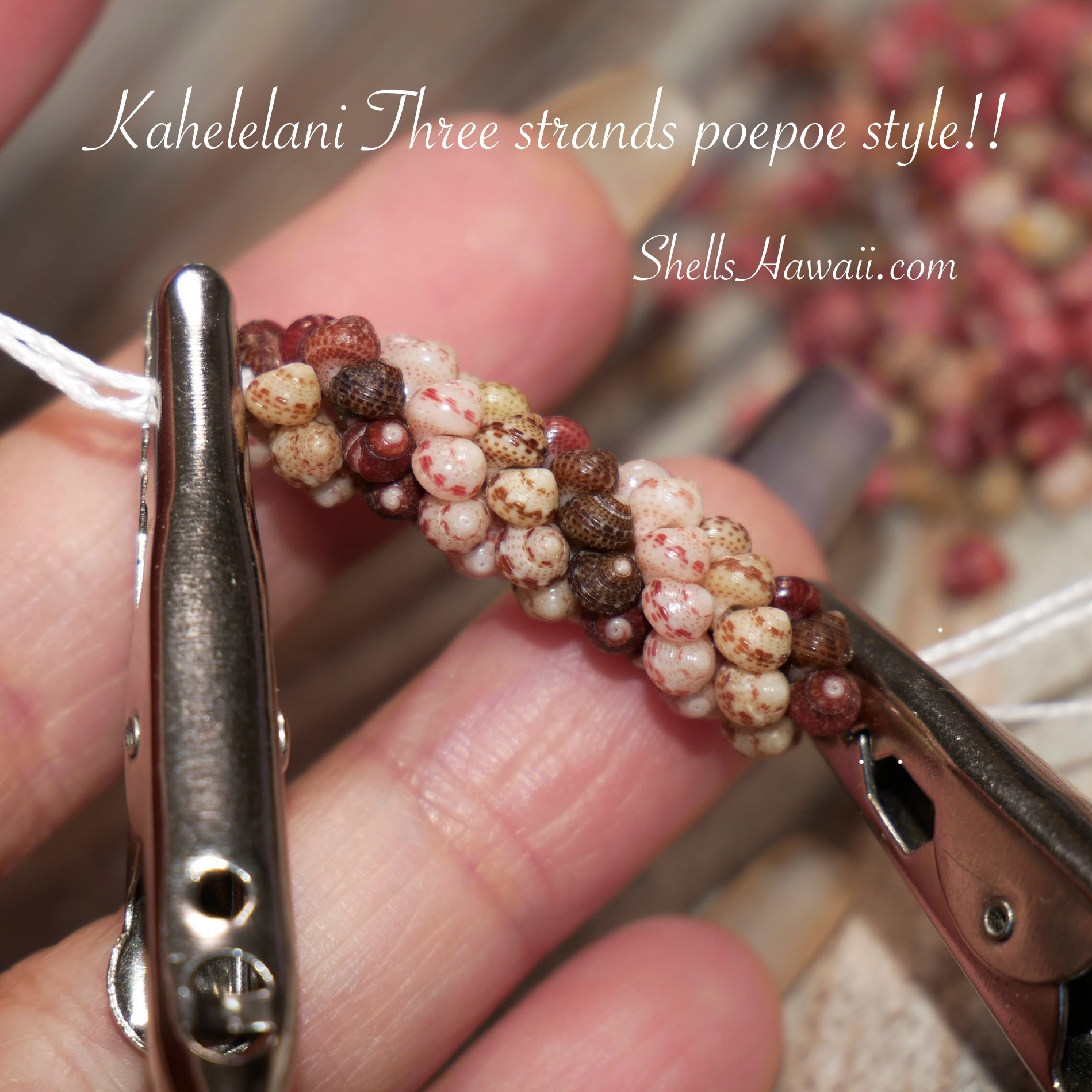
As the strands continue twisting together, the shells begin flowing around the center in a softer spiral movement rather than forming the more stacked and squared appearance often seen in two-strand Poepoe styles.
This style follows more of a wili approach in Hawaiian weaving. The Hawaiian word wili means “to twist” or “to wrap.” Instead of stopping to secure each section individually, the strands continue moving together in a flowing rotational pattern as the design grows.
The finished result creates a more rounded, rope-like appearance with gentle spiral movement throughout the piece. Because of this, Triple Poepoe style often feels softer, fuller, and more dimensional compared to some other Poepoe structures in Niʻihau shell jewelry.
How Hard Is It to Make Triple Poepoe?
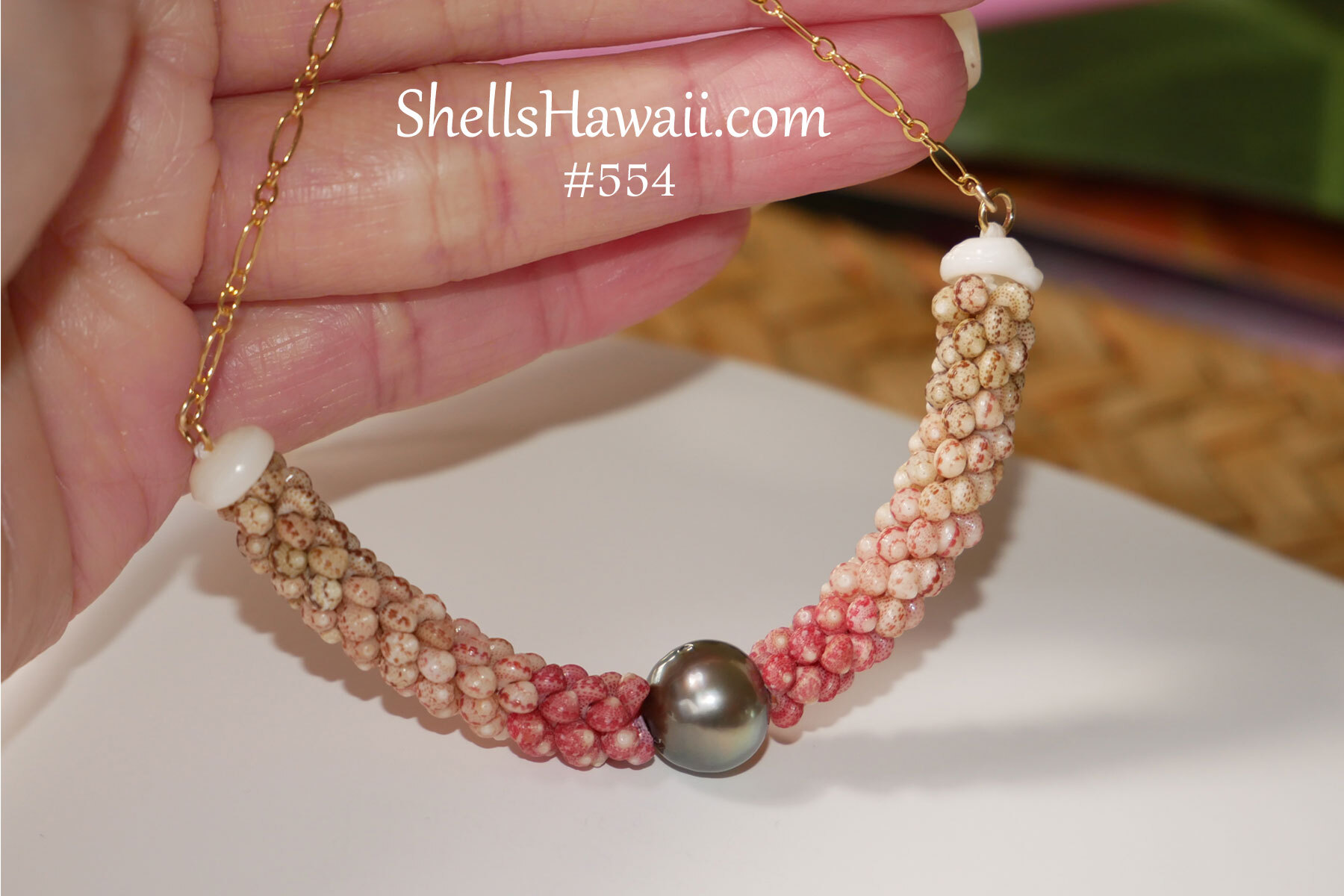
To create a clean spiral, the shells need to match very closely in size and thickness. If one shell is slightly too large, too thin, chipped, or uneven, the spiral flow immediately changes and becomes noticeable in the pattern.
This is especially true with Kahelelani shells, because many of them are naturally tiny and delicate. Sometimes even a very small difference in shell size can affect the balance of the spiral. The hole placement also has to be extremely consistent when creating Triple Poepoe style. The holes need to be poked at almost the exact same angle and in nearly the same position on every shell each time. Even small differences in hole placement can affect how the shells sit together and may interrupt the clean spiral flow of the design.
So with that said, this style of Poepoe usually requires quite a large amount of shells to work with for extra spare shells and for choosing shells with better size consistency and quality that this style requires. This is also one of those Poepoe styles you may not commonly find offered in many Niʻihau shell jewelry classes, and it was something I had to learn the hard way myself through many years of experimenting, adjusting, and trying over and over again before I finally began understanding how to make the spiral structure flow together correctly.
What Is the Difference Between Four-Strand Tie, Two-Strand, and Triple Poepoe?
One of the most interesting things about Poepoe style in Niʻihau shell jewelry is how different the overall structure can look depending on the weaving method being used. Even though all three styles are considered Poepoe, the shape, movement, and shell layout can turn out very differently once the weaving begins. In this blog, I hope to help you gently see the differences between these Poepoe styles so that next time you see photos or finished Niʻihau shell jewelry, you may begin recognizing which weaving style or design you are looking at.
Two-Strand Poepoe
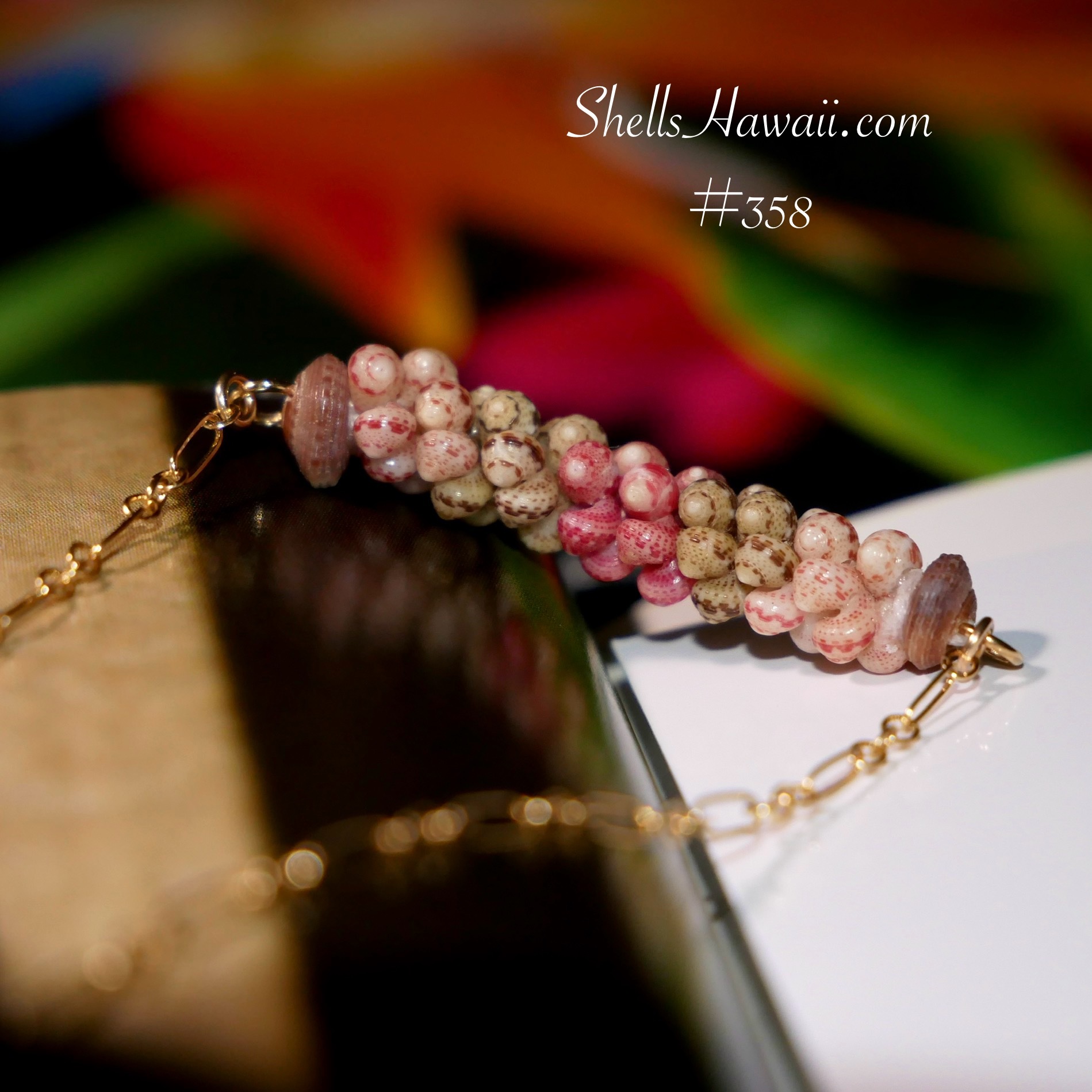
In a two-strand Poepoe style, the structure often develops into a more squared and stacked appearance. The shell rows become easier to see, and the overall shape feels more structured and defined.
Triple Poepoe
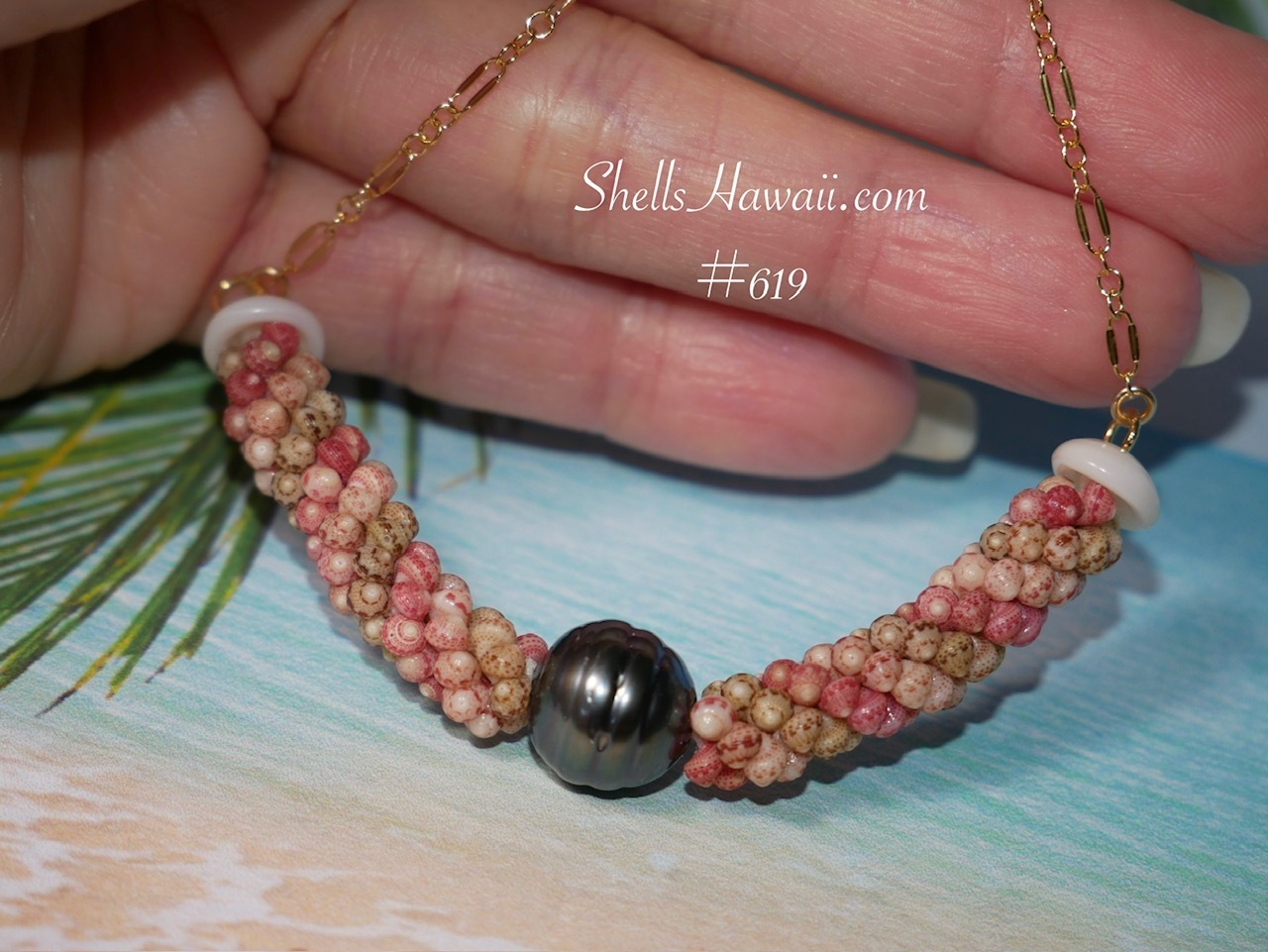
In Triple Poepoe style, the shells begin flowing around the center in a softer spiral movement instead of appearing more stacked and squared like the two-strand style. As the twisting continues, the structure slowly develops into a rounded rope-like appearance with gentle movement throughout the piece.
Four-Strand Tie Method
The four-strand tie method creates a much fuller and more compact structure. Instead of developing a spiral movement, the shells sit in more evenly organized rows that lock closely together around the center. This gives the piece a very balanced and rounded appearance with a more stable woven structure.
To Close for Today
I hope today’s blog helped you better understand the beautiful differences between the two-strand, triple-strand, and four-strand tied Poepoe styles used in Niʻihau shell jewelry.
Each structure carries its own personality, challenges, and beauty. And that’s one of the things I love most about working with these tiny Hawaiian shells from Niʻihau — even a small change in weaving style can completely transform the feeling of the finished piece.
For our next blog, we’ll explore even deeper into how the four-strand Poepoe style slowly transforms from a tied woven structure into a softer twisted method similar to Triple Poepoe — but created using four strands instead. I hope you’ll join me again as we continue learning more about the beautiful details and weaving styles found in traditional Niʻihau shell jewelry.
Much aloha once again for being here. If you would like to learn more about some of these Poepoe styles, you can click on the highlighted links throughout this blog to explore related blogs and finished Niʻihau shell jewelry pieces. You are also always welcome to browse through all of my creations in the different jewelry categories here at ShellsHawaii.
With aloha, and hope to see you again in my next blog.
Janjira