 USD
USD


Aloha and welcome to ShellsHawaii blog everyone,
In Part 1 of Blog 7, I took you with me on a sunrise walk along the shoreline to experience the excitement of finding Kahelelani shells. Now let’s go a little deeper into one of the questions many people ask me:
Is Collecting Niʻihau Shells Seasonal?
Yes — collecting Niʻihau shells is very seasonal, and the best shelling months are usually during the winter season from around October through March.
During this time, larger north and west swells begin stirring the ocean floor and pushing more shells onto the beaches. That’s often when Kahelelani, Momi, and Laiki shells become easier to find.
But even during winter, there is never a guarantee. The ocean always works on its own schedule.
The Ocean’s Rhythm
From my experience shelling on the North Shore of Kauaʻi, I’ve seen how quickly the ocean can change what you find. One day the beach may feel almost empty, and the next, after a strong swell, it can suddenly look as though the sea scattered tiny treasures across the shoreline.
Kauaʻi and Niʻihau are not far apart, and from what my suppliers and friends on Niʻihau have shared with me, the rhythm is often very similar. Shell collecting depends heavily on the ocean, tides, and seasonal swells.
Why Waves Matter So Much
To find shells on the shoreline, you actually need the waves to help bring them in. If the ocean is completely calm, very few new shells reach the beach. But when the waves become too large and violent, the heavy surf can pull the shells right back out into deep water or bury them under thick layers of sand and debris.
The best conditions usually happen after a large swell begins calming down. Medium-sized receding waves often leave fresh shells resting along the wet sand before the next tide pulls them away again.
That timing is very important.
Sometimes collectors may wait many days for the right ocean conditions, and then suddenly gather most of their shells during only a few successful mornings.
Finding the Tiny Shells, Rare Treasures That Require a Lot of Patience
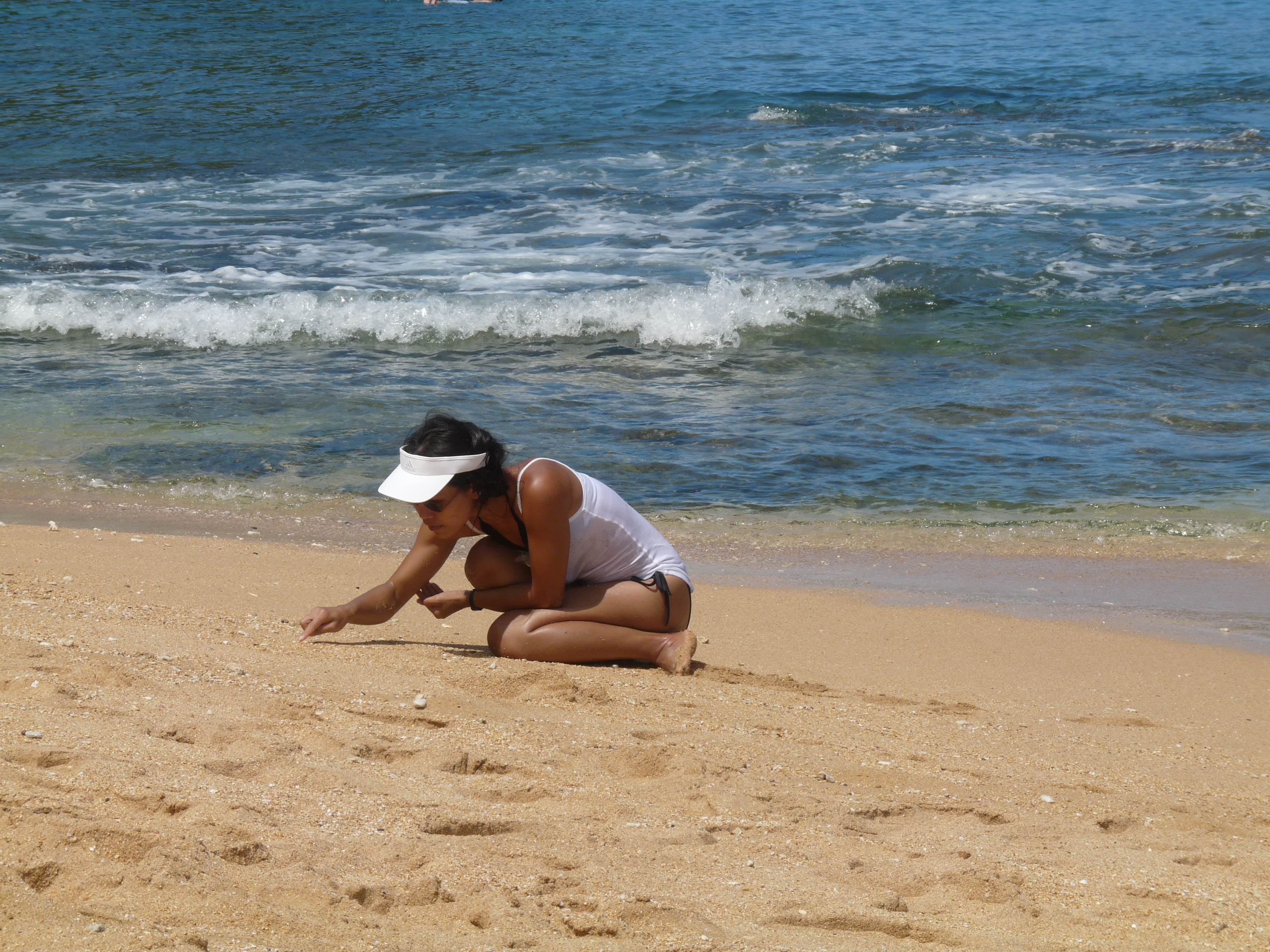
Because these shells are so incredibly small, you cannot simply walk along the beach and spot them easily while standing. Most collectors spend hours bent down on their knees or sitting near the shoreline under the hot sun, slowly scanning gravel lines, coral debris, and wet sand for tiny flashes of natural luster reflecting in the sunlight.
Many people imagine shell collecting as something peaceful and relaxing while walking on the beach, and sometimes it truly is. But when collecting shells becomes part of supporting your living, it also becomes real work that requires long hours, patience, focus, and experience.
Often the shells bury themselves only slightly beneath the surface, so careful observation becomes a huge part of shell collecting itself. And truly, it happens one shell at a time.
I’ve even heard artisans say it can take up to seven seasons just to gather enough Kahelelani shells of the right size, color, and quality for a single strand. That alone shows how much patience and time can go into authentic Niʻihau shell jewelry.
The ocean, tides, seasons, and weather all play an important role in what collectors are able to find. That natural unpredictability is one of the reasons these tiny shells are so rare and treasured today.
Every Shell Has a Story
No matter where the shells are found — Niʻihau, Kauaʻi, or elsewhere in Hawaiʻi — the ocean is always changing. Waves shift, tides rise and fall, and every beach has its own rhythm.
That’s part of what makes Hawaiian shell jewelry so beautiful. Every shell carries a journey shaped by the ocean itself.
➡️ Up Next… In Blog 8, I’ll be answering one of the questions I get asked the most: “Where do you get your Niʻihau shells?” I’ll share my personal experience collecting shells, how I connected with suppliers, and why trust and aloha became such an important part of my journey.
With aloha,
Janjira