 USD
USD


Aloha everyone, and welcome to my ShellsHawaii blog! I am so happy you're here, and I hope you'll enjoy joining me behind the scenes as I share the journey of creating one of my newest shell lei.
In my previous blog, Upcoming Hawaiian Shell Jewelry Creations at ShellsHawaii, I shared some of the handmade Hawaiian shell jewelry designs I hope to recreate, as many of the pieces I previously created have already sold out from my collection.Today, I'd like to take you behind the scenes as I begin creating one of those pieces—a traditional Niʻihau Kipona style shell lei.
Planning the Design
Before starting any creation, one of the most important steps is having a design in mind and planning the overall look you want to create. Once the design is decided, the next step is carefully selecting the shell colors and sizes that will bring your vision to life.
For this lei, I chose a large Tahitian pearl as the centerpiece, which meant I needed slightly larger shells around the pearl to create the balance and flow I was looking for. Because of this, I selected size 13 shells for the two-strand poepoe section.
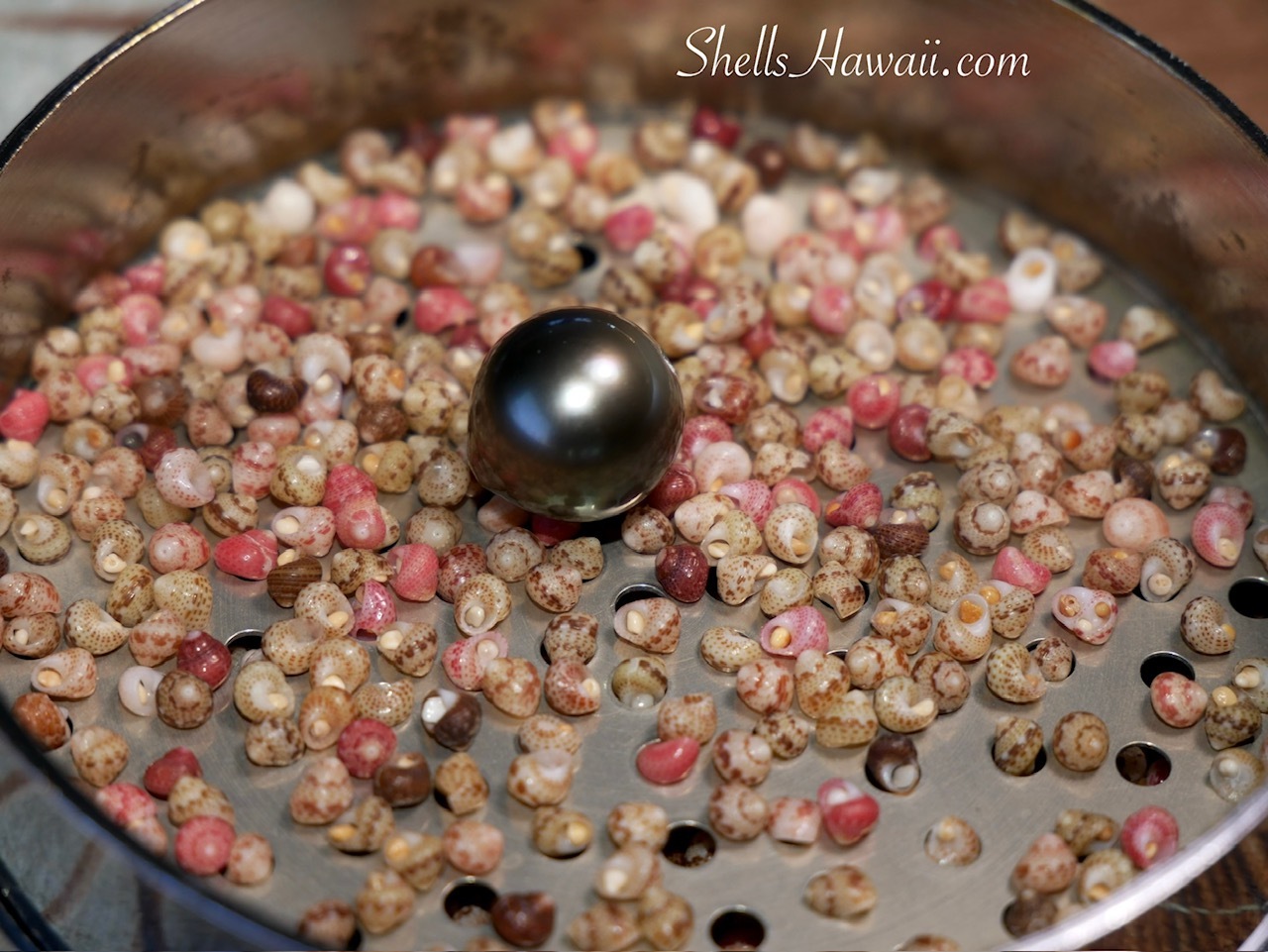
Before I begin stringing, I first gather the shell colors and sizes I plan to use. That is only the starting point. As the lei begins to take shape, I carefully adjust the shell placement one section at a time to achieve the pattern I have in mind. While I always try to stay true to my original design, seeing the shells come together often inspires small changes that help create a more balanced and natural flow.
If you think about it, creating a piece would be much easier if every shell were exactly the size, color, and quality I needed from the very beginning. However, working with natural Niʻihau shells is very different. Every shell is unique, so I have to work with the beautiful materials nature provides while making thoughtful adjustments throughout the process.
These are the small details that most people may never notice once the lei is finished, but they are some of the real challenges—and also one of the most rewarding parts—of creating Niʻihau shell jewelry.
The Hidden Challenges of Creating This Lei
Every handcrafted Niʻihau shell lei has its own unique challenges, and this piece was no exception.
Kahelelani shells are known for their incredibly tiny size, and each one must be carefully hand-poked before it can be strung. Keeping the hole placement as consistent as possible is not always easy. When I started creating the Poepoe section of this lei, I quickly ran into one of those common challenges. Even the slightest difference in where a hole is placed can affect how the shells line up and how the Poepoe pattern begins to take shape.
Shell Alignment Challenges
The first time I completed the center section, something just didn't look right to me, so I took it apart and started over. The second attempt looked much better, but as I continued creating the matching Poepoe section on the opposite side of the Tahitian pearl, the shells no longer twisted correctly and the rows gradually fell out of alignment.
By then, the thread had already been twisted and reworked several times, and I could feel it beginning to weaken. Rather than risk it breaking later, I decided to take apart both Kahelelani shell sections beside the pearl and begin again. Thankfully, the third attempt finally came together exactly the way I had envisioned.
This is the shell alignment I was working toward as I created the Poepoe section of this traditional Niʻihau Kipona shell lei.
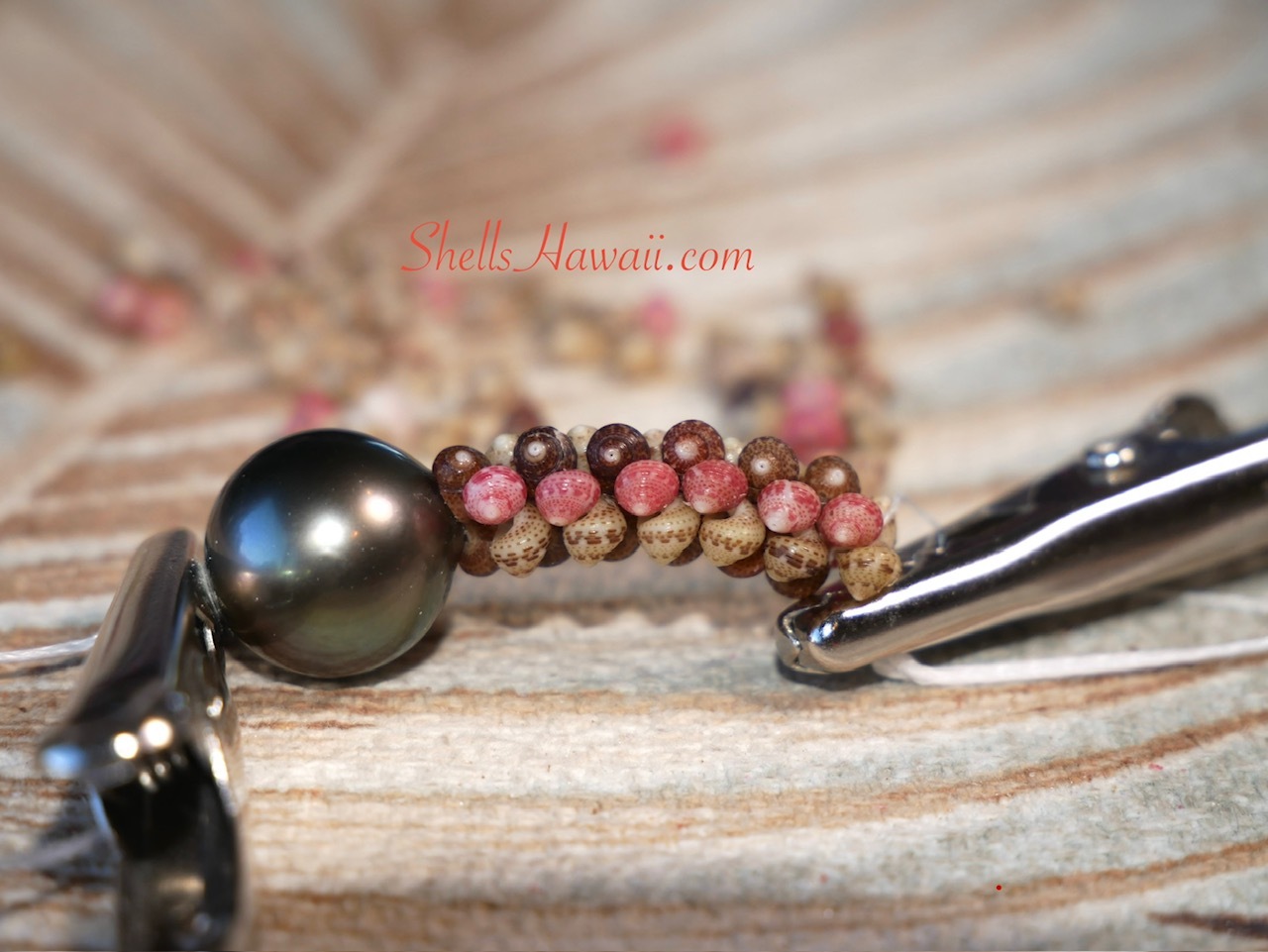
After rebuilding both Kahelelani shell sections beside the Tahitian pearl, the third attempt finally came together exactly as I had envisioned.
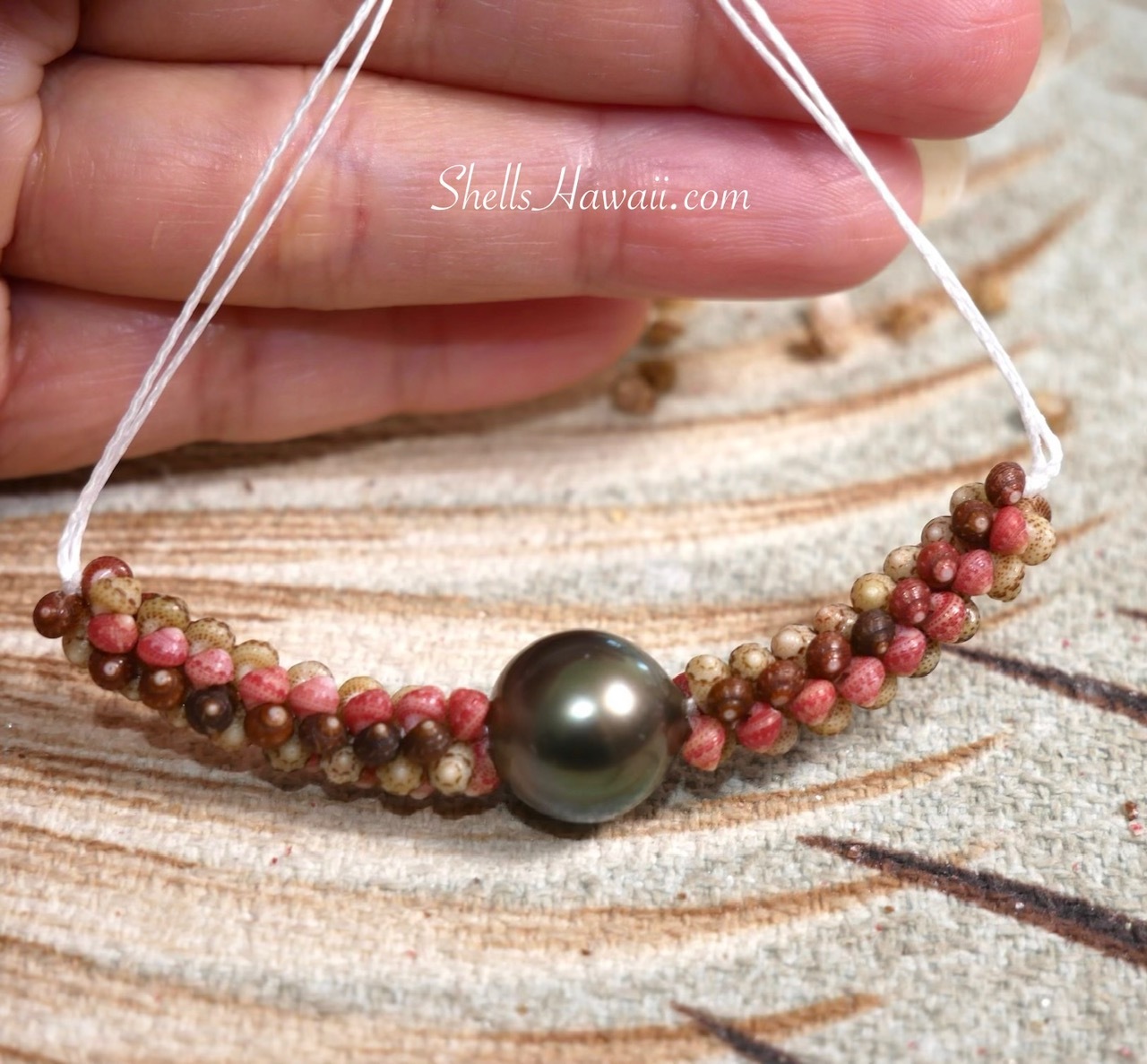
Tangled String and Twisted Lei
After finishing the center section, I continued adding the beautiful Momi and Kahelelani shells while following the pattern I had planned. I kept making small adjustments along the way, and everything was going smoothly until the lei reached about 8 inches long.
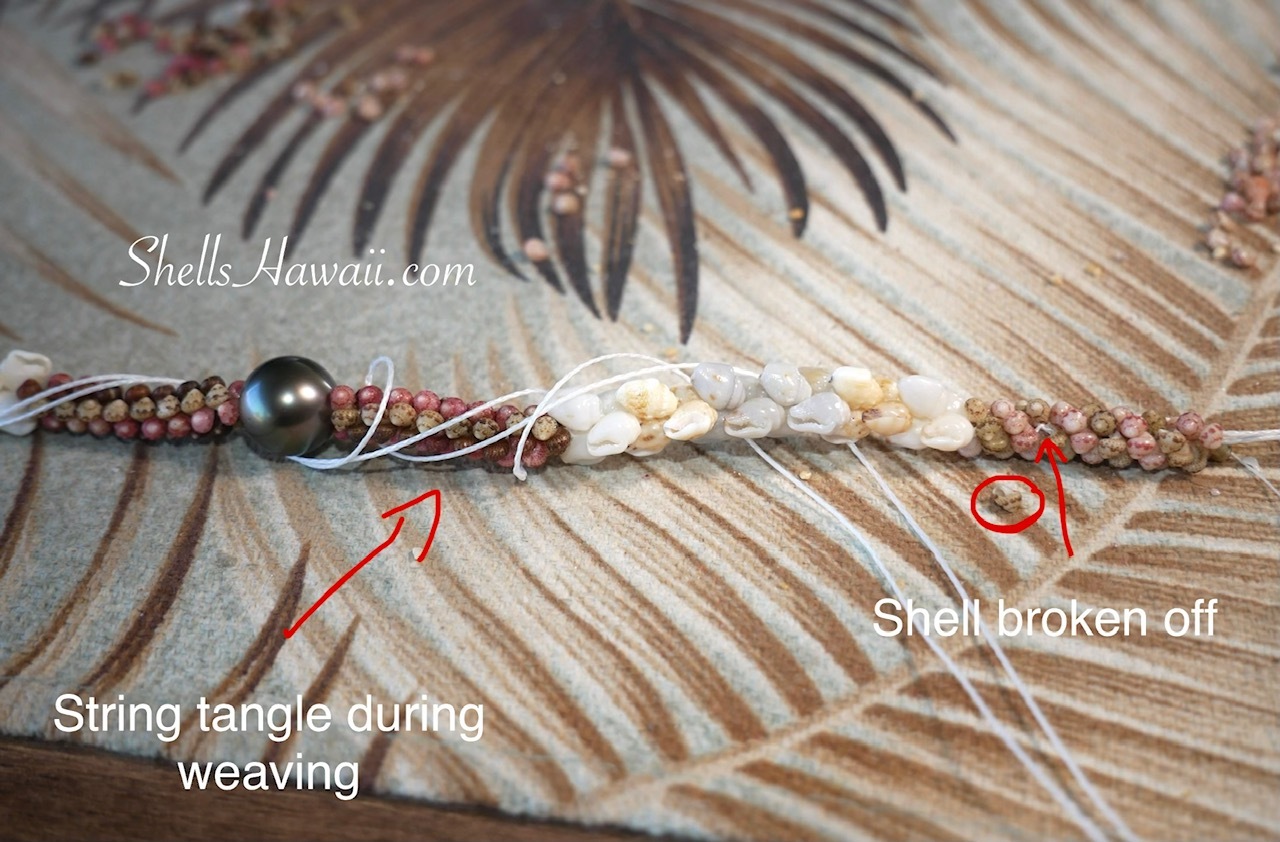
This is one of the things that most people never think about when creating shell jewelry longer than about 7 inches. Since I planned for this lei to be approximately 25–26 inches long, I knew the challenge would only increase as I continued weaving. As the lei grew longer, the string naturally began twisting and tangling much more easily. Every time I twisted new shells into place, I also had to rotate the entire finished section of the lei to release the tension from the string. If I didn't, the twisting would continue to build up, making the lei much more difficult to work with.
At the same time, I constantly checked to make sure none of the shells had cracked or broken. It only takes one broken shell or too much tension on the string to undo part of your work, so I was always paying close attention before moving on to the next section.
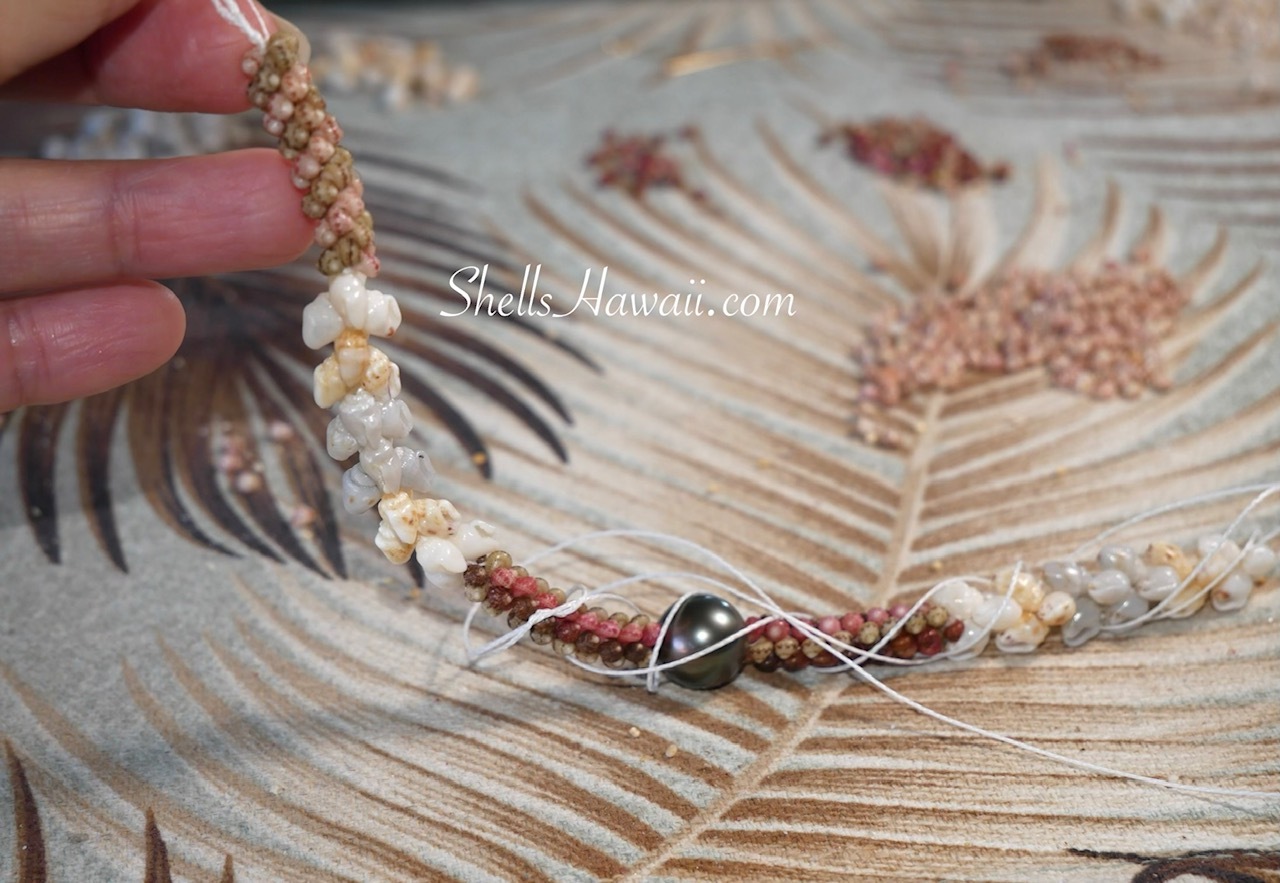
Broken Shells
One of the Kahelelani shells broke, and thankfully it happened on the fourth row of the section I was working on. Because it broke there, I was able to carefully remove the shells that were already on the string, replace the broken shell with another one in the same color, and continue following the pattern I had planned.
These are the little behind-the-scenes moments that make Niʻihau shell jewelry so special once the design is finally complete. Beyond the rarity of the natural shells found on the Hawaiian Islands, every piece represents many hours of planning, adjustments, problem-solving, and patience. There is so much more behind each creation than what you see displayed on my website or on a table at a craft fair.
The Wear Behind the Work
To create Niʻihau shell jewelry, every step I shared above involves working with my hands and fingertips. From hand-poking shells and stringing each section to constantly adjusting the pattern, my hands are involved from beginning to end.
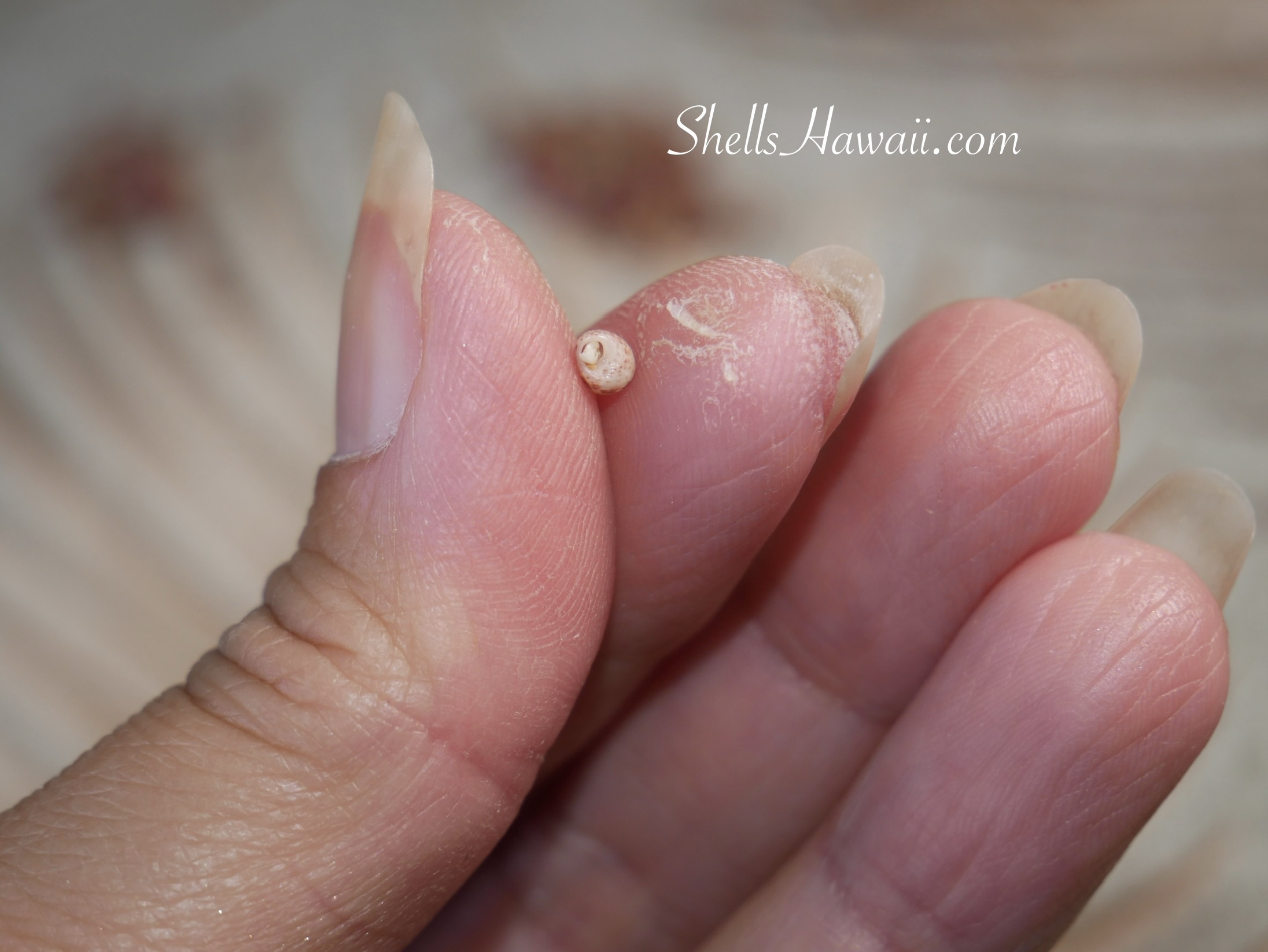
When creating a shell lei, especially one that combines Kahelelani shells, there are a lot of shells that need to be hand-poked before they can be used. During this creation, I spent many hours hand-poking shells one by one. Hidden grains of sand inside the waha caused quite a few shells to break while I was poking them, so I simply had to start over with another shell.
By this point, my fingertips were definitely showing the hours of work. They were bruised, and I had even worn away a few layers of skin. I think they were ready for a break long before I was.
Finishing the Lei
Now my creation is complete. It has been quite a journey, with plenty of challenges, adjustments, and a few surprises along the way. Looking back, every step was worth it because I truly love how this lei came together.
I hope you enjoyed spending a little time with me behind the scenes and seeing what goes into creating a traditional Niʻihau shell lei. Sometimes the challenges are just as memorable as the finished piece, and I hope this blog gave you a new appreciation for the time, patience, and craftsmanship behind every creation.
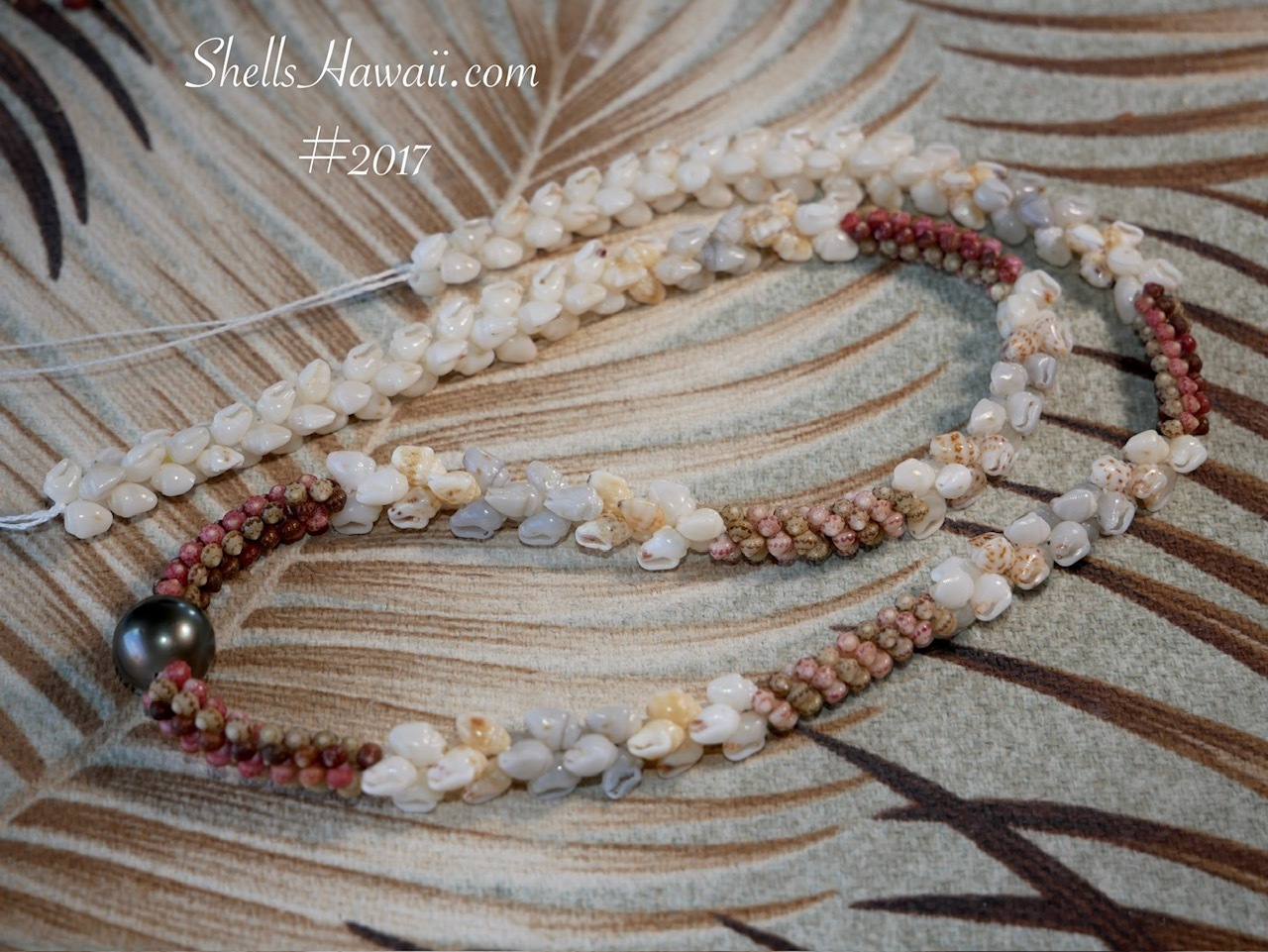
If you would like to see the finished lei, you can find it in Lei– Two Strand category on my website. I hope you'll enjoy seeing how it turned out!
Mahalo nui loa for being here and for taking this journey with me. Your support, whether you're simply learning about Niʻihau shell jewelry or adding one of my creations to your collection, truly means so much to me. I hope to see you again in my next behind-the-scenes blog.
Janjira