 USD
USD


Aloha and welcome to my workstation today, everyone.
Today my newest collection of Momi shells has just arrived, still a little wet from their journey from the Hawaiian sea. When I first receive them, I like to gently pour the shells into a bowl or tray and let them sit for a while until they are completely dry.
Once the shells are dry, that’s when the real work begins.
In some of my past ShellsHawaii blogs, I shared how to separate and sort Momi shells into different grades and quality groups, which you can learn more about here. Today I’ll be using that same method again as I begin sorting this new batch of Niʻihau Momi shells.
Now it’s time for me to begin sorting
Sorting is always the first step before I begin planning any jewelry designs. One by one, I look closely at each shell, checking its size, shape, and condition before placing it into the proper group.
At first glance, what do you notice when you look at this photo? How many colors of Momi shells do you see, and how would you begin sorting them?
When many people first look at a group of unsorted Momi shells mixed with different colors and other types of shells in the same pile, their eyes are usually drawn first to the darkest shells or the colors that immediately stand out before they begin noticing the smaller differences and details between each shell. That is usually where I begin my sorting process, while also checking closely for cracks, chips, or holes that are not in the correct place.
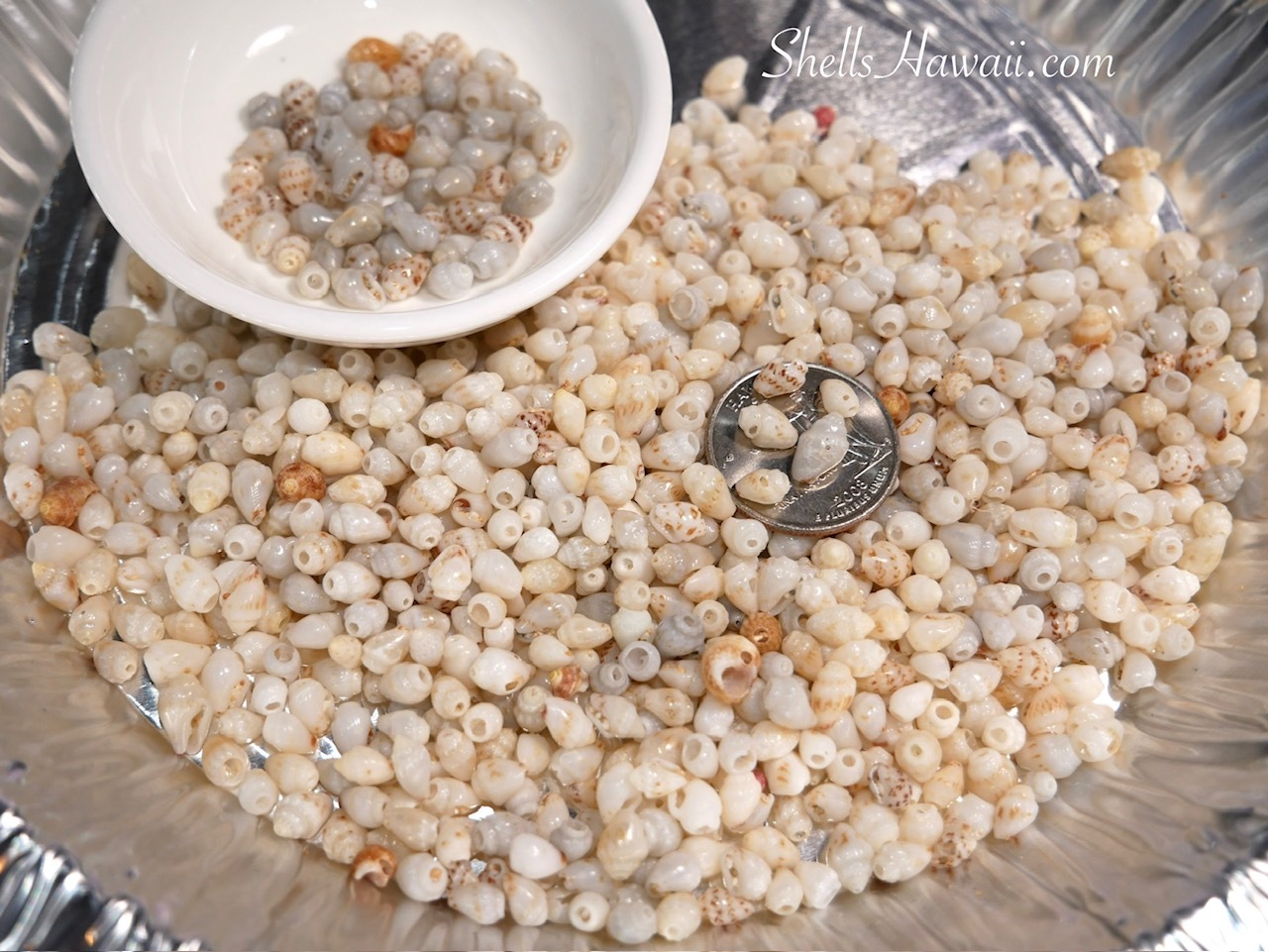
What Should You Look for When Sorting Momi Shells?
Once the shells are spread out, I gently move them around and begin grouping them by size and condition.
Some shells are smooth and well shaped, while others may have small chips, worn edges, tiny cracks, or openings that are not in the correct place. I also compare the shell sizes and begin noticing the luster. These small details help determine whether the shell will be placed into the A grade, B grade, C grade, or imperfect shell group. You can learn more here.
Sorting takes time, and I usually go through the shells many times to double-check everything before they are ready for creation or prepared for listing as shell supplies. For some reason, the shells from this particular beach seem to include many fragile shells, so careful sorting becomes even more important. Even though some shells may still look beautiful, they may not be strong enough for detailed designs such as Pikake, Kipona, or Poepoe styles.
Sorting shells may look simple at first, but it is one of the most important steps before creating Niʻihau shell jewelry. Before any design begins, each shell needs to be examined closely and placed into the right group.
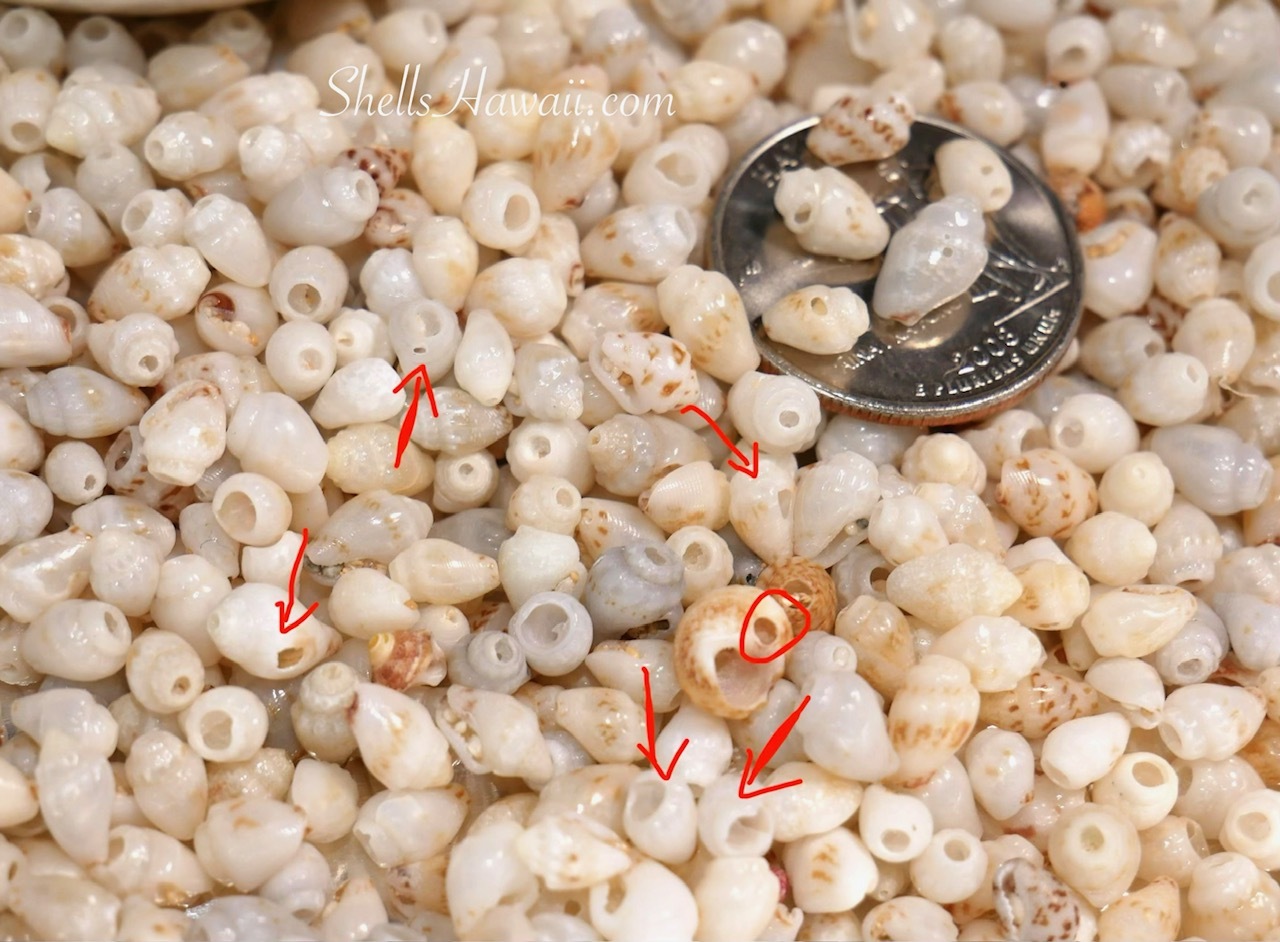
Finishing Up With Our Momi Shell Sorting Today
Now we are coming to the end of our work sorting day.
From today’s sorting, I found some very nice blue Momi shells, medium blue tones, and brown spotted shells. The rest are mostly off-white shells with a soft blue tint. Some of the shells are A grade with very good luster, while others fall into the B grade and C grade groups. I also found some shells that are not full size but still have good luster. These can be very useful for practice work or for creating smaller jewelry pieces.
So far today we have learned and practiced using our eyesight to sort these Momi shells together. These shells will be used for my next creation. Some of them will be listed on my website as Niʻihau shell supplies, and some I will try to find time to pre-poke them, just in case anyone who is beginning their Niʻihau shell jewelry journey would like to give it a try and make their own jewelry. I hope you are enjoying sorting shells with me today. Our workstation will always be full of joy and always something new to learn.
The more attention we give to these tiny shells and to the art of Niʻihau shell jewelry, the more appreciation we develop for the patience, care, and beauty behind this tradition. I hope I will see you here again at my workstation next time. If you enjoyed reading my blogs, a little feedback or a message from you would be very much appreciated. You can always send it to me here.
With aloha,
Janjira