 USD
USD


Aloha and welcome back to ShellsHawaii blog everyone,
In my last blog, Blog 9, I shared just how tiny and precious Kahelelani shells truly are. Today, I wanted to answer another question many people often ask when they first discover Niʻihau shell jewelry:
“Why is Niʻihau shell jewelry so expensive?”
If you’ve ever looked at a Niʻihau shell lei or pair of earrings and wondered why the price seems high, you’re definitely not alone. These tiny shells may look delicate and simple at first glance, but behind every finished piece is an incredible amount of rarity, patience, labor, and history.
In fact, Niʻihau shells are often called the “Diamonds of Hawaiʻi,” and they are the only shells in the world recognized as gemstones that can even be insured.
The Rarity Begins with the Island Itself
Niʻihau is a private and protected island, often called the “Forbidden Island,” with very limited access to outsiders. Most people cannot simply visit the beaches to collect shells, and even for those who do have access, the ocean does not always easily give them up.
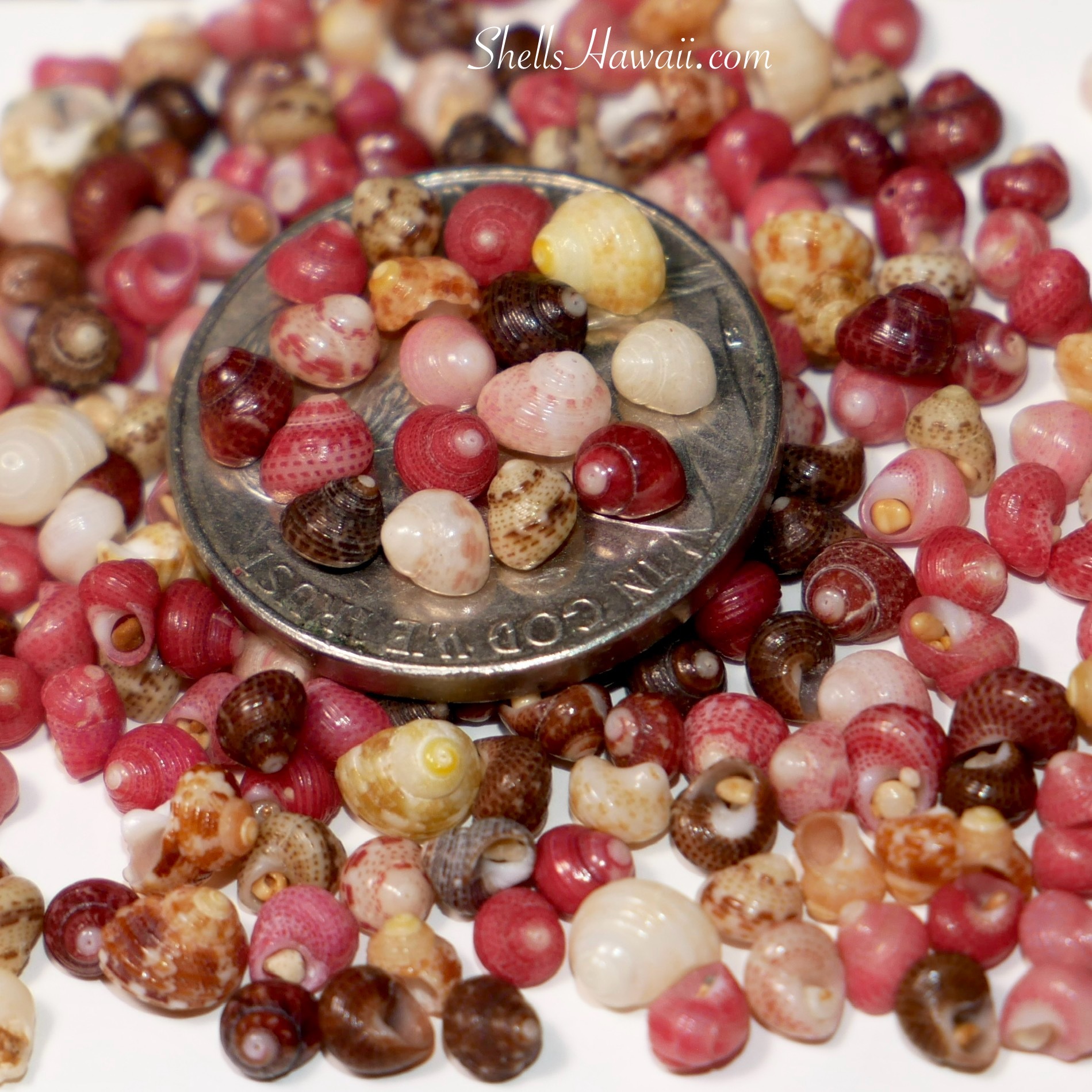
Many of the most beautiful Kahelelani, Momi, Laiki, and Puka shells used in Niʻihau shell jewelry are carefully collected by local collectors from Niʻihau beaches and later shared or sold to artists who create with them.
And even then, not every shell collected is jewelry quality.
That’s where the real work begins.
Tiny Shells, Massive Amounts of Work
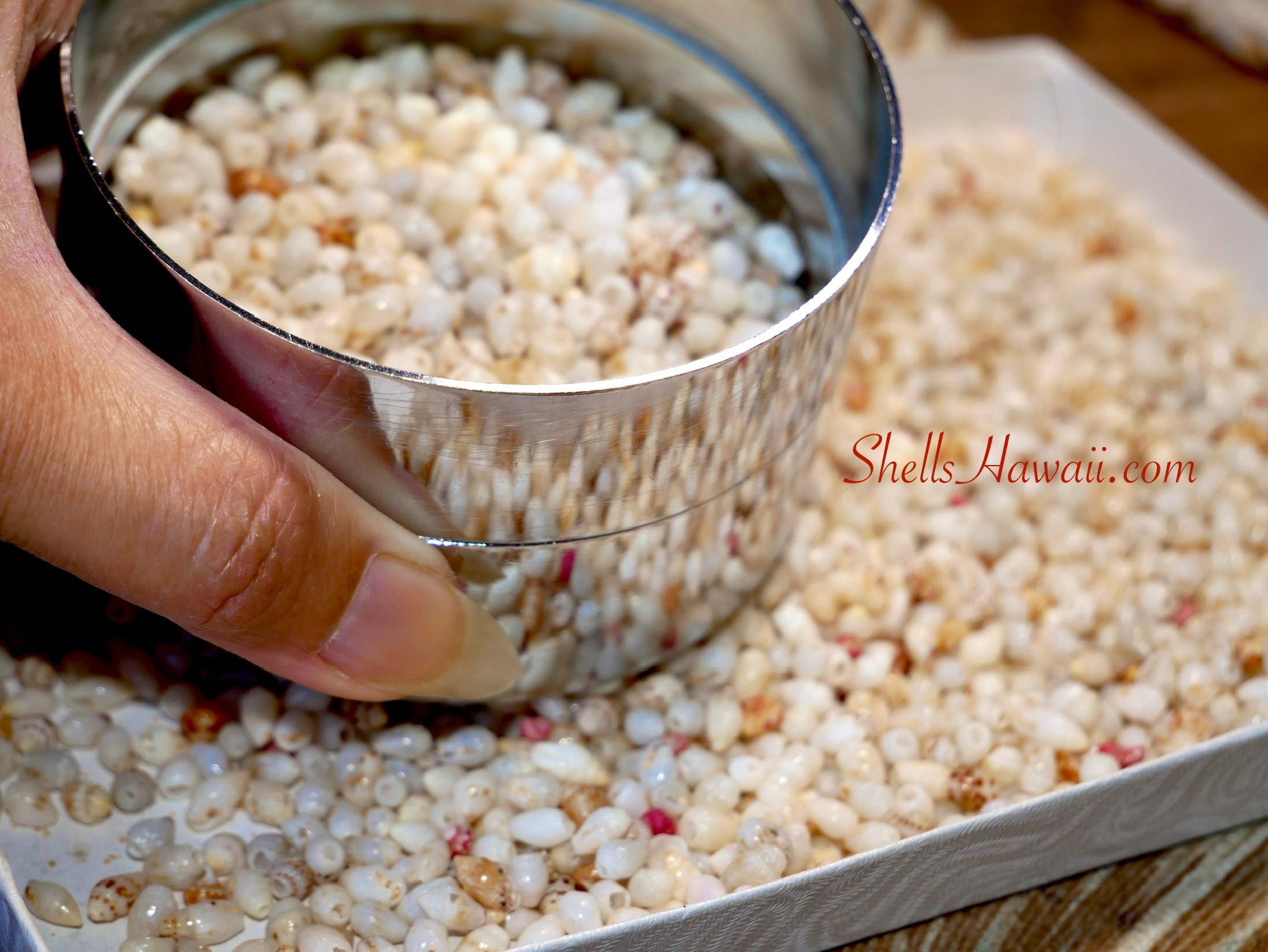
Niʻihau shell jewelry is truly a labor of love. Every shell must first be carefully collected one by one from the beach before it can be cleaned, sorted, matched, trimmed, prepared, and carefully poked one shell at a time before the stringing process can even begin.
Many shells are smaller than a grain of rice, and many do not survive the process. Some crack while trimming, some break while poking the tiny hole, and others may simply not match the quality or size needed for a design. That means artists often sort through large amounts of shells just to find enough usable pieces for one small section of jewelry.
One thing many people may not realize is how difficult it is to gather enough shells in matching sizes and colors for a finished piece. Some colors are more common, while others — like deep burgundy, hot pink, rich red, green, or jet black — can be extremely difficult to find. Even after finding those rare colors, artists still need enough shells in similar size, shape, and quality for the design to look balanced and natural.
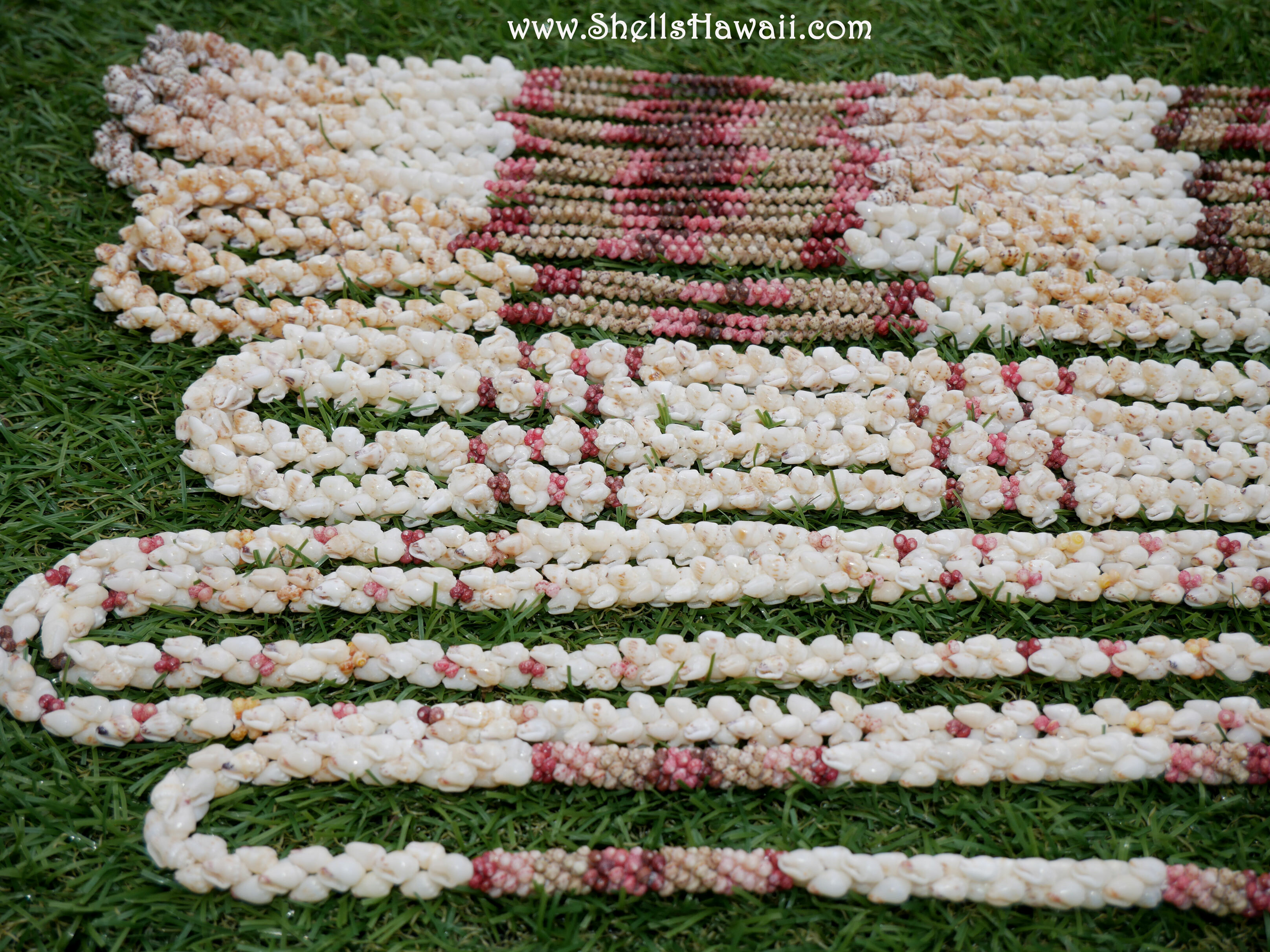
Sometimes it can take years of collecting and sorting just to gather enough matching shells for a single lei. Creating Niʻihau shell jewelry is not fast work. Some larger and more detailed pieces may take months or even years to complete depending on the design, shell availability, and complexity of the work itself.
Behind every finished piece is respect for the local collectors, families, and artists who help keep this Hawaiian tradition alive, along with many hours of sorting, cleaning, matching, poking, designing, and careful handwork. Because artists often need to purchase shells directly from collectors, the shell cost itself also becomes part of every finished creation.
You’re not simply buying shells — you’re holding a piece of Hawaiian history, culture, patience, craftsmanship, and aloha.
Closing Thoughts
I truly hope this blog helped answer one of the biggest questions many people have: Why is Niʻihau shell jewelry so expensive?
For me, Niʻihau shell jewelry is much more than simply Hawaiian jewelry. It is a Hawaiian tradition, a wearable art form, and something deeply connected to the islands, the ocean, and the people who continue helping keep this beautiful craft alive.
For many people, these pieces also become meaningful gifts and special memories connected to Hawaiʻi. Some people visit the islands for weddings, honeymoons, anniversaries, family vacations, or once-in-a-lifetime moments they never forget.
In many ways, Niʻihau shell jewelry helps people reconnect with those memories — the feeling of the ocean breeze, the warmth of the islands, the beauty of Hawaiʻi, and the aloha they experienced during their time there.
That is part of what makes this art feel so special to me. After many years of experience and so much support through this art, it truly means a lot to me, and I am deeply grateful for the journey and the people who have supported me along the way.
In future blogs, I’ll continue sharing more about shell grading, color rarity, shell sorting, behind-the-scenes work, and many of the small details that most people never get to see behind authentic Niʻihau shell jewelry.
I truly hope some of the information I share helps you better understand and appreciate this beautiful Hawaiian art the way it deserves.
With aloha always,
Janjira